Rules
Religious accommodation and workplace dress codes in Illinois
How Title VII and the Illinois Human Rights Act apply to religious dress and grooming in an Illinois dress code, including the undue hardship test, safety limits and how claims are filed.
What to take away
- An Illinois employer with a dress code must usually make exceptions for sincerely held religious dress and grooming, such as head coverings, beards and long skirts, unless the exception would cause undue hardship.
- Federal Title VII covers employers with 15 or more employees. The Illinois Human Rights Act (IHRA) reaches further and lists religion as a protected class.
- Undue hardship is a high bar. Since Groff v. DeJoy (2023), a burden must be substantial in the overall context of the employer's business. A cost that is merely more than minimal no longer qualifies.
- Customer or coworker preference is not a defense, and neither is a vague worry about company image.
- A request does not need magic words. Employers may ask for the limited information needed to evaluate it.
- Safety and hygiene rules can justify a denial only if the accommodation would actually cause undue hardship, so look for alternatives first.
Why dress codes are a religion issue
A dress code is a neutral rule that applies to everyone, which is exactly why it can burden someone whose faith requires a different practice. The Equal Employment Opportunity Commission (EEOC) lists religious head coverings, certain hairstyles or facial hair, and religious prohibitions on wearing certain garments as protected practices. Employers must accommodate them unless doing so causes undue hardship. The EEOC notes that employers may keep their standards for employees who want exceptions for non-religious reasons.
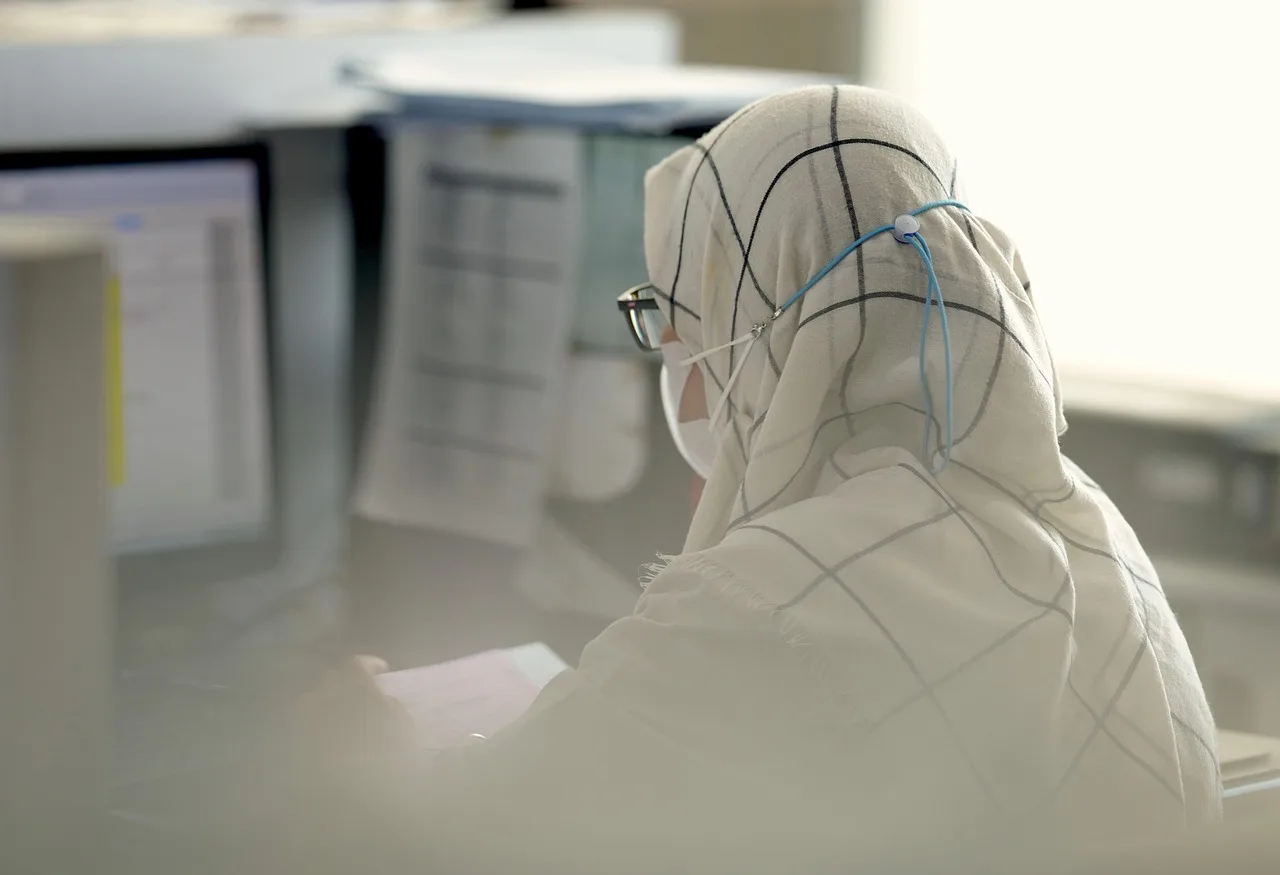
For workwear this covers a wide range of items: a hijab or turban in a business formal setting, a beard under a clean-shaven policy, a long skirt in a pants uniform, or a required logo shirt that conflicts with a belief. The baseline for what a dress code can lawfully require is in what the dress code actually requires.
Which law applies in Illinois
Title VII. The EEOC states that the federal law applies to employers with 15 or more employees. Charges must be filed within 180 days, which state laws may extend.
Illinois Human Rights Act. The Illinois Department of Human Rights (IDHR) lists religion among the protected classes. It says that for most discrimination claims the employer must have had at least one employee on each working day in 20 or more calendar weeks in the current or preceding year. For sexual harassment, disability and pregnancy-related claims, every employer is covered. IDHR also states that failing to provide a reasonable accommodation where the employer has a duty to do so can be discrimination, and gives the example that an employer may allow more frequent breaks for prayer at set times.
For filing, IDHR states that most cases must be filed within 2 years of the discrimination. The IDHR pages used for this article do not set out how Illinois defines undue hardship, so an Illinois employer should apply the federal standard below as a minimum and confirm the state position with IDHR or counsel.
The undue hardship test after Groff
Under the older rule, many employers refused anything that cost more than a trivial amount. The EEOC states that Groff v. DeJoy (2023) replaced that standard. Undue hardship now means a burden that is substantial in the overall context of the employer's business. The analysis considers the practical impact of the accommodation and the nature, size and operating cost of the employer.
Two points follow for dress codes:
- Hypothetical or speculative concerns are not enough. The EEOC says vague image concerns do not establish undue hardship.
- Coworker resentment and customer preference do not count as hardship. The EEOC states that customer preference is not a defense to a claim of discrimination.
Safety, hygiene and security limits
Genuine safety rules carry weight, but the EEOC cautions that an employer should not assume an accommodation would pose an undue hardship. The employer should look for alternatives first. The guidance gives examples of the approach: offering a ponytail or a clip for long hair, or two face masks for a Sikh employee with a beard in a surgical manufacturing setting, which the EEOC indicates would likely be a reasonable accommodation. It also says that firing a bus driver who needed a skirt instead of pants would violate the law absent evidence of a real safety hazard.
A documented hazard changes the analysis. If a rule exists because of a specific machine, chemical or protective-equipment requirement, record the hazard and the alternatives you considered. Sort protective equipment from ordinary clothing as described in employer-required uniforms and federal law.
Customer-facing roles
Many dress codes are strictest for customer-facing roles. The EEOC says assigning employees to positions out of public view because of religious garb or grooming is prohibited segregation. It also says that firing a Sikh coffee shop employee because customers were uncomfortable violates Title VII. An employer cannot satisfy a client's preference by moving the employee to a back room.
Refusing to hire an applicant because the employer expects a religious accommodation is also a violation, even when no request was made.
How to handle a request
- Treat any signal as a request.The EEOC says the employee need not use magic words, and if the conflict is obvious a formal request may not be necessary.
- Ask only what you need.Employers may ask for limited information needed to evaluate the request. Do not ask the employee to prove their faith in general.
- Discuss options together.A cooperative exchange usually finds a workable adjustment, such as a different fabric or color, a modified uniform, a head covering in the company colors or a policy exception.
- Decide in writing.If you deny, state the specific hardship and the alternatives you considered.
- Protect the employee.Retaliation for requesting an accommodation or filing a complaint is prohibited, and employers must act on religious harassment.
- Train managers.The EEOC recommends written, objective criteria applied consistently and manager training on subjective decisions.
Writing the dress code to avoid conflicts
- Add a sentence inviting employees to ask for adjustments for religious or medical reasons and naming a contact person.
- State the reason for rules that carry safety weight, so exceptions are judged against the real hazard.
- Avoid vague standards such as "professional appearance" without examples. The wording issues discussed in industry dress codes and the mistakes to avoid apply here.
- Review how offices in different industries enforce dress codes before copying another company's policy.
If a claim is made
An employee can file with the EEOC within 180 days, which state laws may extend, or with IDHR, where most cases must be filed within 2 years of the discrimination. IDHR says a filing is made by completing its complainant information sheet and sending it to the department, after which it assigns a case number, notifies the respondent and begins its process, which can include intake, mediation, investigation and findings.
Keep requests, communications, the written decision and any safety documentation. They are the record that will be reviewed.
Common questions
Can an employer require a uniform with no exceptions?
Not for sincerely held religious practices, unless the exception would cause undue hardship. A uniform policy with no exceptions does not by itself justify refusing to hire someone who wears a religious head covering.
Does the employee have to say the word religion?
No special wording is required, but employees should tell the employer the accommodation is needed for religious reasons. If more information is needed, the employer and employee should discuss the request.
Do beliefs have to be part of an organized religion?
No. The EEOC says protection covers people in organized faiths as well as people with sincerely held religious, ethical or moral beliefs.
Is a temporary practice still protected?
Yes. The EEOC gives the example of a bank teller who wears a headscarf only during Ramadan, which remains a sincerely held practice even though it is not year-round.
Official sources
- [EEOC
- Religious Discrimination](https://www.eeoc.gov/religious-discrimination)
- [EEOC
- Religious Garb and Grooming in the Workplace, Rights and Responsibilities](https://www.eeoc.gov/laws/guidance/religious-garb-and-grooming-workplace-rights-and-responsibilities)
- [EEOC
- Compliance Manual, Section 12, Religious Discrimination](https://www.eeoc.gov/laws/guidance/section-12-religious-discrimination)
- [Illinois Department of Human Rights
- Employment Rights](https://dhr.illinois.gov/rights/employment-rights.html)
- [Illinois Department of Human Rights
- Charge process for filers](https://dhr.illinois.gov/charge-process/filers.html)