Rules
Part of Headshots and presentation: the neckline, jacket and tone
Why do headshot and presentation brand lists disappoint, and what helps?
Best headshots and presentation brands lists disappoint for three reasons; here is the construction check that replaces them, and what price tells you.
A list of names is the least useful thing this page could give you. Makers change what they produce yearly, and quality varies between lines from the same company.
Availability differs by country and season, and a name that was good advice when written expires quietly and keeps being repeated. What does not expire is the ability to judge the object in front of you.
What to take away
- A brand name is a summary of someone else's past experience. The garment in your hands is evidence about itself, and it takes about a minute to read.
- Buying online, the only reliable number is the flat measurement. Compare it against something you already own and wear.
- The returns policy is a feature, not paperwork. An unknown maker with free returns is a lower risk than a familiar one without.
Why recommendation lists disappoint
Three structural reasons, none of them about anyone acting in bad faith.
The first is drift. A garment is a specification, and specifications get revised: a cloth is substituted, a seam allowance is trimmed, a lining changes. The name stays the same while the thing under it moves, and nobody publishes a correction.
The second is variance within a maker. Most companies of any size produce several tiers. A recommendation earned by one tier gets read as covering all of them, and the tier that actually gets bought is usually not the one that earned it.
The third is how such lists are funded. Many are built on affiliate arrangements, where a click that ends in a purchase pays the publisher. That does not make the recommendations false. It does mean the set of things considered was filtered by what is available to link to, which is a very different filter from what is good.
Where such a connection exists it is meant to be disclosed, and what that requires is set out in the FTC's endorsement guides.
The alternative is not cynicism. It is inspection.
The check that takes about a minute
Do this with the garment in your hands. Every item on the list is visible without tools.
One-Minute Garment Inspection
- Main seam stitchingsmall, even, straight
- Seam allowancegenerous, finished edge
- Pattern across seamcheck or stripe continues
- Buttonholesdense stitching, clean opening
- Buttonssewn firmly, spare included
- Liningsmooth, fold of ease at hem
- Hangingfalls straight, no twist
| What to look at | Good sign | Warning sign |
|---|---|---|
| Stitching along a main seam | Small, even stitches in a straight line | Long stitches, wandering line, skipped stitches |
| Seam allowance, inside out | Generous, finished edge | Barely any spare fabric, raw or roughly overlocked |
| Pattern across a seam | Check or stripe continues across the join | Pattern jumps, especially at the center back |
| Buttonholes | Dense stitching, clean opening | Sparse stitching, loose threads at the ends |
| Buttons | Sewn firmly, spare button included | Thin, loosely attached, no spare |
| Lining attachment | Sits smoothly, has a fold of ease at the hem | Pulled tight, distorting the outer fabric |
| Hanging on the hanger | Falls straight | Twists, or a leg spirals around itself |
That last row is worth dwelling on, because it catches something the others miss. A garment cut off the grain of the fabric will twist as it hangs, and it will keep twisting on the body. No alteration fixes it. It is one of the clearest signals that corners were cut in cutting, and it is free to check.
Buying online, where you cannot touch anything
Photographs tell you about color and styling and almost nothing about quality. The specification tells you more, and there are three things worth extracting from it.
Online Spec Checklist
- Fiber content and weight per unit area
- Flat measurementschest, waist, shoulder, sleeve, length
- Returns termsfree and reasonable window
Fiber content and weight. What the cloth is made of and how heavy it is per unit area predicts how it will drape, crease and last. Weight in particular is the number most often omitted and most worth asking for, as set out in more detail under fabric weight and weave. Content, unlike weight, has to be stated: the rules on textile and wool labeling set out what the statement must disclose and in what order.
Flat measurements. Not the size label. Chest, waist, shoulder, sleeve and length, measured flat. Take a garment you already own and like, measure it the same way, and compare. This is the only method that works across makers, because sizing labels are not standardized and drift over time in ways that make comparison across companies meaningless.
The returns terms. Read them before the product description. If returns are free and the window is reasonable, an unknown maker becomes a low-risk experiment. If returns are paid or restricted, you are buying blind at full risk, and no amount of reputation compensates for that.
How far price tracks construction
Price and quality track together up to a point, then stop. In the lower range, more money buys better cloth, more seam allowance and better assembly, and the gain is visible.
Price vs Construction
Lower range
- Cloth
- Better
- Seam allowance
- More
- Assembly
- Better
- Visible gain
- Yes
Past the point
- Cloth
- Diminishing returns
- Seam allowance
- Subtle finishing
- Assembly
- Name value
- Visible gain
- No
Past that point, extra money goes to materials with diminishing practical returns, finishing that is real but subtle, and the value of the name itself.
Where that point sits varies by category and by market, and any number given here would be a guess. What you can do is test it directly: put two garments at different prices side by side and run the minute-long check above. If you cannot see a difference on any row, the extra money is buying something other than construction.
Judging fit, which is separate from judging quality
A well-made garment that does not fit is not a good purchase, and the two judgments get tangled constantly. Assess them separately: is this well made, and does this fit me.
A yes on both is rare off the rack, which is why the cheapest route to a good result is usually a yes on construction plus alterations. The setting decides how much fit precision is expected of you in the first place, which is covered in reading a workplace dress code.
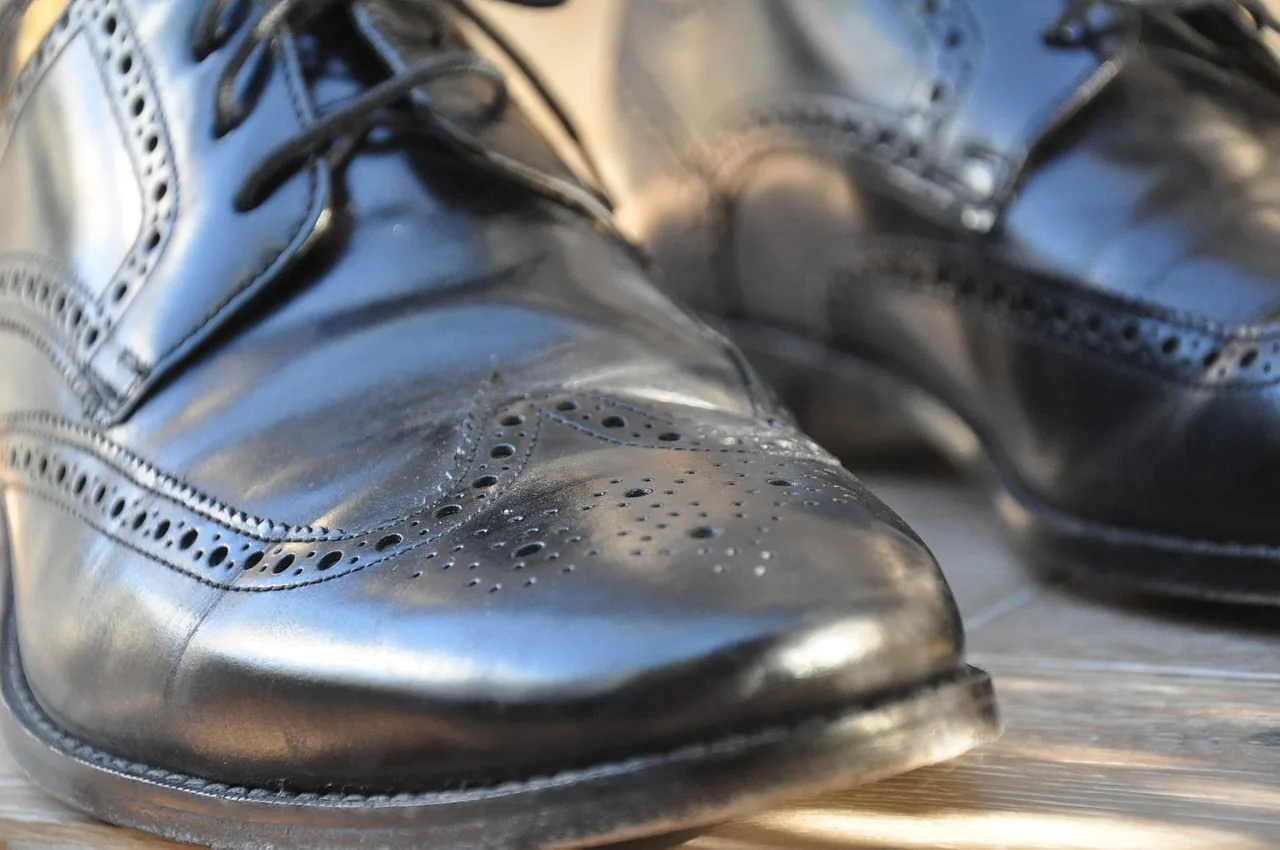
For footwear the equivalent inspection is different in detail but identical in spirit: look at how the sole is attached rather than at whose name is on the insole, which the work shoes guide covers in full.
How this shows up in a photograph
There is a direct link between construction and how a garment looks in front of a lens. A twisted garment reads as twisted on camera. A lining pulling at the hem creates a horizontal shadow.
Construction Faults on Camera
Fault
- Twisted garment
- Reads as twisted
- Lining pulling hem
- Horizontal shadow
- Weak collar structure
- Collapses under light
- Sparse buttonhole stitching
- Visible at portrait resolution
On camera
- Twisted garment
- Lining pulling hem
- Weak collar structure
- Sparse buttonhole stitching
A collar without enough structure collapses under studio lighting in a way it does not in a mirror. Sparse buttonhole stitching is visible at portrait resolution.
This is the practical reason the inspection matters for anyone whose work involves being photographed: the camera flattens everything except construction faults, which it exaggerates. The rest of that problem is covered in headshots and presentation, and the accessories that appear in the same frame are covered in accessories on a budget.
Common questions
Are expensive makers ever worth it purely for the name?
For resale value, sometimes. For how the garment performs, no. If the construction check shows nothing that a cheaper item lacks, you are buying the name, which is a legitimate thing to want as long as you know that is the purchase.
How do I compare sizes between two makers?
You do not. You compare flat measurements against a garment you own. Labels are not comparable across companies and are not stable over time within one.
Is a longer warranty a sign of quality?
It is a sign of confidence, which is weak evidence and better than none. Read what it actually covers: many exclude ordinary wear, which is the only thing likely to happen.