Costs
Part of Where is an industry dress code actually written down, and by whom?
Industry dress codes ideas sorted by effort and payoff
Industry dress code ideas ranked by effort and payoff, from a one-line handbook fix to a full sector rewrite covering named trades and safety rules.
A dress code fails in one of two ways. It says too little, so the room invents a standard nobody wrote down. Or it says too much, so the document outlaws things the work requires.
Below are eleven industry dress code ideas, sorted by how much effort each takes and what it returns. The cheap ones go first. The expensive ones are worth it only if you have already done the cheap ones.
What to take away
- Start with the one-line fixes. Naming the authority for safety gear and adding a line for religious accommodation costs nothing and removes the two most common disputes.
- Rank by effort, not by elegance. A written standard that names a supplier beats a beautifully worded paragraph about professionalism.
- Every clause needs a test. If a manager cannot check it in ten seconds, it will be enforced by mood instead.
- Pay for what you require. Required protective equipment is an employer cost under OSHA 1910.132, and that includes footwear under 1910.136.
- Keep the code shorter than the safety policy. Two documents, two audiences.
Low effort, high payoff
1. Name the authority instead of the item
Delete any sentence that declares a garment compliant. Replace it with the standard the employer assesses against and the person who signs off.
OSHA 1910.132 requires a written hazard assessment, and the employer selects equipment against it. "Steel-toe required" is a guess. "ASTM F2413 protective toe, chosen under the hazard assessment and approved by the safety lead" is a rule.
2. Add one accommodation line
Religious dress and grooming requests go through an accommodation process, not an exception to a style rule. The EEOC sets out its position on workplace religious accommodation.
One sentence pointing there prevents the worst version of this conversation, which is a manager improvising on the spot. Name the person who handles the request, and make it HR rather than the shift supervisor.
3. Write the client-facing standard once
If the role meets clients, the client's requirement usually governs. Most codes never say so, and the employee finds out on site.
Add the clause and name who supplies the client's written standard. Hospital placements answer to Joint Commission infection-control rules, food plants to FDA and USDA rules, and data center work to static-dissipative footwear and no exposed metal. Ask the staffing agency for the client sheet before day one.
4. Define business casual with two photographs
One acceptable day, one not. Photographs settle arguments that adjectives cannot. This is the single cheapest fix for the most abused phrase in the document.
Build the two looks from named pieces: a Lands' End no-iron oxford, typically $50 to $65, and a pair of Dockers khakis, usually $50 to $70. Both come in extended sizes, which matters when the code covers a whole floor.
Medium effort, medium payoff
5. Separate the trades that share a building
A hospital, a hotel and a data center can sit in one campus with three different codes. Write one section per function rather than one code for the site.
Healthcare adds infection control and closed-toe requirements, which is where Cherokee and FIGS scrubs, typically $30 to $70 a set, fit. Food service adds hair restraint and a uniform that cannot leave the premises, and Chef Works coats run about $40 to $60.
Warehousing adds ANSI/ISEA 107 Class 2 vests, roughly $10 to $20 from Radians or Ergodyne, plus foot protection under ASTM F2413.
6. Set a cost-per-wear rule for required purchases
Do not name a price. Give the arithmetic: cost divided by wears before the item fails.
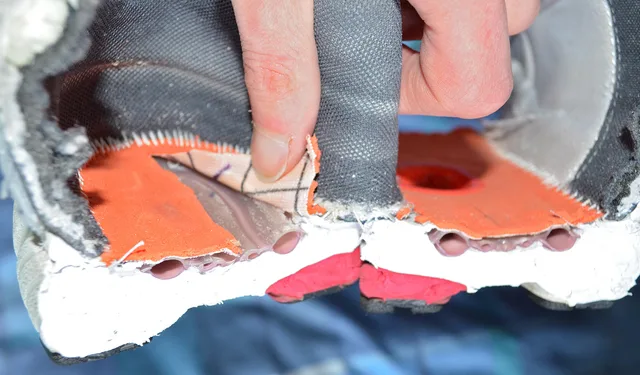
A $90 pair of boots worn 200 days is $0.45 a wear. A $40 pair that fails at the seam in 60 days is $0.67. The formula lets a reader substitute their own figures, and it kills the argument that cheap is cheaper.
Resoleable boots win that arithmetic. Red Wing 606 boots are typically $250 to $300 and can be rebuilt. Timberland PRO and Keen Utility sit lower, often $130 to $200. Dickies work pants, about $30 to $45, are the case where cheap wins instead.
7. Put the dry-cleaning schedule in writing
Wool suiting degrades faster from over-cleaning than from wear. A code that implies daily pressing is a code that shortens the life of the garment it requires.
State the interval and let the employee own the garment. Suit makers such as Suitsupply print care guidance that limits dry cleaning, and the Woolmark Company publishes the same advice for wool. Dry cleaning runs about $15 to $25 a suit in most markets, so a monthly habit costs $180 to $300 a year.
8. Publish the supplier list
Employees buy what they can find. A named supplier with a contract price removes the guesswork and usually lowers the cost.
Uniform rental companies such as Cintas, UniFirst and Aramark charge per garment per week, typically $1 to $3 in most markets, and the contract covers cleaning and repair. For one-off items, Grainger, Fastenal and MSC Industrial list ASTM F2413 boots and Class 2 vests at published prices.
This is the mechanism behind affordable industry dress codes, and it works because the employer negotiates once for everyone.
High effort, high payoff
9. Rewrite the code around the four registers
Most organizations need four levels, not one: business formal for client and executive settings, business casual for office days, a uniform standard for customer-facing roles, and a task standard for anyone in a hazard area.
The top register is described in business formal, with business casual for men and business casual for women covering the middle.
Assign roles to registers in a table. Ambiguity disappears when the assignment is written. A Brooks Brothers suit and a Cintas uniform can both be correct on the same campus, for different people.
10. Audit the code against what the room wears
Walk the floor for a week and record what people actually wear. Use whatever tally tool the site already runs, Microsoft Forms or a paper sheet.
Every gap between the document and the floor is either a clause nobody enforces or a garment the work requires. Both are findings. This is the only way to catch a code that exists in practice and nowhere else.
11. Build a temperature ladder for the climate
Humid and cold sites need different garments for the same role. Four rungs work: indoor climate-controlled, indoor uncontrolled, outdoor short exposure, outdoor full shift.
Each rung names a layer, not a brand. A Smartwool or Patagonia Capilene base layer, a fleece mid layer, and a shell such as the Carhartt duck jacket, typically $100 to $130, cover most of the year.
Insulated high-visibility outerwear from Ergodyne covers the full-shift rung. Footwear sits on its own rung because it is specified separately, and the reasons are set out in the guide to work shoes.
The ranking, side by side
| Idea | Effort | Payoff | Who owns it |
|---|---|---|---|
| OSHA 1910.132 authority clause | One hour | Removes compliance guesswork | Safety lead |
| EEOC accommodation line | One hour | Prevents the worst dispute | HR |
| Joint Commission and FDA client clause | One hour | Stops on-site surprises | Account lead |
| Two photographs (Lands' End, Dockers) | Half a day | Ends daily argument | HR |
| Function sections (scrubs, chef coats, hi-vis) | One week | Fits multi-trade sites | Operations |
| Cost-per-wear rule (Red Wing 606 math) | One week | Lowers real spend | Procurement |
| Written cleaning interval (Woolmark) | One week | Extends garment life | HR |
| Published supplier list (Cintas, Grainger) | Two weeks | Cuts unit cost | Procurement |
| Four-register rewrite | One month | Removes ambiguity | HR and operations |
| Floor audit | One month | Finds the unwritten code | Operations |
| Climate ladder (base, mid, shell) | One season | Fits the actual weather | Safety and HR |
Where the rules come from
Safety requirements are set by OSHA and by the employer's written hazard assessment, not by a style guide. Accommodation requirements come from the EEOC and from your state civil-rights agency.
Deduction rules for required clothing vary by jurisdiction. Under the Fair Labor Standards Act, an employer may deduct the cost unless it drops pay below minimum wage or cuts into overtime pay. California Labor Code 2802 requires employers to reimburse expenses the employee must incur.
Questions about a specific deduction belong with your state labor agency or an employment attorney, not with a page like this one. The wider patterns by sector are described in the guide to industry dress codes.
Common questions
Which idea should a small employer do first?
Ideas one through four. Together they take about two days and remove the disputes that generate the most complaints. The expensive rewrites only pay off once the cheap fixes have shown you where the real gaps are.
Does a dress code have to cover every role?
No, but it has to say which register each role falls into. A code that describes only office wear leaves the warehouse, kitchen and front desk to improvise, and improvisation is where the unwritten code forms.
Can an employer require employees to buy their own safety footwear?
That depends on the hazard assessment, the standard, and the law in your state. OSHA 1910.136 sets the performance requirement for protective footwear; who pays is a separate question. Read the OSHA standards linked above and ask your employer's safety contact. For a question about your own situation, ask your state labor agency or an employment attorney.
How often should a code be reviewed?
Once a year, and after any change to the hazard assessment or the client contract. Both events change what the code is supposed to say, and a code that lags either one is enforced by memory.