Features
Part of Women's professional wear: a weekly wardrobe plan
Affordable women's professional wear: capsule planning
Affordable women's professional wear built around a small capsule: choose a working set, prioritize fit and compatibility, and plan for repeated outfits.
A small working set is one approach to affordable women's professional wear. Plan around repeat use, fit and pieces that work together.
The cheapest wardrobe is not the one with the lowest prices in it. It is the one with the fewest items that get worn the most times. That sounds like a slogan until you do the arithmetic, at which point it stops being a preference and starts being a budget.
What to take away
- Cost per wear is the only number that matters, and a large cheap wardrobe usually loses to a small careful one on that number.
- Build outward from the two things worn every day, the shoes and the outer layer, rather than inward from tops.
- Repeating outfits is noticed far less than people fear, but not by nobody, and that asymmetry is worth naming rather than denying.
The arithmetic that makes a capsule cheaper
Take any garment and divide what it cost by the number of times you will actually wear it before it leaves the wardrobe. A cheap top worn six times is expensive. A well-fitting trouser worn two hundred times is not, almost regardless of what it cost. For equal sticker prices, the top's cost per wear is price / 6 and the trouser's is price / 200: the top costs over thirty times as much per wear (200 / 6 = 33), because two hundred wears spreads that price across more than a working year while six wears retires the garment before it earns its keep.
Cost Per Wear Arithmetic
Cheap top
- Wears
- Six times
- Cost per wear
- High
- Verdict
- Expensive
Well-fitting trouser
- Wears
- Two hundred times
- Cost per wear
- Low
- Verdict
- Not expensive
Large wardrobes push every item toward the small end of that division, so with twenty tops in rotation, no single one gets worn often enough to earn its price. Tops bought for a specific occasion get worn once.
With six, each is in play weekly, wears out visibly, and gets replaced deliberately rather than accumulating. A wardrobe mistake bought under time pressure is often the most expensive kind, and repair cost varies widely.
There is a second effect that is harder to see. A crowded wardrobe hides the gaps. You end up owning eleven things that nearly work and nothing that definitely works for the meeting on Thursday, so you buy again under time pressure, which is when the worst purchases happen.
Build from the bottom and the outside in
Most people build a wardrobe from tops, because tops are cheap and satisfying to buy. It is the wrong order. The items that get seen every day, take the most physical wear, and are hardest to substitute are the shoes and whatever goes over everything else.
Build Order: Shoes and Outer Layer First
- Shoesworn every working day, set formality
- Outer layerworn most days, pulls outfit together
- Trousers or skirttwo or three days a week
- Topsrotating, provide variety at low cost
- Accessoriesoptional, change reading of outfit
| Layer | How often it is worn | What it does for the rest |
|---|---|---|
| Shoes | Every working day | Sets the formality of everything above them and fails on a fixed schedule |
| Outer layer or jacket | Most days, or on demand | Pulls a mismatched combination into something deliberate |
| Trousers or skirt | Two or three days a week each | Carries the fit of the whole outfit |
| Tops | Rotating | Provides variety at the lowest cost per item |
| Accessories | Optional | Changes the reading of a repeated outfit for very little money |
Buying in that order means the expensive decisions get made once and the cheap decisions get made often. Buying in the reverse order means a drawer full of tops and nothing to wear them with. The work shoes guide covers how to judge the first row, and work dresses covers the case where one garment does the job of two.
What a small wardrobe actually needs
A working set is smaller than most people expect and more specific: about a dozen garments, listed below. The test for any item is whether it goes with at least three things you already own. If it goes with one, it is not a wardrobe piece, it is an outfit, and outfits are what make wardrobes expensive.
Small Wardrobe Working Set
- Two bottoms in repeating neutral colors
- Three or four tops under same layer
- One structured layer reading as deliberate
- One ordinary-day shoe, one not-ordinary shoe
- One bag holding what you carry
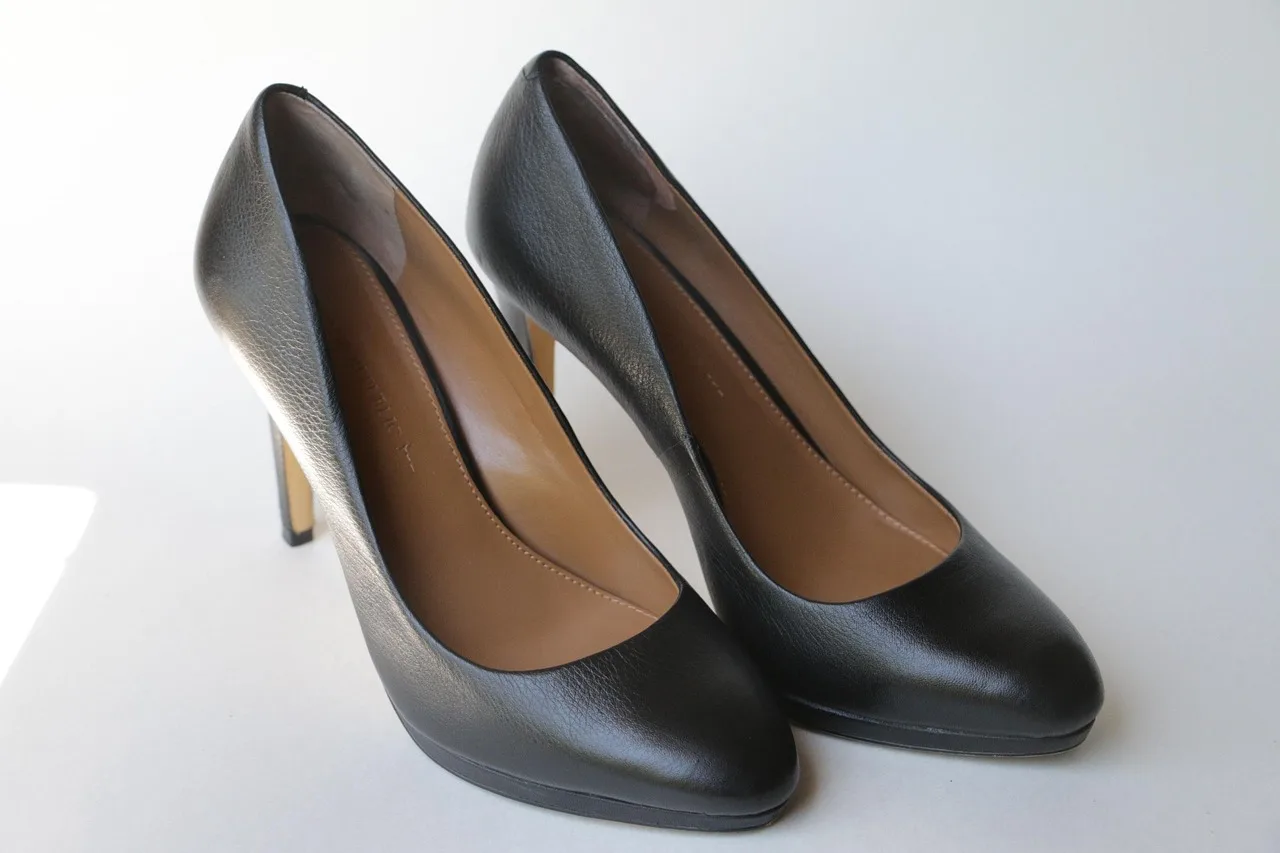
- Two pairs of shoes that cover every working dayone closed-toe flat or low heel for the office, one weather-and-commute pair for the walk in.
- One outer layer that reads professional over everything below it, sized to fit over a blazer.
- Two to three bottoms (trousers, a skirt, or a dress that stands in for both) in neutral cloth that the shoes and outer layer already complement.
- Six tops, not twenty, chosen so each one pairs with at least three of the bottoms and the outer layer.
- One set of small accessoriesa watch, stud earrings, a belt, the things that signal a different day without a different garment.
Add to that only when a genuine gap has caused a problem twice. The second time is the evidence. The first time is usually an unusual day.
Repetition, and the part that is not symmetrical
The standard reassurance is that nobody notices what you wore last Tuesday. It is mostly true. People are poor at recalling other people's clothes and good at recalling whether someone looked put together.
Tolerance is not the same for everyone. The acceptable range is narrower for women, and small departures read as judgment, not taste.
Grooming and appearance are employment issues often enough that the EEOC addresses them directly. The EEOC compliance guidance on race and color discrimination includes a section on appearance and grooming standards; appearance rules generate disputes, and those disputes fall unevenly.
Pretending the two situations are identical does not help anyone plan. What follows from the asymmetry is practical, not decorative. A narrower tolerance raises the cost of a bad guess, which is an argument for fewer, better-fitting items rather than more of them.
It also means the variation that does the most work is the cheapest kind: a different layer, a scarf, a change of shoes. The base of the outfit can repeat almost indefinitely if what sits on top of it does not.
None of that is a prescription about how anyone ought to look. It is a description of what a room is doing while you decide how much of it to accommodate.
Which pieces carry the capsule
Spend where failure is expensive and visible. Skip where it is neither. In practice that means spending on the shoes, the outer layer, the trousers or skirt that carry the fit, and alterations; and saving on tops and accessories, which provide variety at the lowest cost per item.
Spend Versus Skip
Worth the money
- Alterations
- Anything worn weekly
- Shoes
- Resolable, survive winter
- Layer
- One that holds shape
- Variations
- Skip
- Hypothetical
- Skip
- Cleaning
- Skip
Not worth the money
- Alterations
- Skip
- Shoes
- Skip
- Layer
- Skip
- Variations
- Third variation of existing
- Hypothetical
- Bought for hypothetical event
- Cleaning
- Needs professional cleaning every wear
Not worth the money: a third variation of something you already own, anything bought for a hypothetical event, and anything that needs professional cleaning after every wear unless the job genuinely requires it. The label settles that before you pay, because under the FTC care labeling rule it has to state a complete regular care procedure.
The one purchase that reliably beats its price is having something altered. A garment bought at the low end and fitted properly reads better than an expensive one hanging wrong, and the difference is visible from across a room. Affordable women's professional wear is stocked at Target, Old Navy, Uniqlo, J.Crew Factory, and Banana Republic Factory; structured pieces worth a second life surface on ThredUp and Poshmark, where construction quality is visible on inspection and the same build costs far less than new. Assume a hem, a waist take-in, or a sleeve adjustment is part of the real price of any off-the-rack purchase.
Two things sit outside this piece. Working out what a specific office expects before you spend anything is its own problem, handled in doing business casual on a budget. The wider category, including the formal end that a capsule does not cover, sits in the women's professional wear overview. Neither changes the arithmetic above; they set the register you spend inside.
Common questions
How many items is a working wardrobe?
The list above comes to about a dozen garments: two pairs of shoes, one outer layer, two to three bottoms and six tops, plus a bag and a set of small accessories. That is fewer than most people own and more than the minimalist versions suggest. To check your own number, count how many distinct things you wore in the last month. That number, plus a small margin, is your real wardrobe. Everything else is storage.
Does buying cheap and replacing often ever make sense?
Sometimes, for items destroyed by the job rather than by time. If a garment is going to be ruined in a year regardless of quality, paying for durability buys nothing. That is a narrow case, and it does not extend to shoes or to anything structured.
Is it worth buying second hand?
For structured pieces it often is, because construction quality is visible on inspection and the price of the same construction new is much higher. For a first interview outfit, university career services also point to free sources such as Dress For Success and campus career closets, alongside local low-cost and thrift stores. Check the seams, the lining and the shoulder before anything else, and assume alterations are part of the cost.