Rules
Part of Women's professional wear: a weekly wardrobe plan
Choose women's professional wear when you cannot try it on
Choose women's professional wear when you cannot try it on: read flat measurements and return terms, then run the six-movement fit test at home.
Choosing is not the same as liking. A garment can be well made, well priced and completely wrong, because the question is never "is this good" but "does this close a gap I actually have". Without a fitting room, that question has to be answered on paper.
The method is short. Define the gap and the job, measure instead of trusting sizes, and read the return terms as part of the specification. Run the fitting at home when the parcel arrives, and decide before the emotion of the purchase does it for you.
What to take away
- Write the gap down before you order. A garment bought against a named gap gets worn; one bought against a mood competes with what you already own.
- Sizes are not comparable between makers. A measurement taken from a garment you already own is.
- Treat the return policy as part of the specification. It is the only part of the decision you can reverse.
- When the parcel arrives, judge fit by moving, not by standing in front of a mirror.
Write the order before you open the basket
Lay out what you wore over the last month and sort it by how often each piece came out. The gap is the list of days for which you have nothing and improvise. Write it as a sentence with a day in it, not as "I need a jacket".
A good sentence is "I have nothing for a full day of client meetings that starts cold and ends warm". It rules out most of a shop floor, and online it rules out most of the pages. Then give every item one of four jobs, because the job decides what you accept.
Four Jobs of a Garment
Foundation
- Survives
- Worn one day in three
- Spend on
- Cloth and construction
Layer
- Survives
- On/off, carried, sat on
- Spend on
- Recovery and weight
Statement
- Survives
- Being remembered
- Spend on
- Buy it cheaply
Repair
- Survives
- One specific failure
- Spend on
- Precision of match
| Job | What it has to survive | Where to spend |
|---|---|---|
| Foundation | Being worn one day in three, all year | Cloth and construction |
| Layer | Coming on and off, being carried, being sat on | Recovery and weight |
| Statement | Being remembered, which limits repetition | Nothing much; buy it cheaply |
| Repair | One specific failure in the current set | Precision of the match |
A statement piece bought at foundation prices is an expensive error. It gets worn rarely by definition, because being remembered is exactly what stops you wearing it next week.
Take measurements, not sizes
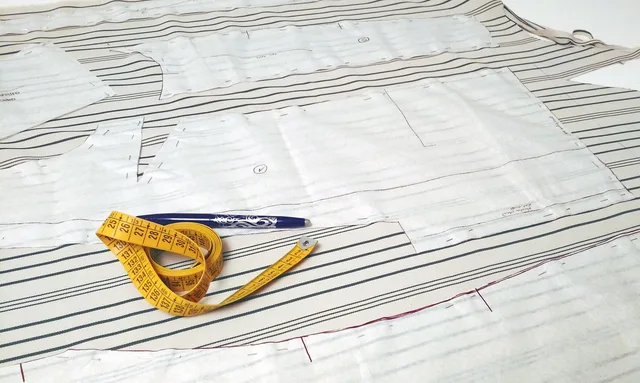
Use a measurement taken from a garment you already own and like, held against the flat garment. Sizes are not comparable between makers, and they are not comparable within a maker across lines. The flat measurement means the same thing everywhere.
Check the shoulder first. The shoulder seam should sit at the outer edge of your shoulder, not past it and not inside it, and it is the one point where an alteration is expensive to reach. The shoulder decides so much of women's professional wear that a wrong one is a reason to leave the garment out.
Read the return terms as part of the specification
The return policy is the only part of the decision you can reverse, so read it before the product description. Write the return date somewhere you will see it, and treat that date as the deadline for deciding.
Buying a garment to think about it is legitimate only when the return terms genuinely allow it. Order what the measurements support, plan to return most of it, and treat the shipping cost as the price of the fitting room.
Unworn garments with the tags on are the largest single category of wasted wardrobe money, and every one of them was bought at the point of deciding. The cost of a wardrobe mistake is the reason to decide early.
When the parcel arrives: six movements
Run the fitting the day the parcel arrives, before any tag comes off. Appearance is checked in a second, so test movement instead. Fit takes six movements, and each one catches a different failure.
Six-Movement Fit Test
- Reach arms forwardback should not pull
- Raise arms to shoulder heightgarment lifts and settles
- Sit downcheck lap, waist, front closure
- Cross one legreveals real range
- Take a full stridenot a shop step
- Turn and look at the back over shoulder
- Reach both arms straight forward as if for a keyboard. The back should not pull across the shoulder blades and the jacket should not ride up at the hem.
- Raise both arms to shoulder height. The garment should lift with you and settle back down when you lower them.
- Sit down. Then look at the lap, the waist and the front closure. A button that gaps seated will gap in every meeting.
- Cross one leg, if the garment covers the leg. This is where a narrow skirt or a slim trouser reveals its real range.
- Take a full stride. Not a shop stepthe stride you use crossing a road.
- Turn and look at the back over your shoulder. Most people never see the view that everyone else has.
The cloth and the label come before the price
Take a handful of the cloth, squeeze it hard for a slow count of ten, and let go. What is still there after a few seconds is what a room will see after lunch. Do this before you look at the price, because after the price you will forgive it.
Ten-Second Cloth Test
- Take a handful of the cloth
- Squeeze hard for a slow count of ten
- Let go and wait a few seconds
- See what is still there
- Read fiber content and care instructions together
Then read the fiber content and care instructions together. Under the federal textile rules, a covered product must be labeled to show the fiber content.
The Care Labeling Rule requires manufacturers and importers to attach care instructions to clothing, so use that information rather than guessing. If you will not dry clean a garment, it is not a dry-clean garment, however good it looks.
Keep it, send it back, or alter it
Three outcomes are legitimate. Keep it. Send it back. Or keep it with a named alteration and a budget for that alteration, decided now rather than later.
Decide or Leave It
Is the garment eighty percent right?
Ask what the missing twenty percent is
If length, waist or sleeve -> A tailor closes it cheaply
If the garment is eighty percent right, ask what the missing twenty percent is. If it is length, waist or sleeve, a tailor closes it cheaply. If it is shoulder, cloth or shape through the body, it stays missing.
An alteration is worth planning on the day you decide if it is one of the routine ones and the budget is in hand. If the plan is to have it done eventually, send the garment back. Eventually is where garments go to hang unworn.
Where measurements stop working
A dress compresses several of these decisions into one garment, which is an advantage and a risk, and the trade is worked through in the guide to work dresses.
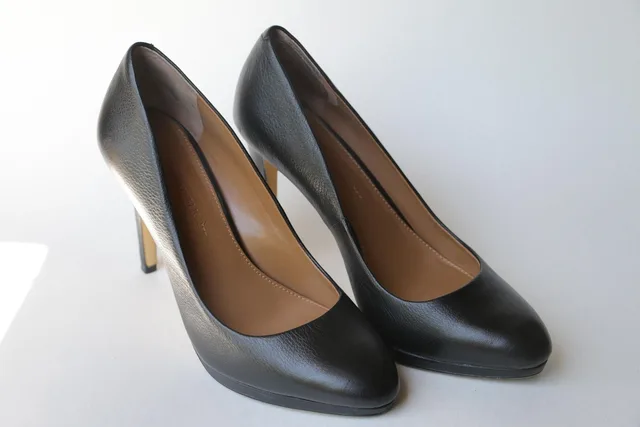
Shoes invert the order entirely, because fit there is a matter of shape rather than measurement and the construction decides the lifespan. That is covered in the guide to work shoes, so the flat-measurement method above is for clothing only.
Common questions
How many garments should I order at once?
One gap at a time. Ordering a coordinated group in one go feels efficient and produces a set that ages out together, leaving you with the same problem again on the same day.
Are sizes at least consistent within one maker?
No. Sizes are not comparable between makers and are not comparable within a maker across lines, which is why the measurement from a garment you own does the work.
When should the fitting be done?
The day the parcel arrives, before any tag comes off, and with the return date already written down. A fitting done a week later is a fitting done after the decision has made itself.