Rules
6 things about work shoes worth your time
Work shoes from the ground up: how the sole is attached decides repairability, what the upper does over time, and why rotation beats spending.
Shoes are the only thing you wear that carries your weight. Every other garment hangs.
A shoe is loaded, flexed and struck against the ground several thousand times a day. That is why it wears out first, why its condition is legible from across a room, and why it deserves different attention from anything above the ankle.
This guide works from the ground up: how the sole is attached, what the upper is made of, what the walking part of your day actually asks, and how to keep a pair in service for years rather than months.
What to take away
- How the sole is attached decides whether the shoe can be repaired. That single construction fact matters more than anything printed on the insole.
- Buy for the distance you walk, not for the room you sit in. The room sees condition; your feet feel the pavement.
- A pair rested for a day between wears lasts far longer than the same pair worn daily. Two pairs in rotation outlast three pairs worn in sequence.
How the sole is attached
Turn the shoe over and look at the join between sole and upper. There are three broad ways it is made, and they predict the shoe's whole life.
What you see
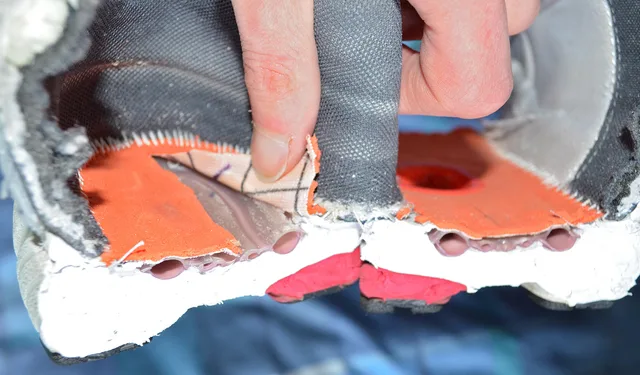
- Glued (cemented)
- A clean edge with no stitching; the sole simply meets the upper
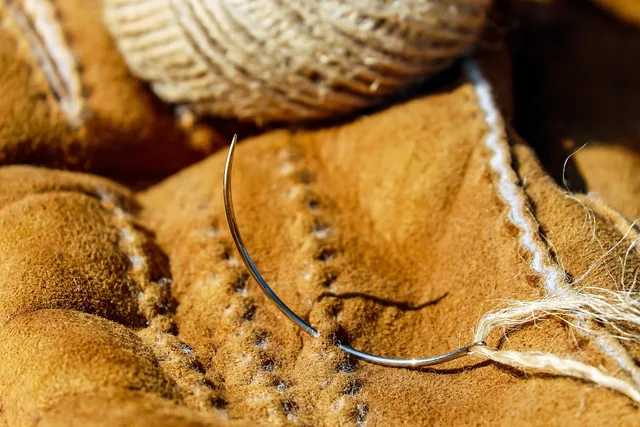
- Stitched through
- A row of stitching visible on the sole's edge, going through the upper
- Welted
- A strip of leather running around the shoe between upper and sole, stitched to both
What it means
- Glued (cemented)
- Light, flexible, and usually not resoleable. When the sole wears through, the shoe is finished
- Stitched through
- Resoleable by a competent repairer; a middle path in weight and cost
- Welted
- Fully resoleable, repeatedly; heavier, stiffer at first, and the longest-lived
A welted shoe can be resoled several times. Each resoling returns a shoe already broken in to your foot. A glued shoe cannot.
Over five years the welted shoe is usually cheaper. The glued shoe is usually lighter and more comfortable on day one. Neither is wrong.
Know which you are buying, because a shop will rarely tell you.
The upper, and what it does over time
Leather is the default for a reason: it stretches to the foot, breathes, takes polish, and shows wear as a patina rather than as damage. It also needs a period of breaking in, which is why a new pair worn for the first time on an important day is the most common footwear mistake there is.
Coated and synthetic uppers do not stretch and do not breathe. They look the same on the last day as the first, right up until they crack, which they do at the flex point across the toe. They are the right choice for weather and the wrong choice for a long day in a warm building.
Suede and other napped finishes read as a step down in formality. That is a register question, not a quality one. The men's side is in the guide to business casual for men, and it holds for anyone.
In wet weather they are the first casualty.
Buy for the distance, not the room
Before choosing a shoe, count the walking. The walk from transport, the stairs, the corridor to the far meeting room, the lunch errand, the walk back. Most office days involve more distance than people credit, and the shoe has to cover all of it, not just the part where you are seated.
That count changes three decisions.
Buy for the distance
- Heel height is a function of distance.The higher the heel, the shorter the comfortable range. Match the height to the longest walk in the week, not the shortest.
- The sole surface matters on smooth floors.Polished stone and sealed concrete are common in office buildings, and a hard, smooth sole on a smooth floor is a slip waiting for a wet day. OSHA's guidance on slips, trips and falls is written for hospitals, where floors are hardest, but the point about footwear and floor surface transfers to any building with a lobby.
- Fit is judged at the end of the day.Feet swell over hours of standing. Try shoes on in the afternoon, and walk in them on a hard floor rather than the shop's carpet.
For roles with genuine hazards, protective footwear is a separate subject. Its requirements are set by the employer's hazard assessment, not preference.
It is covered by the federal foot protection standard, not this page.
Rotation, rest and repair
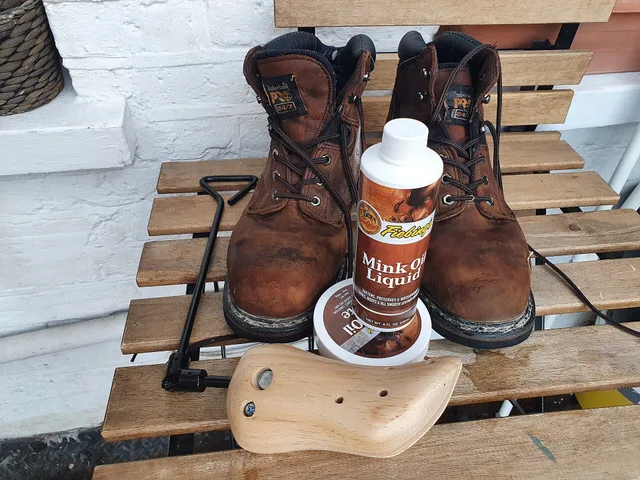
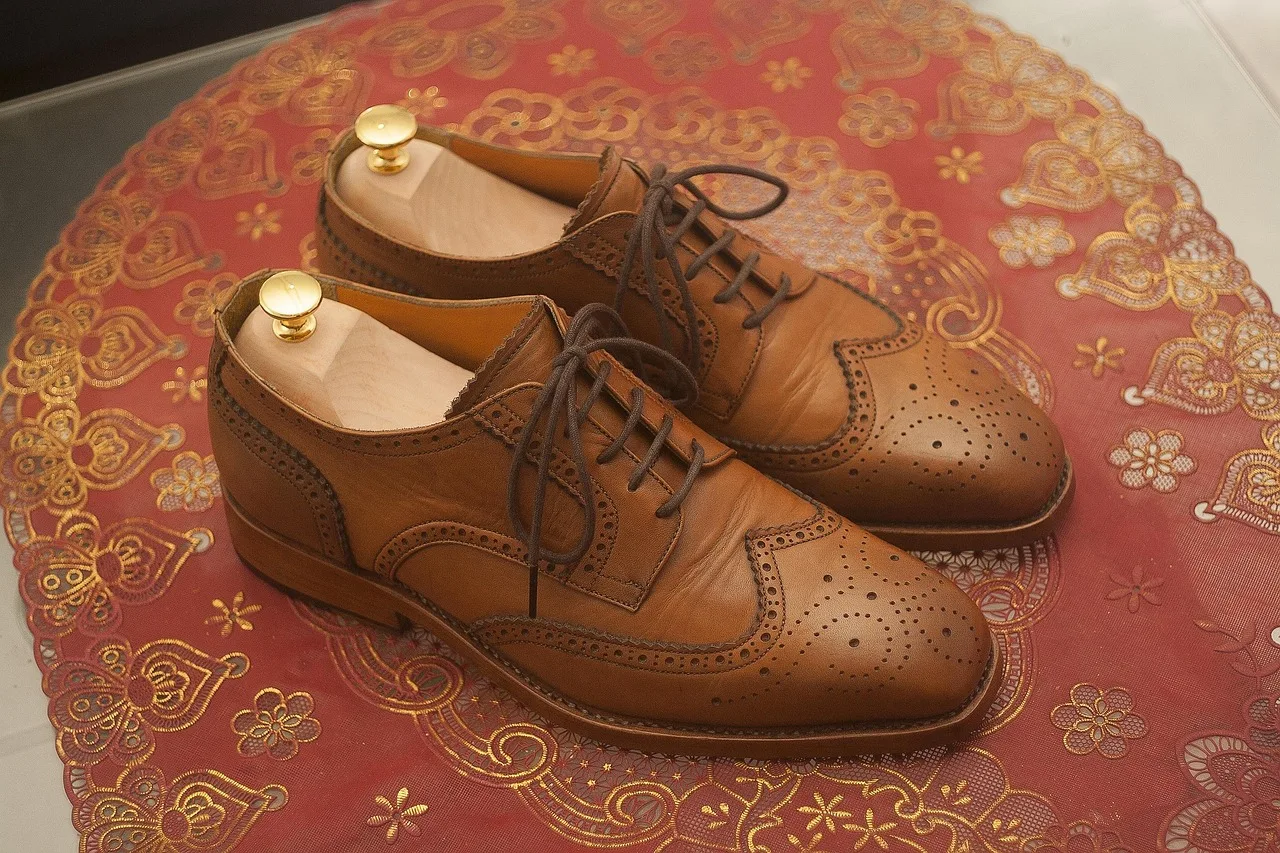
A shoe absorbs moisture through the day and needs a day to release it. Worn daily without rest, the lining stays damp, the leather stiffens and the sole compresses unevenly. Worn on alternate days, with a shaped tree inside overnight, the same pair lasts far longer.
That makes two pairs in rotation the minimum for a working week, and it is not a luxury: two pairs alternated will outlast three pairs worn one after another into the ground. Add a third pair for weather, and the working set is complete.
Repairs, in order of how often they are needed:
- Heel tips. They wear first and are replaced cheaply and quickly. Do it before the wear reaches the heel block.
- Polish and conditioning. Not a repair, but the thing that prevents most of them. Leather that is fed does not crack.
- Resoling, on a shoe whose construction allows it. Do it when the sole is thin, not when it is through; a hole lets water reach the insole and that is a different repair.
- Relining and restitching, worth it on a welted shoe and rarely on anything else.
The set, rather than the pair
One pair cannot cover a working week. The specs conflict. A slim smooth sole reads formal, yet it cuts grip on a wet floor.
A flexible sole suits stairs but fails a day standing at a counter. A breathable upper helps in a warm room and suffers most in rain.
Think in slots, not pairs: a default pair for ordinary days, a second in the same role so the first can rest, a weather pair to absorb damage, and a plain formal pair worn rarely enough to last years.
Three pairs will usually cover it, because one can hold two slots. The weather pair should never double up.
Condition is what the room reads
From across a room nobody can tell what a shoe cost. Everybody can tell whether it has been cleaned. Scuffed toes, worn heels, salt marks and a dull finish are the first things noticed and the last things the wearer thinks about, which is why a well-kept ordinary shoe outperforms a neglected expensive one on every occasion.
That has a practical implication for where money goes. Spend on construction, which decides the life of the shoe, spend time on condition, which decides what the shoe says, and spend little on anything else.
The whole outfit is read at the level of its least formal element. The shoe is where that judgment most often lands, a point made from both directions in business formal and in business casual for women.
Common questions
How do I know if a shoe can be resoled?
Look for stitching at the edge of the sole. A glued shoe has none. If you are unsure, ask a repairer rather than the shop; the repairer has no reason to flatter the shoe.
How long should breaking in take?
Several short wears at home before any full day. Leather that needs more than that was the wrong size or the wrong shape for your foot, and no amount of wearing will fix a shoe that is too narrow at the widest point.
Is a heavier sole less formal?
Yes, reliably. Weight and visible stitching move a shoe toward the casual register, and a slim, polished sole moves it toward formal. The same shoe cannot do both, which is why the working set is at least two pairs.
Does the same advice hold for men's and women's shoes?
The construction facts do, entirely. The heel question applies more often on one side than the other, and where it does, the rule about distance applies with more force. The rest of the wardrobe the shoes sit under is covered separately in men's professional wear and women's professional wear.
In this guide
- Filling out a work shoe rotation: default, weather, formal, distanceFifteen work shoes ideas arranged as slots to fill: default, weather, formal and distance pairs, and how to stagger buying so the set never dies at once.
- The one sole check that separates good cheap work shoes from bad onesAffordable work shoes hinge on one check, whether the sole is stitched or glued, plus fitting from the heel and resting a pair between wears.
- Work shoe families sorted by closure: lacing, loafers, boots and courtsWork shoes styles by closure and coverage: lacing, loafers, monk straps, boots and courts, what each adjusts to, and the one care habit each needs.
- A work shoe care calendar: daily, weekly, monthly and twice a yearA work shoes checklist set out as a calendar: daily, weekly, monthly and twice-yearly tasks, plus the procedures for a soaked shoe and for salt.
- Why a work shoe review cannot judge fit the way a thirty-day trial canWork shoes reviews cannot judge fit, so run your own: a thirty-day trial, what to record each day, and how to read the wear pattern on a worn sole.
- How to choose work shoes: roles, rotation and wear countsHow to choose work shoes: give each pair a role, rotate two pairs, count wears and repairs, and know when a cheap pair is the right buy.
- Twenty working days and what each one demands of your work shoesTwenty working days, from desk days and client events to site visits, and what each demands of a work shoe: distance, floor, standing time, register and hazards.