Maintenance
Business formal: what the experienced already know
Business formal in practice: the colors, cloth, shirts and shoes that meet the standard, when to wear them, and how to keep an outfit ready.
Business formal is the one register of office dress that still has rules you can write down. That makes it easier than anything else on this site, and it is worth being clear about why, because the same rules also make it the register where a single wrong element is most visible.
Everything else in workplace dress is a range. Formal is a specification: matched cloth, a dark and sober palette, smooth rather than textured surfaces, closed shoes, and a small set of accessories that have jobs.
Get those right and there is very little left to argue about. Get one wrong and the whole outfit is read at the level of the mistake.
What to take away
- Formal is defined mechanicallymatching, dark, smooth, closed. Each of those words rules something out, and that is the point of them.
- The outfit is judged by its least formal element. One item from a different register costs you the whole effect.
- The situations that call for it are few and predictable. Prepare for them in advance, because they rarely give notice.
What formal means, word by word
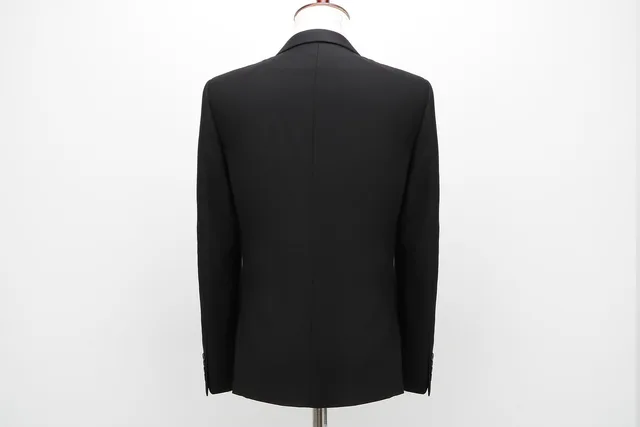
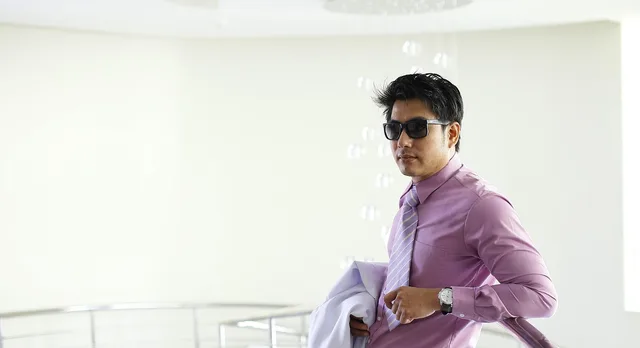
Matching. Jacket and trouser, or jacket and skirt, cut from the same cloth at the same time. A matched skirt or trouser suit, or a sheath dress with a matching jacket, meets the specification. Two garments that nearly match are worse than two that clearly do not, because the near miss reads as an error rather than a choice. For a men's suit, pair it with a white or pale shirt with a spread or semi-spread collar and a restrained silk tie; an open collar is a step down. A dress with a jacket in the same cloth counts; a dress with a jacket in a different cloth is one notch down.
Dark and sober. Navy, charcoal gray, and black are dependable choices: they are dark without drawing attention away from the person. This is not aesthetic preference. The purpose of formal dress is that the person is read and the clothes are not.
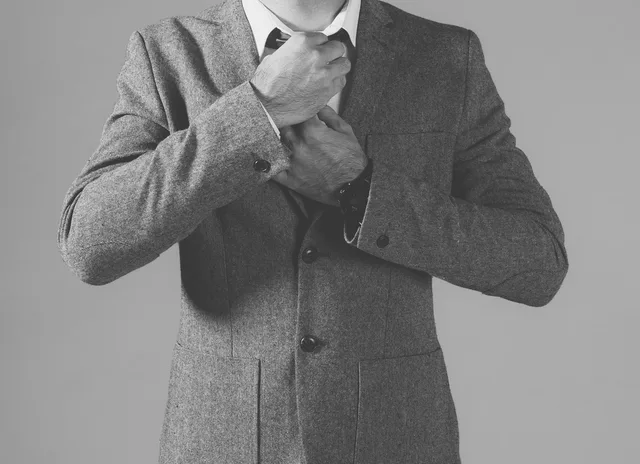
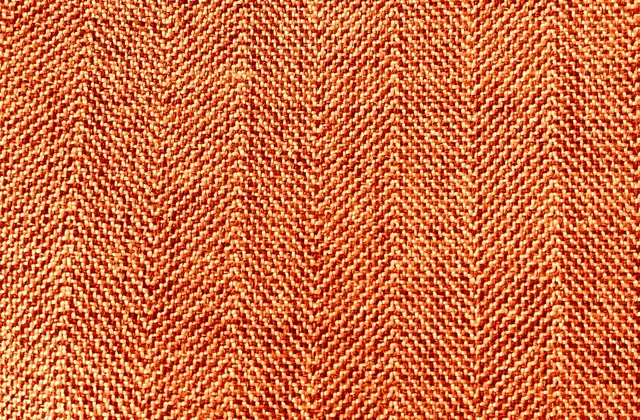
Smooth. Fine, flat cloth with a closed surface. Worsted wool suitings, often labeled Super 100s or Super 130s, are examples; those labels describe fiber fineness, not overall garment quality. Tweed, flannel, slubbed linen, velvet, brushed finishes, and anything with a nap or prominent texture break the smooth surface and belong to a less formal register.
Closed. Shoes that cover the foot, in dark polished leather. A plain-toe or cap-toe Oxford is the safest choice; a simple derby is a step less formal and depends on the setting. Prefer a slim leather sole and dark laces. Wear dark socks that coordinate with the trousers and cover the leg when seated. Open shoes, heavy soles, prominent decorative stitching, and matte finishes all read as a step down, whatever the rest of the outfit is doing.
Accessories with jobs. A belt that holds the trouser, ideally in leather coordinated with the shoes; a watch that tells the time; a bag that carries the papers. Keep the buckle and watch restrained. A pocket square is decorative rather than functional, so leave it out under this rule.
The register is described from the men's side in men's professional wear. For a men's formal outfit, start with a matched navy or charcoal suit, a white or pale shirt, a spread or semi-spread collar, and a silk tie; the same construction and cloth questions decide whether a suit reads as formal or merely dark.
From the women's side, women's professional wear describes a wider range of garments that can meet the specification, including a matched skirt or trouser suit and a sheath dress with a matching jacket.
The situations, and what each one needs
Formal dress is rarely a daily requirement now. It is a situational one, and the situations repeat.
Formal situations and requirements
Situation
- Interview
- Matched, pressed, worn once
- Board meeting
- One notch above ordinary
- Court hearing
- Most conservative version
- Formal dinner
- Survives morning to evening
- Funeral
- Dark, matched, plain, quiet
What has to be true
- Interview
- First wear on the day
- Board meeting
- Over-reaching into evening dress
- Court hearing
- Anything that draws the eye
- Formal dinner
- Daytime shoes in evening room
- Funeral
- Treating as ordinary meeting day
Where people go wrong
- Interview
- Board meeting
- Court hearing
- Formal dinner
- Funeral
| Situation | What has to be true | Where people go wrong |
|---|---|---|
| Interview with a formal employer | Everything matched, pressed, and already worn once so nothing surprises you | Wearing the outfit for the first time on the day |
| Board, investor or regulator meeting | One notch above the room's ordinary day; nothing new, nothing that needs adjusting | Over-reaching into evening dress |
| Court, tribunal or formal hearing | The most conservative version of everything you own | Anything that draws the eye, including jewelry with no job |
| Formal dinner or ceremony that follows the working day | An outfit that survives from morning to evening, or a planned change | Wearing daytime shoes into an evening room |
| Funeral or memorial in a professional capacity | Dark, matched, plain, and quiet | Treating it as an ordinary meeting day |
The column on the right is the useful one. For a meeting with the Securities and Exchange Commission (SEC) or a hearing in a U.S. District Court, follow the host's or court's stated rules first; business formal does not replace a court dress code or entry requirements. For an interview or funeral, check the employer's or family's expectations and have the complete outfit ready, pressed, and appropriate to the setting.
The least formal element sets the level
This rule does more work than any other. A room reads an outfit at the level of its most casual component, and it does so instantly and without being able to say why.
Build from bottom up
- Shoes first
- Then cloth of main garments
- Then the collar
- Then accessories last
A matched suit over a soft, open-collar shirt reads as business casual with a jacket. A dark dress and jacket over heavy-soled shoes reads as an outfit that was nearly formal.
A polished shoe under a trouser with visible texture reads as a shoe from another outfit. In each case, the effort spent on formal elements is not recovered.
So build from the bottom up. Shoes first, because they are the element people most often get wrong and the one that is hardest to fake with condition. Then the cloth of the main garments. Then the collar. Then, and only then, the accessories. Each step should be at least as formal as the one before it.
Condition is part of the specification
Formal cloth shows condition more than any other kind, because it is smooth and dark and has nowhere to hide a crease, a mark or a shine. A suit that was right when it was bought can be wrong by the second wear if it has not been rested and pressed.
Condition habits
- Hang on wide hanger, rest a day
- Press with steam, press trouser crease
- Brush after wear, clean rarely
- Polish shoes to avoid scuffs
Three habits cover most of it.
- Hang the garments on a hanger wide enough to hold the shoulder, and give them a day between wears so the cloth recovers.
- Press with steam rather than a dry iron, and press the trouser crease, because that single line is what the room reads as "pressed."
- Brush cloth after wear and clean it rarely. Professional cleaning is hard on a structured garment, and most of what it is asked to do is pressing, which can be bought separately. The FTC care labeling rule, 16 CFR Part 423, requires complete regular-care instructions and warnings when a care procedure could harm the garment. The instructions cover applicable washing or drycleaning, bleaching, drying, ironing, and professional-care steps.
Shoes are the same story with more force, since polished leather shows every scuff. A shoe that is clean and polished outperforms an expensive one that is not, every time.
The part a dress expectation does not decide
One class of question sits outside any formal standard, no matter how strictly held. The Equal Employment Opportunity Commission (EEOC) enforces Title VII of the Civil Rights Act of 1964, which requires reasonable accommodation of sincerely held religious practices unless accommodation would impose an undue hardship. Raise a request promptly with the employer; if it is denied, a worker can contact the EEOC and may file a charge of discrimination.
Raise it early and in writing with whoever handles those requests, not on the day of the event.
Where formal borders the ordinary day
Most offices that once expected formal dress now expect something looser, and the boundary between the two is where the practical difficulty lies. If your building has a second, stricter setting for certain days, the question is how far to move on those days, and the honest answer is: one notch, not three.
The formal register below, and the specific ways it goes wrong for men, is set out in business casual for men. The equivalent for women, where the band is narrower and the reading faster, is in business casual for women.
Together they cover the ordinary day, but this page covers days that are not ordinary. The rule for those: prepare before they are announced.
Common questions
Does formal mean a suit, always?
For men, in practice, yes. For women, a matched skirt or trouser suit is the direct equivalent, and a dress with a matching jacket meets the same specification. The mechanism is the same in both cases: matched cloth, dark, smooth, closed shoes.
Can a dark suit with a textured cloth be formal?
It can be smart, and it can be right for the building's ordinary day. It cannot be formal, because texture is the marker of the casual register and the room reads it as such regardless of color.
Is there a formal version of a knit?
No. Knits belong to the casual register by construction. A fine knit under a suit jacket is a business casual outfit with a good jacket on top.
How far ahead should a formal outfit be ready?
Always. The situations that call for it, an interview, a hearing, a funeral, are exactly the ones that arrive with no notice and no time to shop. Keep one complete outfit, shoes included, in a state where it could be worn tomorrow.
In this guide
- Business formal ideas worth trying firstBusiness formal ideas 2027 built on one plain outfit: six configurations made from the shirt, the neckwear and the shoes, and the order to buy them in.
- Affordable business formal: read the cloth before the priceAffordable business formal starts with the cloth: what weight and weave do, what a Super number legally means, and what the fiber and care labels must say.
- Business formal 2027: dress code rules, level by levelBusiness formal trends 2027, the three shifts, the invitation wording that sets the level, and the named dress codes with their rules, level by level.
- A business formal checklist arranged by the calendar, not the closetA business formal checklist arranged by time: a week out, two days out, the night before and the morning, plus the small kit worth carrying.