Features
New York City business formal under Wall Street and corporate rules
Business professional attire and work style in New York City: how Wall Street banks, law firms and Midtown offices set dress norms, plus commute-proof suits.
What to take away
- Business professional attire and work style in New York City is still a suit-and-tie or suit-and-equivalent code in client-facing finance and law, but enforcement varies by firm, floor and role.
- Wall Street banks lean conservative and dark; Midtown corporate offices have loosened to business casual on non-client days.
- Law firms split by seniorityjuniors dress to the partner standard, partners set their own.
- Commute-proof suits need high-twist wool, a tight weave and a half or full lining that resists subway crush.
- Shoes and bags should be resoleable and repairable, because Manhattan walking destroys glued soles and thin straps.
- Seasonal layering from January to August is the real testwool in winter, unlined wool or cotton in summer, always a layer you can remove indoors.
What business formal still means in Lower Manhattan
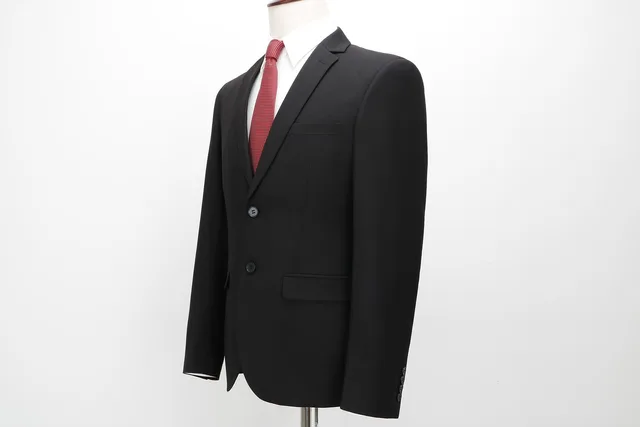
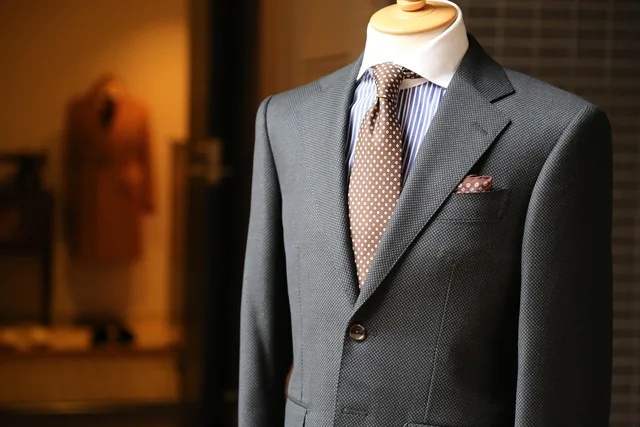
Lower Manhattan business formal means a matched suit in navy, charcoal or dark grey, a collared shirt, a leather belt matching the shoe, and leather shoes. For men, a tie is still expected in client meetings at most banks and law firms.
For women, the equivalent is a suit, a tailored dress with a jacket, or a skirt suit with a closed-toe shoe. The code is about uniformity, not expression.
The Financial District runs colder and more formal than the rest of the city. Buildings on and around Wall Street host bank headquarters where visitors, regulators and clients pass through lobbies, so the visible standard is high. A doorman, a security desk and a client meeting create three separate audiences for what you wear before 9 a.m.
Beyond the Financial District, the same formality reaches Hudson Yards and the law offices near Foley Square and City Hall.
Business formal here also means fit over fashion. A suit that fits at the shoulder and waist reads more expensive than a trendier cut that gaps.
Tailoring costs less than replacement, typically $20 to $40 to hem trousers and $60 to $120 to take in a jacket. Manhattan tailors sit on nearly every commercial block in the Financial District and Midtown.
Written policy is rare. What you see is what the firm tolerates. If you want the baseline that experienced staff already work from, see business formal.
Wall Street bank norms versus Midtown corporate offices
Wall Street banks keep the strictest visible standard. Front-office staff in investment banking, sales and trading, and client coverage wear dark suits daily. Back-office and technology staff often wear business casual. The split is by function, not by firm.
Goldman Sachs replaced its written dress code with a flexible one in 2019 and left the standard to each team. Banks such as JPMorgan Chase and Morgan Stanley read the same way: client-facing groups wear suits, back-office groups do not.
Midtown corporate offices, especially in media, tech, advertising and consumer brands, have moved to business casual as the default. Client days pull the standard up to a jacket and no tie, or a suit without a tie. The written policy often says business casual and then lists what is banned: athletic shoes, shorts, visible logos, denim.
Industry composition explains the gap. Finance and legal roles in the New York metro area are concentrated and well paid. The Occupational Employment and Wage Statistics (OEWS) Tables : U.S. Bureau of Labor Statistics show how those occupations cluster by industry and wage band.
Higher client contact tends to mean a stricter suit standard. The Home : Occupational Outlook Handbook: : U.S. Bureau of Labor Statistics covers finance and legal occupations in plain terms.
If you are switching from a Midtown corporate office to a bank, expect to rebuild your weekday wardrobe around suits. The Monthly Labor Review Home Page : Monthly Labor Review : U.S. Bureau of Labor Statistics tracks wage and employment movement in finance and legal work, and dress norms follow headcount and client mix.
For how these norms are moving rather than where they stand today, the shifts that matter is worth reading alongside your firm's actual practice.
Law firm expectations for junior and senior staff
Law firms split by seniority more than banks do. Junior associates dress to the partner standard, because partners decide who stays. That usually means a dark suit, a pressed shirt, and shoes that are clean and closed. Litigators who appear in court dress more formally than transactional lawyers who do not.
At the most conservative firms, among them Cravath, Swaine & Moore and Sullivan & Cromwell, that floor is a suit and tie on client days.
Partners have latitude. A senior partner in a white-shoe firm may wear a suit every day by habit, while a partner in a smaller firm may wear a jacket and open collar. The safe read for a junior is to match the most formal person in the room, not the average.
Court days and client meetings set the ceiling. Depositions, closings and court appearances call for the full suit and tie. Internal document review days allow a jacket without a tie at many firms, but not all.
Support staff, paralegals and summer associates usually follow the same written policy as attorneys. Summer programs often publish a dress code memo, which is one of the few places a New York firm writes the standard down.
Commute-proof suits: fabric, weave and construction
Commute-proof suits survive a subway car, a crowded platform and a building lobby without looking crushed by 10 a.m. Fabric does most of the work. High-twist wool in a tight weave resists wrinkling and holds a crease. Fresco, plain-weave worsted and wool with a small amount of synthetic for stretch all perform well.
Weave matters more than brand. A tight plain weave sheds lint and recovers from sitting. A loose, soft weave looks luxurious in a showroom and looks tired after one rush-hour ride. Avoid heavy flannel for daily commuting; it shows every crease and picks up lint.
Construction decides how the suit hangs after a day of wear. A half lining breathes better in a packed car. A full lining slides on and off more easily over a shirt. A canvas front holds its shape longer than a fused front, which bubbles after repeated dry cleaning.
A half-canvassed wool suit off the rack typically costs $500 to $1,000 in New York, while a full canvas suit starts above $1,500.
Care schedule is part of construction. Wool suits need rest between wears, so a two-suit rotation beats one expensive suit worn daily. To avoid the breakdown that comes from over-cleaning, learn how often to dry clean a suit and spot-clean between visits.
A worked example
A first-year associate buys two navy high-twist wool suits, one charcoal, all half-lined, and rotates them across five workdays. Each suit rests at least two days between wears and is brushed nightly. Dry cleaning happens twice a season, with spot treatment for lunch spills.
The rotation costs less per year than replacing one fused suit that fails after a summer of daily wear.
Shoes and bags that survive subway and walking commutes
Shoes fail at the sole and the welt. A glued sole separates after repeated wet mornings and long walks. A stitched, resoleable leather shoe costs more up front and less per year, because a cobbler can rebuild it.
A resole typically runs $40 to $90 in Manhattan. Factory recrafting at a maker such as Allen Edmonds or Alden typically costs $125 to $175 and replaces the sole, cork and laces.
Manhattan has cobblers in the Financial District, Midtown and most residential neighborhoods.
Leather soles are traditional and slippery on wet subway stairs. A rubber or combination sole is the practical choice for a walking commute. Keep a second pair of dress shoes at the office if your commute involves more than a few blocks on foot.
Bags fail at the seams and strap anchors. A tote loaded with a laptop pulls at the point where the strap meets the body, and that is where cheap bags tear first.
Three details decide it: a strap anchor that is stitched rather than glued, a reinforced bag base, and a lining sewn in tight. Those three are the criteria in affordable business formal, and they predict whether a bag lasts two years or ten.
Leather holds up better than coated fabric for daily commuting, but it is heavier. Nylon is lighter and water-resistant. The choice depends on your walk length and whether you carry a laptop.
Tote or backpack turns on the walk length, the number of hands you need on the subway, and whether the floor reads leather as the standard. A work tote vs backpack comparison settles it faster than guessing.
- Check the solestitched, not glued, and resoleable
- Check the strap anchorreinforced with stitching or a rivet, not glue
- Check the liningtight, not loose, so it does not tear at the seam
- Check the heelreplaceable top piece, not molded plastic
- Check the bag basereinforced, so a laptop does not sag the shape
- Check water resistanceleather treated, or nylon with a coated back
Seasonal layering from January to August in the city
January in New York City means wind tunnels between buildings and overheated lobbies. A wool overcoat, a scarf and gloves handle the street, and the suit under them has to breathe indoors. Seasonal layering is not about more clothes, it is about removable layers.
Through February and March, slush ruins leather soles and hems, so keep overshoes or a second pair of commute shoes for the street.
April and May swing between cold mornings and warm afternoons. A light wool suit covers both, and a trench coat over it works better than a puffer on client-facing days. Keep a compact umbrella in the bag, because spring rain in Manhattan arrives without much warning.
June through August is humid and hot. Unlined wool, cotton, or a wool-linen blend breathes better than a heavy worsted. Banks and law firms still expect dark suits in client meetings, while lighter colors pass in many Midtown corporate offices. Keep a spare shirt at the desk during heat waves, because a morning commute can undo a fresh press.
Where the written policy ends and observation begins
Most New York employers do not publish a detailed dress code. HR policies often say business professional or business casual and stop there. What actually governs is observation: what your manager wears, what client-facing colleagues wear, and what the firm tolerates on a Friday.
Federal law touches the edges. The IRS treats work clothing as deductible only if it is required for work and not adaptable to general wear, which is why a plain navy suit is usually not deductible while a uniform or a logoed item may be.
The FLSA governs whether an employer can require you to buy a uniform and deduct the cost from pay. The ADA requires reasonable accommodation in dress codes where a medical or religious need applies.
Read the written policy once, then watch the floor for a week. What managers wear to client meetings is the standard that gets enforced. Keep a jacket at the desk in case a meeting appears. That habit covers the gap between what the handbook says and what the firm actually expects.