Industry
4 US industries and the dress codes their offices actually enforce
Workwear style varies sharply by US industry: finance, healthcare, government and tech each enforce dress codes differently, and BLS data shows who wears what.
What to take away
- Workwear style in the United States is set less by written policy than by enforcement: what a manager will actually say to you on a Tuesday morning.
- Finance leans formal and written, healthcare splits clinical from administrative attire under OSHA footwear rules, government runs on agency policy plus union agreements, and tech ranges from smart casual to client-facing formal.
- BLS occupational data tells you how many people work in each sector and what those jobs typically involve, which is the fastest way to guess the dress norm before an interview.
- Hybrid schedules have loosened weekday norms but not client-facing ones.
- Ask about the dress code in writing before you accept an offer, and check whether uniforms or safety footwear come out of your pay.
How to read an industry dress code before you accept the offer
Start with the job, not the company. A bank teller, a hospital nurse, a federal auditor and a software engineer can work for employers of similar size and still face completely different rules about what covers their bodies.
Ask three questions in the interview. First, what do people in this role wear on a normal day. Second, what changes when a client, patient or inspector is present. Third, who enforces it, meaning whether a manager, a safety officer or a union agreement governs the answer.
Get the answer in writing if you can. An offer letter, an employee handbook page or an email from HR is worth more than a verbal "we're pretty casual here," because casual in one department is not casual in another.
Understand who writes these rules. Some are internal policy, some come from federal safety regulation, and some come from collective bargaining. Our guide to industry dress codes explains the difference between a handbook rule and a legal obligation.
The fastest shortcut is to look at the sector, not the company. Our guide to canadian winter workwear layering walks through which party holds the pen in each case, with a cold-weather version for readers in Canada.
Budget matters too. A finance analyst in New York may need two suits before the first paycheck. A warehouse supervisor in Texas may need steel-toe boots the employer is required to consider. Our guide to business casual for humid climates covers how to build a starter wardrobe without overspending.
Avoid the obvious traps. Do not assume a startup is casual because it is small, or a hospital is uniform because it is clinical. Do not assume a government office is formal because it is federal. Our guide to business casual women lists the common misreads.
A three-step way to check before day one
- Pull the employer's handbook or onboarding packet and search for the words attire, grooming, uniform and safety footwear.
- Email HR one questionwhat should I wear on my first day, and what should I have ready for client or patient contact.
- Walk past the building at lunchtime and look at the people leaving. That is the real code, not the written one.
Finance: the written and unwritten rules at named employers
Finance is the most formal of the four sectors and the most likely to put the rule in writing. The written part covers client meetings, branch floors and any role with a fiduciary or sales title.
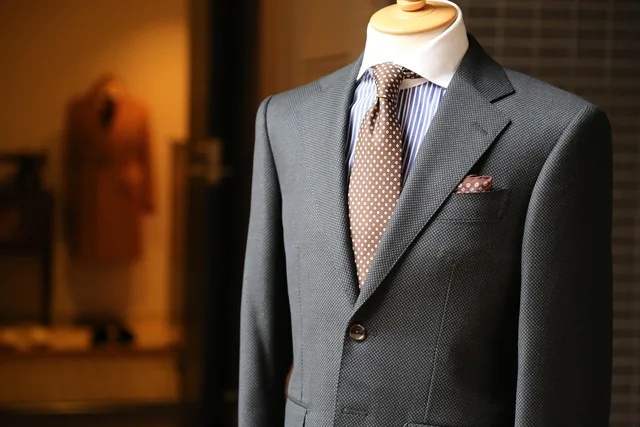
The unwritten part is stronger. At large banks, the expectation is a dark suit, a collared shirt and closed-toe leather shoes for anyone who might be seen by a client, even if the desk itself has gone business casual.
Named employers draw the line differently. Goldman Sachs relaxed its firmwide dress code in 2019 to a flexible standard, with client meetings setting the floor. JPMorgan Chase keeps business attire for client-facing desks and business casual for technology. Morgan Stanley expects business attire in branch and advisory roles.
Bank of America and Citigroup follow the same role-based split, one notch above the back office. Regional banks and credit unions often mirror the larger houses to look credible to the same customers.
Investment banking and asset management sit at the formal end. Commercial banking, insurance and mortgage operations sit closer to business casual, with khakis and a button-down as the working uniform in many branches.
Dress for the interview above the stated level. If the recruiter says business casual, wear a suit jacket anyway. You can always take it off, and no one in finance has ever been penalized for being overdressed on the first day.
Watch the seasonal detail. New York and Chicago finance offices expect wool suiting in winter and lighter fabrics in summer, while Florida and Texas offices lean toward lighter cloth year round. The rule is not the same in Miami as it is in Manhattan.
One cost note: the IRS treats most everyday business suits as personal, non-deductible clothing, because they are adaptable to general wear. Uniforms and safety clothing required for work are treated differently. That distinction matters if you are buying a wardrobe for a new role.
Healthcare: clinical versus administrative attire and OSHA footwear
Healthcare splits into two worlds that share a building. Clinical staff follow infection control and safety rules. Administrative staff follow a softer, office-style code.
Clinical attire is functional first. Scrubs, closed-toe shoes and tied-back hair are standard in patient-facing roles. That holds at hospitals such as Mayo Clinic, Cleveland Clinic, Kaiser Permanente, HCA Healthcare and Ascension. Jewelry is limited and artificial nails are usually banned.
Footwear is where regulation enters. The Occupational Safety and Health Administration requires employers to assess workplace hazards and provide appropriate personal protective equipment, which in healthcare can include protective footwear, gloves, gowns, eye protection and respirators. The OSHA PPE overview sets out that framework.
The separate foot protection standard, 29 CFR 1910.136, applies where feet are at risk from falling or rolling objects or from punctures. The employer's hazard assessment decides which shoe is adequate, and OSHA does not name a brand or a model.
Employers generally cannot simply hand you the bill for required safety gear. Under the Fair Labor Standards Act, if an employer requires a uniform and the cost would push an employee's wages below the federal minimum wage, the employer must cover the difference in that workweek.
Several states go further. California requires employers to reimburse required uniforms and their upkeep under Labor Code section 2802, and state workplace safety rules put the cost of required protective equipment on the employer.
Administrative and billing staff usually wear business casual: slacks, collared shirts, closed-toe shoes, no athletic wear. Patient-facing administrative roles, such as front-desk registration, often sit in between, with scrubs allowed in some systems and business casual required in others.
Watch the jewelry and nail rules. Many hospital systems restrict rings to a plain band, ban dangling earrings in clinical areas, and prohibit nail polish or artificial nails because they harbor pathogens. These are enforcement points that get checked, not suggestions.
What to ask before a clinical start date
- Are scrubs provided, laundered on site, or purchased by me?
- Are specific shoe types required, and does the employer pay for them?
- Are there color restrictions per department or per shift?
- What jewelry and nail rules apply in my unit?
- Does the rule change for off-site clinics or home health visits?
- Is there a union or contract provision covering uniform allowances?
Government: agency policies, public sector norms and union agreements
Federal agencies set dress expectations through internal policy, not a single government-wide rule. Each agency publishes its own guidance, and enforcement runs through supervisors.
The Internal Revenue Service keeps a written business attire standard for employees who meet taxpayers face to face. A revenue agent on a field appointment dresses closer to a corporate client than to a casual office.
The U.S. Senate stopped enforcing its own business attire rule on the floor in 2023, which shows how much these written standards vary by workplace. Other agencies, including the Department of Veterans Affairs, the Social Security Administration, the Environmental Protection Agency and the Department of Homeland Security, run their own versions.
Public sector norms are conservative but not corporate. A federal office in Washington, District of Columbia typically expects a suit for hearings, briefings and congressional contact, and business casual for internal work. State offices in Texas, Florida or Illinois often run slightly looser.
Union agreements matter. Where employees are represented, uniform allowances, laundry provisions and safety footwear requirements are frequently negotiated rather than imposed. That means the answer to "who pays for this" may be in a contract, not a handbook.
Field and inspection roles follow safety rules. An OSHA inspector, a park ranger or a maintenance worker in a federal building gets protective equipment and uniforms under the same safety framework that governs private industry.
For job seekers, the practical read is this: government is formal in public-facing moments and relaxed in internal ones, and the transition between the two is announced by calendar, not by memo. If a hearing or a site visit is on the schedule, dress for it.
Tech: the range from smart casual to client-facing formal
Tech has the widest internal range of the four sectors. A single company can hold a hoodie-wearing engineering floor and a suit-wearing sales team in the same building.
Large employers set the casual tone. Google, Meta, Apple, Amazon and Microsoft are known for relaxed everyday attire in engineering and product roles, with jeans, t-shirts and sneakers common. That norm is real, not a rumor.
Client-facing and enterprise roles pull the other way. Sales engineers, solutions consultants and account executives at these same companies often dress business casual or business formal when meeting enterprise customers, especially in finance, healthcare and government accounts.
Startups split by funding stage. Early-stage companies tend to be very casual, while later-stage companies with enterprise customers adopt a smart casual baseline: dark jeans, a collared shirt, clean shoes.
Interviews remain conservative across the sector. Even at a company where everyone wears t-shirts, candidates typically wear business casual, because the interview is a signal about judgment rather than a sample of daily life.
Remote work complicates the picture. If you are on camera with a client, the visible half of your outfit is the whole outfit. Keep a collared shirt or a clean sweater within reach of your desk.
BLS occupational data on who works where and in what attire
The U.S. Bureau of Labor Statistics publishes the numbers that let you size a sector before you join it. The Occupational Employment and Wage Statistics tables report employment and wages by occupation and industry, which is how you find out how many people actually work in a given role nationwide.
Three rounded figures help you size the field. Healthcare and social assistance is the largest employer in the country, at roughly 21 million to 22 million jobs.
Finance and insurance employs roughly 6.5 million to 7 million people. Across all occupations, the median annual wage was about $48,000 in the May 2023 estimates. The BLS revises these numbers, so treat them as orders of magnitude rather than exact counts.
The Occupational Outlook Handbook goes further and describes what workers in each occupation typically do, including the physical demands and working conditions that shape attire. That is useful when a job title sounds office-based but the profile describes outdoor or clinical work.
The Monthly Labor Review carries longer analyses of employment trends by industry, which helps when you want to know whether a sector is growing or shrinking before you invest in a wardrobe for it.
Use the data to map attire, not to memorize it. High-employment office occupations cluster in business casual settings. Healthcare support occupations cluster around scrubs and safety footwear. Installation, maintenance and repair occupations cluster around protective equipment.
Here is a rough sector map based on the categories BLS reports.
| Sector | Typical attire reported in occupational profiles | Who pays |
|---|---|---|
| Finance and insurance | Suits and business casual by function | Employee |
| Healthcare and social assistance | Scrubs, clinical footwear, business casual in admin | Mixed |
| Government | Business attire public-facing, business casual internal | Mixed |
| Information and professional services | Casual to smart casual, formal for clients | Employee |
That table is a starting point, not a rulebook. The enforcement column is where the real variation lives, and it is covered next.
A comparison table of enforcement across the four sectors
Enforcement is the part job seekers underestimate. A written code that nobody checks is weaker than an unwritten norm that everyone follows.
Written policy
- Finance
- Common, detailed
- Healthcare
- Common, safety-driven
- Government
- Common, agency-specific
- Tech
- Rare, vague
Who enforces
- Finance
- Manager, HR
- Healthcare
- Manager, safety officer, regulator
- Government
- Supervisor, contract terms
- Tech
- Peer pressure, client expectation
Flexibility
- Finance
- Low in client roles
- Healthcare
- Low in clinical roles
- Government
- Medium
- Tech
- High
Typical consequence
- Finance
- Informal warning
- Healthcare
- Sent home to change
- Government
- Counseling, memo
- Tech
- None
Finance enforcement is social and quick. A managing director's glance is the mechanism. Healthcare enforcement is procedural, tied to infection control and safety inspections. Government enforcement is administrative, moving through supervisors and, where applicable, union processes. Tech enforcement is mostly cultural, which means it disappears the moment a client walks in.
The pattern to remember: the more regulated the work, the more the dress code is enforced by rule. The less regulated, the more it is enforced by audience.
If you want to compare how much effort each sector's code demands of you personally, our guide to what to wear on video calls ranks the options by cost and return.
What changes when an industry goes hybrid
Hybrid work did not delete dress codes. It split them into two versions: the one for days in the office and the one for days at home.
Office days have loosened fastest. When a team is only together two or three days a week, the social pressure to dress formally drops, and finance and tech offices have both drifted toward business casual on non-client days.
Client and patient days have not loosened. A banker meeting a client, a nurse on a unit and a federal employee at a hearing all face the same expectations as before, because the audience has not changed.
On-camera norms are now part of the code. A clean, collared top reads as professional on video, and a wrinkled t-shirt reads as unprepared, even when no policy mentions either.
Keep a small formal reserve. One suit or equivalent, one pair of closed-toe leather shoes and one clean collared shirt cover almost every surprise, from a same-day client call to a promotion interview.
Check your state's rules on uniforms and pay if your employer requires specific clothing. The U.S. Department of Labor publishes state-by-state labor law resources, and the FLSA sets the federal floor on deductions that would cut into minimum wage.