Industry
Part of 6 things about work shoes worth your time
The one sole check that separates good cheap work shoes from bad ones
Affordable work shoes hinge on one check, whether the sole is stitched or glued, plus fitting from the heel and resting a pair between wears.
Shoes are where the gap between cheap and expensive shows up fastest, and where the usual advice breaks down first. "Buy quality and it lasts" is only true if the shoe was built to be repaired. Most are not, and whether a particular pair was is something you can check in the shop in about ten seconds.
What to take away
- How the sole is attached decides whether a shoe has a second life. Glued soles are a single-use design; stitched soles are not.
- Fit is settled at the heel and the instep, not at the toe. A shoe that slips at the heel will never be comfortable and will destroy itself from the inside.
- The buy-and-resole strategy is far more available in men's footwear than in women's, which changes the arithmetic rather than the advice.
The one construction check that matters
Turn the shoe over and look at the join between the upper and the sole.
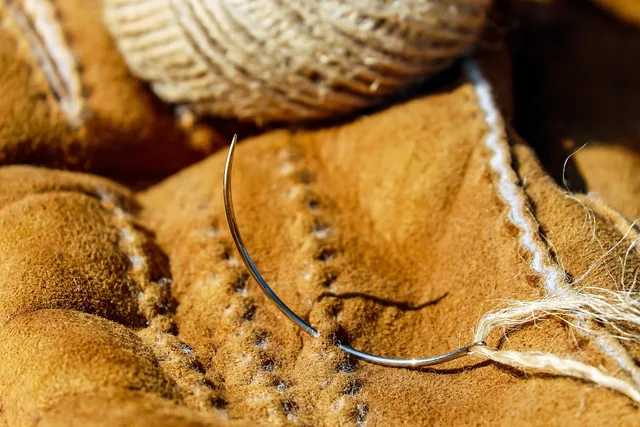
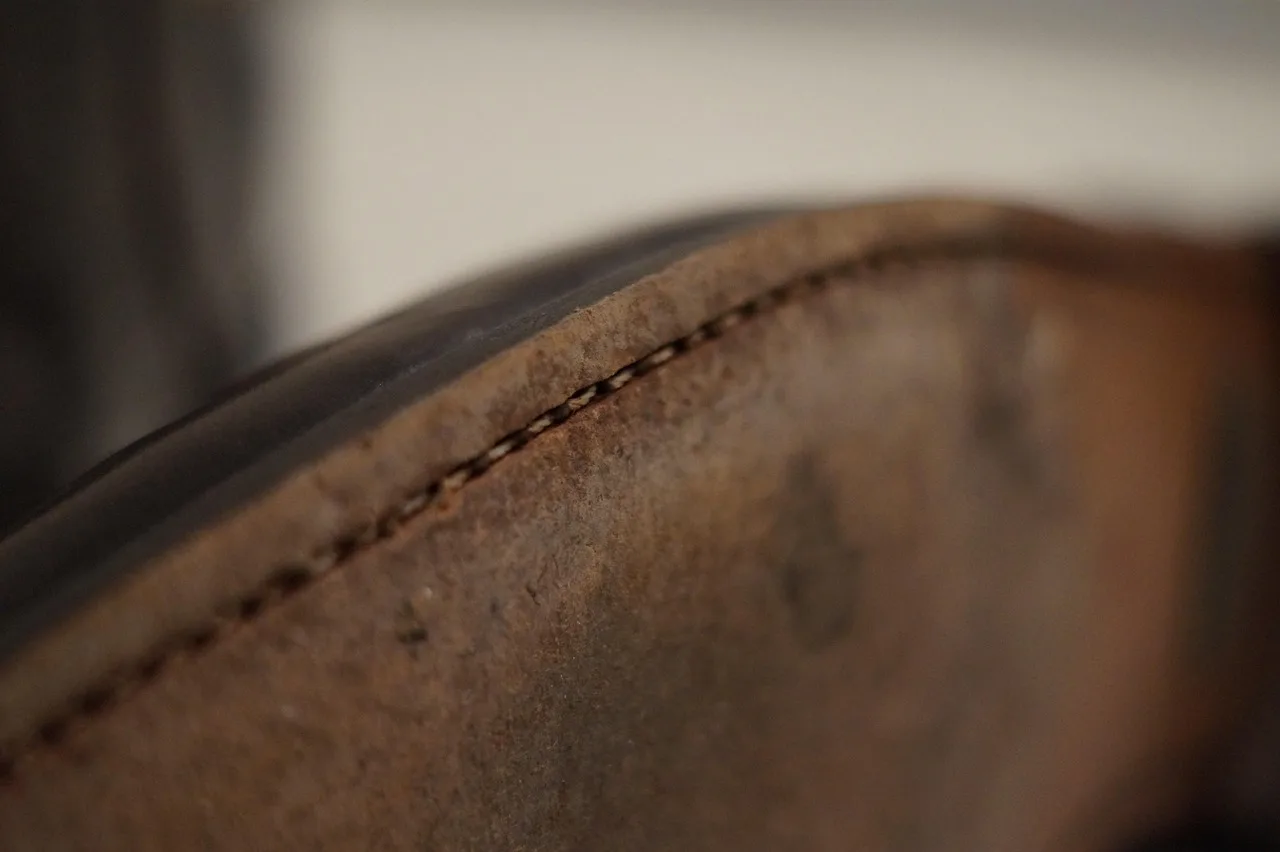
A visible line of stitching around the edge where the upper meets the sole means the sole is mechanically attached, and a repairer can remove and replace it. If the upper simply disappears into the sole with no stitching, it is bonded with adhesive.
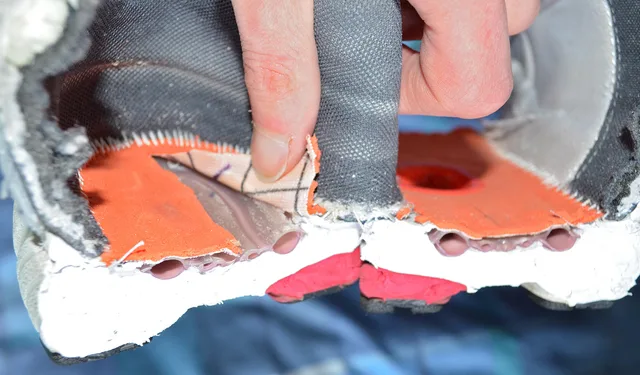
Adhesive-bonded soles are lighter, cheaper to make and perfectly serviceable, but once the sole wears through, the shoe is finished. Prying it off usually damages the upper, and the labor costs more than the shoe is worth.
That single distinction reorganizes the whole budget question. A stitched shoe can absorb two or three resoles, so its cost is spread across many more years. A glued shoe is a consumable, and the right way to buy a consumable is to pay as little as the job allows rather than as much as you can.
Neither is wrong. Buying a glued shoe expecting it to be an heirloom is wrong, and so is paying for stitched construction on a pair you will wear a dozen times a year. The work shoes overview sets out the categories; this page is about what makes one pair cost less than another over its life.
Uppers, linings and where the cost hides
The cheaper version
- Upper leather
- Surface sanded and a finish sprayed on to hide flaws
- Upper leather
- Full grain, outer surface intact
- Lining
- Synthetic, or unlined
- Lining
- Leather
- Heel counter
- Fused board
- Insole
- Foam glued in place
What changes with wear
- Upper leather
- The applied finish cracks at the flex point across the toe
- Upper leather
- Creases rather than cracks, and takes polish
- Lining
- Holds moisture, breaks down at the heel, wears through against the sock
- Lining
- Absorbs and releases moisture, molds to the foot
- Heel counter
- Collapses once the heel has slipped against it enough times
- Insole
- Compresses flat within months and cannot be replaced
The heel counter is the quiet stiffener at the back that holds the shoe's shape around your heel. Once folded, the shoe no longer grips, every step slides slightly, and the wear pattern goes wrong everywhere else.
Cheap vs durable shoe components
Cheaper version
- Upper leather
- Sanded, sprayed finish
- Lining
- Synthetic or unlined
- Heel counter
- Fused board
- Insole
- Glued foam
- Wear result
- Cracks, collapses
Durable version
- Upper leather
- Full grain, intact surface
- Lining
- Leather
- Heel counter
- Holds shape
- Insole
- Replaceable
- Wear result
- Creases, molds
Squeeze the shoe's back between finger and thumb: if it collapses under light pressure when new, it will not survive a year.
Fitting, which almost everyone does backward
Most people fit shoes by checking the length at the toe. Length is the least informative measurement available.
Fit the shoe in this order
- Fit the heel first, check for lift
- Check the instep, the securing point
- Length last, toes room and no more
- Try on late in the day
- Width beats length for comfort
Fit the heel first. Walk in the shoe and feel whether the back lifts away as you roll off the step. A small amount of movement is normal. A heel that slides up the back of the shoe means the shoe is holding your foot nowhere and is doing damage every stride.
Then check the instep, the part of the shoe that actually secures the foot. A shoe that is loose over the instep gets laced too tight, which pinches. Length is what is left over: enough space ahead of the toes to move, and no more.
Two practical notes. Feet swell over a day, so a shoe fitted first thing in the morning will be tight by the afternoon. And width matters more than length for comfort, so a shoe that is the right length and too narrow is the wrong shoe, not a shoe that needs breaking in.
Breaking in is real but limited. Leather softens, and the upper molds to the shape of your foot. It does not change size, and it does not widen a last that was cut narrow. Pain on the first wearing that comes from pressure rather than stiffness will still be there in a month.
Rotation, drying and the cheapest life extension available
Do not wear the same pair two days running. Feet put an amount of moisture into a shoe over a day, and that moisture degrades leather, weakens adhesives, and breaks down the lining.
Rotation beats buying more
2 pairs alternated outlast 3 worn daily
One day of air between wearings
Never dry wet shoes on a radiator
A day of air between wearings is free and does more for a shoe's lifespan than any product. Never dry wet shoes against a radiator: fast heat drying stiffens and cracks leather permanently.
Two pairs alternated will outlast three pairs worn until each dies. The same rest principle applies to clothing, as set out under caring for and repairing what you own.
When the job, rather than the office, sets the rules
In workplaces with a physical hazard, footwear stops being a style question and becomes a regulated one. The federal foot protection standard at 29 CFR 1910.136 sets when protective footwear is required. The general personal protective equipment requirements at 29 CFR 1910.132 address who pays for it, including a specific carve-out for non-specialty safety-toe footwear.
If your role sits anywhere near that line, read those before buying anything yourself, because the answer to "do I have to fund this" is often no. How much of this applies varies enormously by sector, which is the subject of the industry dress codes guide.
The part that is not symmetrical
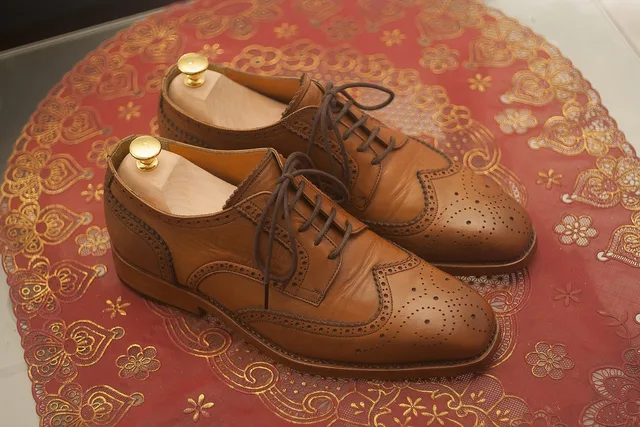
The buy-once-and-resole strategy is a good answer, but it is more available on one side of the shop than the other. Men's dress footwear is often built with stitched construction, a replaceable sole, and enough upper material to justify repair.
Resole potential by category
Men's dress footwear
- Construction
- Often stitched
- Sole
- Replaceable
- Repair economics
- Justifies repair
- Cost outcome
- Amortized over decade
Women's professional footwear
- Construction
- Usually glued
- Sole
- Thinner, not rebuildable
- Repair economics
- Not economical
- Cost outcome
- Replaced on cycle
Much women's professional footwear is built glued, on a thinner sole, in shapes no repairer can rebuild economically.
So the same advice produces a different outcome: one buyer amortizes a purchase over a decade, the other replaces on a cycle regardless of what they spent.
There is a second cost on the same side. When a workplace expects a raised heel, in writing or by convention, that expectation carries a physical load the other half of the office does not carry.
It shortens the life of the shoe, changes the wear pattern, and is not optional the way it is often described.
The practical response is not to spend more but to spend differently. Prioritize the heel counter and lining over the finish, look for the minority of styles that are stitched, and treat the replacement cycle as a known cost, not a failure.
The equivalent argument on the menswear side sits in fit and alterations. The formal end of the category is covered in business formal.
Common questions
Is an expensive shoe always more comfortable?
No. Comfort comes from the shape of the last matching the shape of your foot, and that is independent of price. An expensive shoe in the wrong width will hurt more than a cheap one in the right width, because the better shoe is stiffer and will not give.
Are insoles worth it?
For cushioning on a hard floor, often yes. For correcting fit, rarely: adding an insole reduces internal volume, which fixes a shoe that is slightly too roomy and makes a tight shoe worse. It cannot address a shoe that is too narrow.
How many pairs do I actually need?
Two that suit ordinary days, so they can be alternated, plus whatever a genuinely different setting requires. A third pair bought for variety is the least useful money in the whole wardrobe.