Rules
Do work shoes need breaking in? What a 30-day trial actually reveals
A 30-day trial separates normal leather softening from a fit that will never improve, using daily notes, wear patterns and clear stop signals.
What to take away
- A genuine break-in period softens leather at the heel, instep and flex point, and does very little else.
- Shoes that pinch the ball of the foot, rub the longest toe or slip more than a thumb width will not improve with time.
- A thirty day trial with four daily notes separates normal softening from a bad fit before the return window closes.
- Feet swell through a standing day, so buy in the late afternoon and test in the socks you actually wear.
- Sharp pain, numbness or a blister that reopens after day twenty one ends the trial.
What a break-in period can actually change
Leather, suede and knit uppers have a little give. The parts that move are the topline behind the heel, the vamp across the instep, and the crease line over the toes. Repeated flexing and body heat let the material take the shape of your foot. Expect a few millimetres of relaxation, not a change in length or width.
Socks and laces belong in the same calculation. A thin cotton sock changes the internal volume of a shoe more than most people expect, and cotton's breathability helps across a long day. Lacing with a heel lock loop holds the heel down while the counter softens, which prevents the rubbing that makes people give up in week one.
What no break-in period will fix
Some day one signals are ordinary. Others point at the last, the size or the width, and thirty days will not change them.
Normal break-in
- Stiffness at the heel
- Softens in one to two weeks
- Tight across the instep
- Relaxes a few millimetres
- Firm under the arch
- Insole conforms
- New leather shine
- Fades with wear
Never improves
- Stiffness at the heel
- Heel slip past a thumb width
- Tight across the instep
- Pressure under the ball of the foot
- Firm under the arch
- Toe box touching the longest toe
- New leather shine
- Pain that stops you mid shift
Pressure under the ball of the foot usually means the shoe is too narrow or the toe spring is wrong for your gait. Toe contact at the front means length, full stop. Heel slip beyond a thumb width means the last is too long or too shallow for your heel.
Running your own thirty day trial
- Buy late in the day, after at least six hours on your feet.
- Wear the shoes two hours on day one, then note heel slip, ball pressure, toe contact and any hot spot.
- Add one hour every second day and keep the same socks and laces so the notes stay comparable.
- Photograph the sole and the upper on day one, day ten and day thirty.
- Stop at day twenty one if a hot spot has not changed for the better.
Let the shoe rest a full day between wears. Two pairs worn on alternate days outlast one pair worn daily, because the midsole and lining need time to dry and recover their shape.
Reading the wear pattern at day thirty
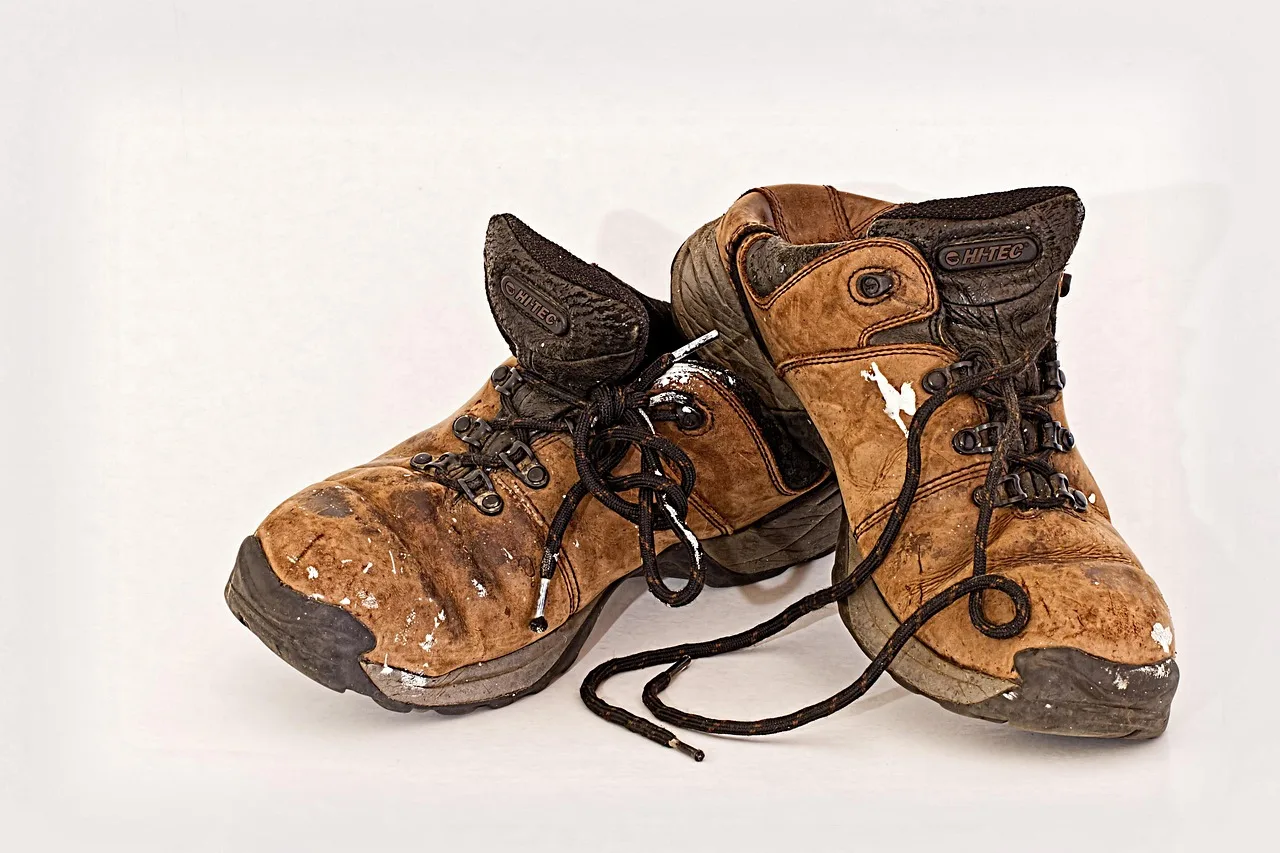
Turn the shoes over. Most people wear the outside rear corner of the heel first, which is normal. Wear at the front tip alone means the shoe is long. Wear under the inner ball suggests the shoe rolls inward with you.
A daily record and a thirty day shoe trial turn those marks into a decision about your next pair, instead of a guess made at the till.
Example: two pairs in the same month
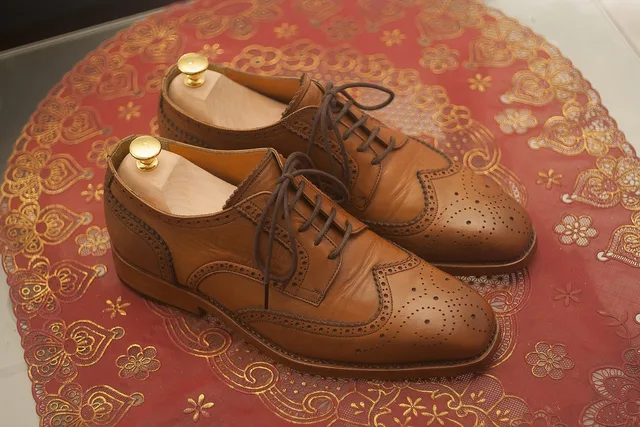
A leather derby bought at five in the afternoon felt snug across the instep and stiff at the heel. Hot spots faded by day nine and the heel counter settled by day sixteen. That is a break-in.
A pointed toe flat that felt fine at a desk ached at the ball after an hour of standing. Day thirty looked like day one. Nothing softened, because nothing was stiff. The shape was wrong.
Stiffness softens. Pressure does not. That line settles most shoe returns.
Shoes for standing all day in heat and cold
A standing shift asks more of the midsole than of the upper. Cushioning, a firm heel counter and a sole that grips a smooth floor matter more than the leather finish. In hot workplaces, OSHA heat guidance covers clothing and fabric choices for humid conditions, and socks belong in that plan.
Rotation and a spare pair of socks do more for comfort on a long day than an insole bought at the last minute. If your feet swell by mid afternoon, a wider fitting at the same length often solves more than a softer footbed.
What the outfit above the shoe decides
Heel height, toe shape and finish have to answer to the clothes. A rounded toe and a low block heel work with straight trousers and knit dresses, while a pointed toe reads sharper under tailoring. For the clothing side, work dress examples worth copying show which constructions survive a year of wear and why.
Business casual does not always require a blazer, and that freedom changes the shoe you can wear with a skirt or chinos, as the business casual definition notes.
Read as a specification, business casual for women comes down to shoulder fit, fabric behaviour and how the outfit reads on the camera.