Costs
Professional Workwear Style: Cost per Wear, Care and When to Replace
A practical guide to professional workwear style: how to estimate cost per wear, judge fabric and care, fit by measurement, and know when to repair or replace.
What to take away
- A workwear estimate has three linesprice, care and the replacement interval that sets cost per wear.
- Fiber percentages, three measurements and the care label decide whether a piece survives a working week.
- Buy the anchor piece first, then match everything else to it in person.
- Set a returns rule before orderingtwo sizes on approval, one goes back.
- A piece is finished when repairs pass a third of replacement cost.
What the first estimate covers
Most wardrobes record the purchase price and stop there.
Cost Per Wear Example
- $240blazer purchase price
- 3 yearsworn twice a week
- $1.50cost per wear before cleaning
Care is the second line: alterations, cleaning, repairs. The replacement interval is the third, and it turns both into a cost per wear.
A $240 blazer worn twice a week for three years lands near $1.50 a wear before cleaning. Treat that figure as illustrative.
What your employer actually requires is a separate question, and the comparison of who actually decides the dress code answers it before you spend.
Build the vocabulary before you open a catalog
Search finds construction, not mood. Run these five steps before typing anything into a search box.
Five Search Terms To Name
- Name the silhouette first
- Name neckline and sleeve separately
- Name the closure
- Name fabric behavior, then fiber
- Write three photograph properties
Two searches beat one. Pair a shape word with a fabric word and read what comes back. Vocabulary costs nothing, and it returns money at the returns desk.
Silhouette is a body question more than a trend question, and matching a decade's silhouette to your body before your shoes settles it honestly.
Composition and care decide the lifespan
| Field on the listing | What it tells you | What it cannot tell you |
|---|---|---|
| Fiber percentages | How the cloth drapes, creases and wears | Weight, which decides warmth |
| Fabric weight in gsm | Whether the piece reads summer or winter | Fit through the shoulder |
| Care label | Cleaning method and shrinkage risk | How often the piece truly needs it |
Cotton moves air and holds a press, which matters from June through September in a warm office. For winter, wool over a cotton base keeps heat without bulk.
Dry cleaning is where workwear quietly fails. Solvents are hard on soft wool and on any coating, and a suit sent weekly will not outlast one sent twice a season.
Ask which solvent your cleaner uses, and check the EPA Safer Choice listings before committing a jacket to a weekly cycle.
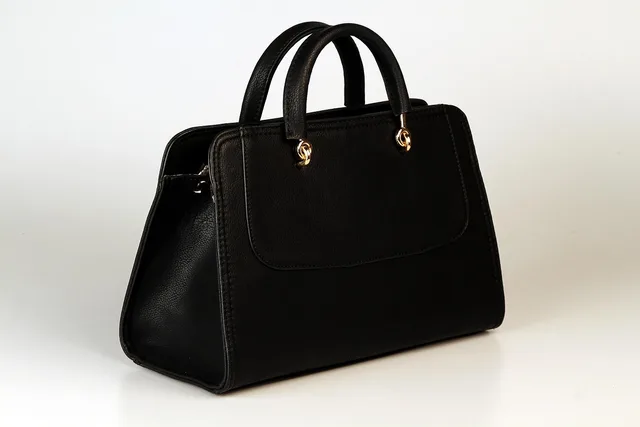
Materials behave the same way in everything you carry, and what seams and strap anchors reveal about bags covers the checks before you buy.
Example: a two-year navy blazer
Take a mid-weight navy wool blazer at $260, with $90 of alterations. Two dry cleans a year at $18 each adds $72 across two years. One button repair adds about $15.
The all-in figure is $437 across roughly 200 wears, or a little over $2 a wear. Those figures are illustrative, but the shape of the calculation is not.
Alterations are where estimates go wrong most often. Sleeve length, waist and hem run from $20 to $60 for a jacket, and more for a coat.
Two hundred wears is the test. If you will not reach it, the piece is a costume, not a work garment.
Buy the blazer first, then the trousers, then the shoes. Each later purchase is matched to something you already own.
Rebuilding that rotation on a tighter budget is its own exercise, and affordable industry dress codes works through it from the ground up.
Measurements that survive a working day
Buy by measurement, not by size label. Chest, shoulder, sleeve length and rise vary by maker, and a size 40 in one house behaves like a 42 in the next.
Three numbers cover most of it: shoulder width, chest and inseam. Ask for them in writing before you order. A garment that fits at the shoulder can be taken in almost anywhere else.
Two fit rules for desk work. Sit down in the jacket before you buy it, because a hem that rides up will not be worn. Check sleeve length at a keyboard, not with your arm at your side.
Trousers are the exception, because rise and inseam decide whether a pair can be worn at a desk all day.
Resale listings often carry the measurements retail listings omit, which is one reason to read them even when you plan to buy new.
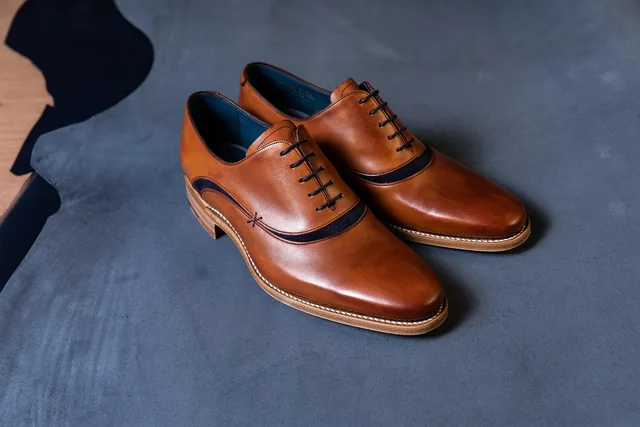
Shoes are fitted the same way, by measurement and by the job, and choosing work shoes by cost per wear applies identical arithmetic to leather.
When the garment stops needing attention
A piece is finished when a repair quote passes a third of replacement cost. Until then, four habits push that date back.
- Rotate two pairs of trousers instead of one, which halves the wear on each.
- Air wool after wearing and brush it, rather than washing it.
- Clean less often than feels natural.
- Fix buttons and hems at the first sign, not the third.