Guides
Cross-border style for US professionals working with Canadian and UK clients
How US professionals dress for Canadian and UK client meetings, from formality gaps to winter layers and the tax tests behind travel deductions.
What to take away
- London law, banking and consulting still treat a suit as the default for a first client meeting. Toronto and Montreal finance and law do the same. A Waterloo or Vancouver tech client does not.
- Canadian winter runs November through Marchbelow-freezing days, wind chill, salted sidewalks, slush. Waterproof footwear and a knee-length coat are the difference between arriving composed and arriving wet.
- UK shoulder seasons, April to May and September to October, sit near 10 to 15 C with rain and wind in the same afternoon. A trench and a compact umbrella beat a heavy overcoat.
- The IRS allows laundry and dry cleaning as travel expenses on a trip that is primarily business. It generally does not allow the suit itself, because you can wear it in ordinary life.
- Build the bag around one color familyone dark suit, one blazer, two pairs of trousers, three shirts, one weather layer, two pairs of broken-in shoes.
Why formality reads differently in the US, Canada and the UK
US business dress drifted toward casual across most industries after the 1990s, but it drifted unevenly. A Los Angeles software sales meeting runs on a polo and dark jeans. A Chicago law firm still expects a suit for client-facing work.
Formality by country and setting
US
- Finance/law first meeting
- Suit, tie optional
- Tech or startup client
- Polo and dark jeans
- Everyday office
- Business casual
- Regional variation
- LA casual, Chicago formal
Canada
- Finance/law first meeting
- Suit in Toronto/Montreal
- Tech or startup client
- Blazer and trousers
- Everyday office
- Close to US norms
- Regional variation
- Calgary energy suits
UK
- Finance/law first meeting
- Suit and tie
- Tech or startup client
- One step above casual
- Everyday office
- Above US casual
- Regional variation
- Manchester less formal
Canada sits close to US norms in everyday office dress, with two exceptions. Toronto and Montreal finance, law and consulting hold to suits for external meetings. Calgary energy boardrooms do the same.
Elsewhere in Canada, a blazer and trousers read as respectful without being stiff. Canadian clients tend to notice fit and weather-appropriate footwear more than tie width.
The UK is the outlier. London professional services, from law to banking to consulting, treat a suit as the default for a first client meeting, and many firms expect a tie for men in client settings.
Manchester and Edinburgh firms run slightly less formal than London, but the UK baseline still sits one step above US business casual.
The working rule: dress to the client's industry, not your own. If your US office is casual and your UK client is a bank, you adjust. If your Canadian client is a Waterloo scale-up, a suit can read as a mismatch.
Ask your main contact what the room wears. Treat the answer as data, not a hint.
Why formality reads differently
US norm
- Finance or law first meeting
- Suit, tie optional
- Tech or marketing pitch
- Blazer and smart casual
- Conference sessions
- Business casual
Canada norm
- Finance or law first meeting
- Suit in Toronto, Montreal and Calgary
- Tech or marketing pitch
- Blazer and smart casual
- Conference sessions
- Business casual
UK norm
- Finance or law first meeting
- Suit, tie usual
- Tech or marketing pitch
- Suit or blazer, depending on the firm
- Conference sessions
- Business casual, suits common in London
For where formal dressing is heading, business formal trends covers the shifts that matter when your calendar splits between US, Canadian and UK clients.
First meeting, pitch and conference: what each room expects
A first meeting carries the most weight because the client has no prior read on you. For a UK first meeting, wear navy, charcoal or mid-grey, a white or light blue shirt, and leather shoes. The same suit works in Toronto and Montreal.
In Vancouver or Waterloo, a blazer with trousers and clean leather shoes is usually enough. For a US first meeting, match the client's industry: a suit for finance, law and government, a blazer for tech and marketing.
A pitch is a performance, and dress supports the story. A UK pitch usually means the most formal version of your wardrobe: suit, tie if the room wears them, polished shoes, and a leather folio rather than a backpack.
A Canadian pitch often accepts business casual with a blazer, but a bank or energy firm calls for a suit. A US pitch follows the first-meeting logic, with one addition: if you are the outside expert, dress one notch above the client's average.
Conferences vary by host and city. A London conference often draws suits during sessions and business casual at receptions. Toronto and Calgary conferences are usually business casual, with a blazer for speakers.
A New York or Chicago conference is business casual, while a Washington, DC policy conference runs suit-heavy. Check the host's photo gallery from the prior year. It is faster than guessing.
Industry beats country when the two disagree. A Shoreditch tech conference is more casual than a City law conference. A Vancouver mining conference is more formal than an Ottawa software conference. Filter by sector first, country second.
On video, the same rules compress to the top third of your body, so a blazer and a solid shirt or blouse do most of the work. See what to wear on video calls when the first meeting happens on screen.
Seasonal timing: Canadian winter and UK shoulder seasons
Canadian winter is the biggest packing variable for US professionals. From November through March, Toronto, Montreal, Ottawa and Calgary run well below freezing. This brings wind chill, salt-stained sidewalks and slush.
A wool overcoat or a cold-rated parka, waterproof boots and gloves are not optional if you walk between meetings. Indoor spaces are heated, so build layers you can remove.
Winter also changes meeting logistics. A client may suggest a shorter walk between offices, and a taxi or rideshare is normal in January. Calgary and Edmonton bring dry cold and snow. Vancouver brings rain and 5 to 8 C instead of deep freeze.
The canadian winter workwear layering guide covers base layers, insulation and shell choices in more detail.
UK shoulder seasons are the other timing trap. April to May and September to October in London, Manchester and Edinburgh bring rain, wind and 10 to 15 C, often in one day.
A trench coat, a compact umbrella and shoes that handle wet pavement matter more than a heavy overcoat. July and August are milder, but rain still appears.
UK winter is milder than Canadian winter and darker and damper. December and January in London run around 2 to 8 C with short daylight, so a warm wool coat, a scarf and a layer under your suit beat a bulky parka.
UK summer can be warm in July and August, and air conditioning is less common in older buildings. A lightweight suit in breathable fabric helps.
Client calendars matter too. Canadian clients often take vacation in late July and August. UK clients take time off around bank holidays and the August school break. Confirm the room's dress and the week's forecast before you pack.
Fabric and layering that survive a two-city trip
Fabric decides whether your professional workwear style survives a two-city trip. High-twist wool in a 9 to 11 ounce weight resists wrinkles, breathes in heated offices and holds a press.
A wool blend with a little stretch helps on long flights but can sag over time. Keep the stretch content low.
For shirts and blouses, cotton with a small share of performance fiber resists creasing and dries overnight in a hotel bathroom. Non-iron cotton passes in US and Canadian meetings. UK law and banking clients treat a crisp, well-pressed shirt as part of the uniform, so pack two and rotate.
Dark colors hide travel marks better than white on a multi-leg trip.
Layering is the core skill. A thin merino crewneck under a blazer adds warmth without bulk in Canada and doubles as a standalone layer in a cool UK office. A packable down vest or liner fits under an overcoat for Canadian winter and stays in the bag for the UK shoulder season.
Outerwear should match the worst weather you expect, not the average. A Canadian winter trip calls for a knee-length wool coat or a technical parka with a removable liner, covering both client meetings and airport transfers. A UK shoulder-season trip calls for a water-resistant trench with a zip-out liner.
Shoes follow the same logic. Leather shoes with rubber soles grip wet pavement better than leather soles, and a second pair lets one dry overnight.
A leather folio or slim briefcase reads more formal than a backpack in UK client settings. The work tote vs backpack comparison helps if you are deciding for a mixed US and Canada trip.
Shoes, bags and the signals clients actually read
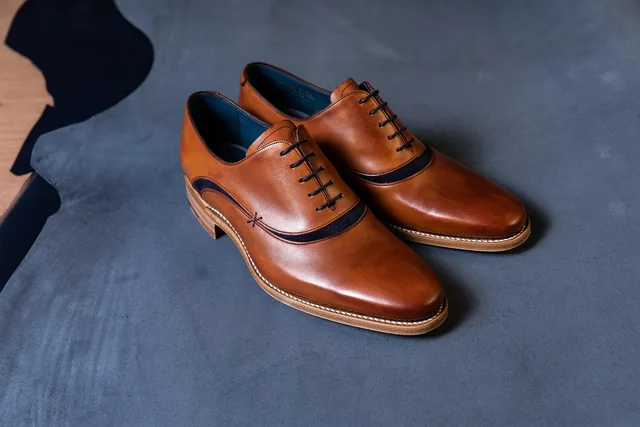
Shoes are the first thing many clients weigh. In the UK, polished leather Oxfords or derbies in black or dark brown are the safe choice for men, and leather low heels or loafers for women.
In Canada, the same shoes work in Toronto and Montreal, but waterproof leather or rubber soles are practical in winter. In the US, clean leather sneakers pass in tech and creative meetings and fail in law and banking.
Boots are acceptable in Canadian winter if they are clean and not snow boots. Change into indoor shoes at the office after walking through slush, and keep a shoe bag in your case. UK professional services clients rarely wear boots to meetings, so pack a leather pair and leave the heavy boots at the hotel.
Bags signal how you work. A leather briefcase or slim folio fits UK and Canadian finance and law settings. A structured tote works for women in most settings. A technical backpack is fine in US tech and Canadian software meetings and can read as junior in a UK bank or a Toronto law firm.
Small signals add up: a leather watch, a belt that matches your shoes, a compact umbrella in the UK, a scarf in Canada. Skip visible logos in UK and Canadian finance settings. Carry a lint roller and a travel steamer, because wrinkles read as carelessness faster than any single garment choice.
Fit beats brand. A well-fitted blazer from a mid-priced brand outperforms a loose designer jacket. Apparel spending data from the CE home : U.S. Bureau of Labor Statistics shows how US households allocate clothing budgets, which helps when you decide where to spend.
Tax and expense treatment for cross-border work travel
The IRS separates commuting from business travel. Ordinary commuting from home to your regular workplace is not deductible. Travel away from your tax home can be deductible when the trip is primarily business. Topic no. 511, Business travel expenses | Internal Revenue Service explains which costs qualify.
What travel costs are deductible
Deductible
- Airfare and lodging
- Yes
- Meals and local transport
- Yes
- Laundry and dry cleaning
- Yes
- Everyday suits and shoes
- No
- Required uniforms
- Yes
- Personal days on the trip
- No
Not deductible
- Airfare and lodging
- No
- Meals and local transport
- No
- Laundry and dry cleaning
- No
- Everyday suits and shoes
- Yes
- Required uniforms
- No
- Personal days on the trip
- Yes
Deductible travel costs can include several categories. These include airfare, lodging, meals, and local transport. They also include laundry and dry cleaning. Reasonable incidental expenses are included too. If you mix business and personal days, only the business portion is deductible. Keep an itinerary that shows the client meetings, save receipts, and note the business purpose for each day.
Clothing is the common trap. Everyday business suits, shirts and shoes are generally not deductible because you can wear them in ordinary life, even if you only wear them for work. Uniforms required as a condition of employment and not suitable for general wear may qualify. Protective clothing required for safety may also qualify.
The International taxpayers | Internal Revenue Service page covers filing and residency questions for US professionals with cross-border income. Check it before you claim a deduction on a trip that mixes client work with a personal weekend abroad.
If your employer reimburses travel under an accountable plan, the reimbursement is not taxable to you and the employer takes the deduction. If you are self-employed, you deduct business travel on your return, subject to the meal rules and percentage limits for the tax year. Keep a separate folder or app for each client trip.
State treatment can differ from federal treatment, and some states are stricter about meals and entertainment. Your tax home is generally your regular place of business, not your residence. A New York consultant who works mostly in Toronto may have a different answer than a Texas salesperson with occasional UK trips. Confirm your situation with a tax professional.
A packing checklist for a two-city client trip
This checklist assumes one Canadian city and one UK city, or two cities in either country, with client meetings on consecutive days. Adjust quantities for trip length and laundry access.
Two-city client trip packing list
- One dark navy or charcoal suit, pressed
- One blazer plus two trousers or skirts
- Three shirts, two white or light blue
- Thin merino layer for Canada and UK offices
- Wool coat or parka for Canada, trench for UK
- Two leather shoe pairs, one rubber-soled
- Leather folio, packable tote, travel steamer
- One dark suit (navy or charcoal) that fits and is pressed
- One blazer that works with two pairs of trousers
- Two pairs of trousers or skirts, wrinkle-resistant
- Three shirts or blouses, two white or light blue and one darker
- One thin merino layer for Canada and cool UK offices
- Weatherproof outer layerwool coat or parka for Canada, trench for the UK
- Two pairs of leather shoes, one with rubber soles, plus a shoe bag
- Leather folio or slim briefcase, and a packable tote for extras
- Belt, socks or tights, and a simple watch
- Compact umbrella, scarf and gloves for the season
- Travel steamer, lint roller and stain wipes
- Passport, visa or ESTA-equivalent documents, and a printed itinerary
- Receipt envelope or app folder for deductible travel costs
Build the bag around one color family so everything mixes. A navy suit, grey trousers, white and light blue shirts, and brown or black leather shoes cover most US, Canadian and UK client rooms. Add the weather layer last, because it is the bulkiest item and the one you can replace on arrival if needed.
For a calendar-based view of what to own and when to wear it, a business formal checklist arranged by the calendar rather than the closet helps you plan purchases around your actual client schedule.
Common questions
Do I need a tie for a UK client meeting?
In London law, banking and consulting, yes for a first meeting and most pitches. Outside those sectors, a suit without a tie is usually acceptable. Ask your client contact what the room wears.
Can I wear business casual to a Canadian client meeting?
In tech, marketing and many Vancouver or Waterloo offices, yes, with a blazer. In Toronto or Montreal finance, law and energy, wear a suit. Match the client's industry first.
What should I pack for a Canadian winter client trip?
A wool overcoat or cold-rated parka, waterproof boots, gloves, a scarf and a removable mid-layer. Indoor spaces are heated, so build layers you can take off during meetings.
Are dry cleaning and laundry deductible on a cross-border client trip?
Laundry and dry cleaning while traveling away from home for business are generally deductible travel expenses. Keep receipts and document the business purpose of the trip. For your own situation, confirm with a tax professional.