Features
Part of 6 things about work shoes worth your time
Why a work shoe review cannot judge fit the way a thirty-day trial can
Work shoes reviews cannot judge fit, so run your own: a thirty-day trial, what to record each day, and how to read the wear pattern on a worn sole.
No review can tell you whether a shoe will fit, because fit is a relationship between the shape of a shoe and the shape of a foot, and the reviewer has a different foot. That single limitation removes most of what people want from published reviews and leaves a much smaller thing that is still useful.
What is left is a method. Test the pair yourself over a defined period, record specific things, and read the sole afterward, because a worn sole is the most honest review a shoe ever receives.
What to take away
- Run a thirty-day trial with written notes. Four observations beat any published verdict, because they are about your foot.
- Record where the shoe hurts and when, not whether it is comfortable. Location and timing point at the cause.
- The wear pattern on the sole is evidence. Read it before buying the next pair, because it tells you what to change.
The thirty-day trial
Start indoors. Wear the pair for an hour a day on carpet for the first three days, which is enough for the leather to begin taking the shape of your foot and short enough that a return is still possible.
Four Things to Record Daily
- Where it presses, exact spot and hour
- Whether the heel lifts or slides
- How it feels on your two floor surfaces
- How it looks the next morning
Thirty-Day Trial Schedule
- Days 1-3indoors, 1 hour on carpet
- Short day, then rest day
- Normal day, then rest day
- Long day, then rest day
- Day 30decide keep or return
Then take it out on a short day, then a normal day, then a long day, with a rest day between each. Write down four things each time.
- Where it presses, in the exact spot, and at what hour. Pressure at the widest point of the foot from the first hour is a width problem and will not resolve. Pressure at the top of the toes late in the day is swelling and may.
- Whether the heel lifts as you roll off the step, and by how much. Slight movement is normal. Sliding is not, and it damages the shoe from inside.
- How the shoe feels on the two floor surfaces you actually cross. Hard smooth floors are common in public buildings and behave nothing like carpet, which is the concern behind the OSHA guidance on slips, trips and falls.
- How the pair looks the following morning, after a night with trees in. Creasing that has softened out is fine. Creasing that has set into a fold is where the upper will eventually crack.
At thirty days, decide. A shoe that still presses in one spot after thirty days will press in that spot forever.
Reading the wear pattern
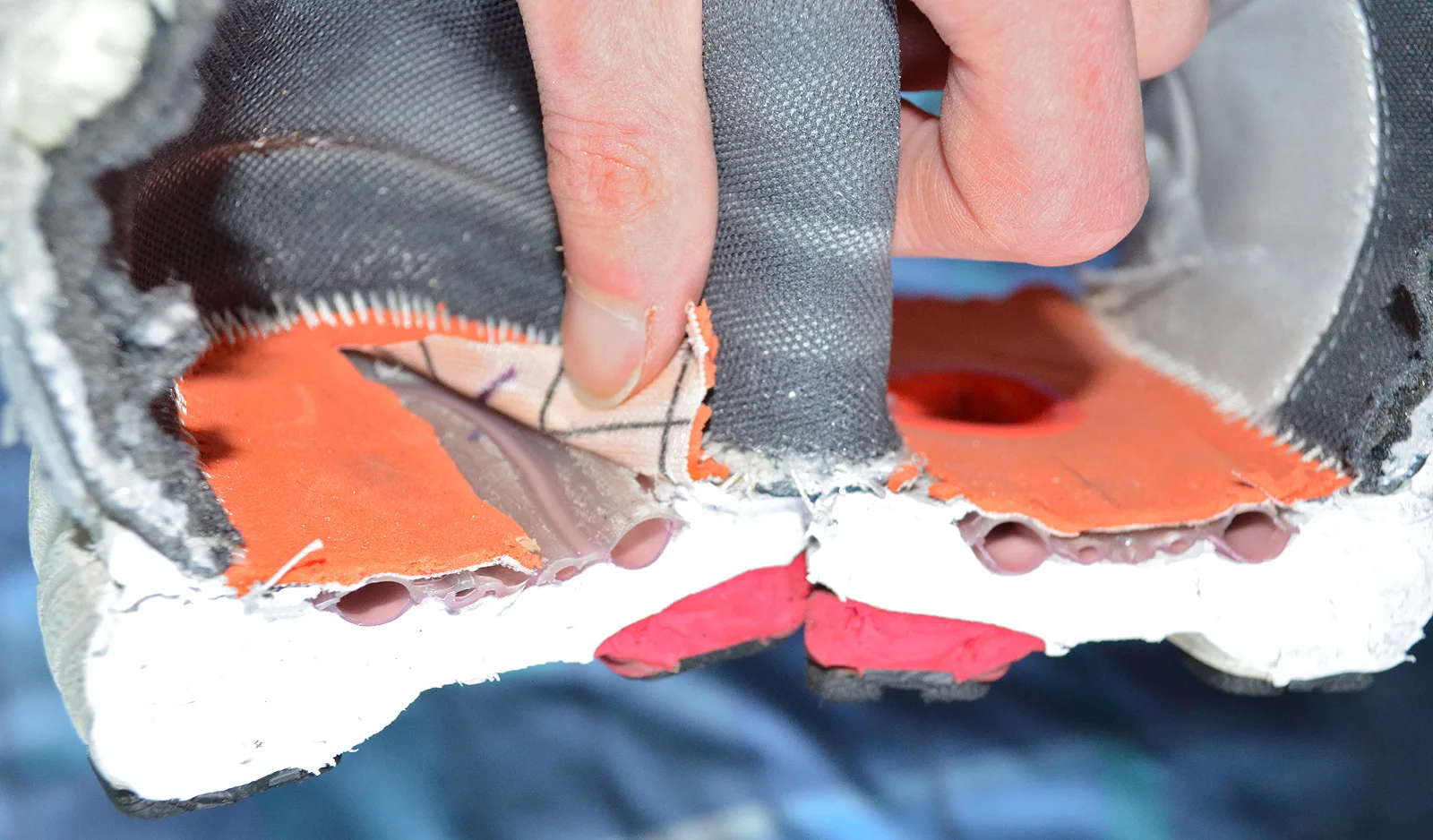
Turn a worn pair over and look at the sole and the heel. The pattern is a record of how you actually walk and how the shoe actually fit.
Sole Wear Pattern Diagnosis
What you see
- Outer heel worn first
- Normal common pattern
- Wear under ball, one side
- Foot rolling, unsupported
- Toe scuffed on sole edge
- Foot not clearing ground
- Uneven left-right wear
- Bodies not symmetrical
- Lining worn through at heel
- Heel slipped all along
- Sole thin at flex point
- Normal, resole point
What it means
- Outer heel worn first
- Replace heel tips earlier
- Wear under ball, one side
- Different last or support
- Toe scuffed on sole edge
- Check flexibility and weight
- Uneven left-right wear
- Fit to the larger foot
- Lining worn through at heel
- Shoe too large or counter failed
- Sole thin at flex point
- Resole before it goes through
What to change
- Outer heel worn first
- Wear under ball, one side
- Toe scuffed on sole edge
- Uneven left-right wear
- Lining worn through at heel
- Sole thin at flex point
| What you see | What it usually means | What to change next time |
|---|---|---|
| Outer heel worn first, both shoes | The common pattern; normal | Nothing, but replace heel tips earlier |
| Wear concentrated under the ball on one side | The foot is rolling; the shoe is not supporting it | Consider a different last shape or support |
| Toe scuffed on top of the sole edge | The foot is not clearing the ground | Look at the shoe's flexibility and weight |
| Uneven wear between left and right | Bodies are not symmetrical; this is common | Fit to the larger foot, always |
| The inside lining worn through at the heel | The heel was slipping the whole time | The shoe was too large or the counter failed |
| A sole worn thin at the flex point only | Normal, and the point to resole at | Resole before it goes through |
The last row is the practical one. A sole is resoled when it is thin, not when it is through, because a hole lets water reach the insole and turns a routine job into a different repair.
What a published review can still tell you
Three things, all of them factual rather than evaluative. Whether the construction is repairable, which is checkable and reported reliably. What the shoe is made of, which the maker has to state. And a pattern of the same complaint from many people, which is real information in a way that an average rating is not.
Everything else is one person's foot. The claim to discount hardest is comfort, because it is the claim most dependent on the reviewer's own shape, and it is the one most confidently made.
What to record for next time
Keep one page for footwear. The shoe's construction type, the width you bought, whether it fit, where it failed, and how long it lasted. After three pairs that page will predict more about a purchase than any review.
One Page Per Pair
- Construction type
- Width bought
- Whether it fit
- Where it failed
- How long it lasted
The same logic applies to garments, where specifications differ and claims are looser; see the guide to men's professional wear. Construction facts for the repairable and consumable distinction are in the guide to work shoes.
The shoe sets the register of everything above it; see business formal at one end and business casual for men at the other.
Where a shoe is required rather than chosen, the trial above is beside the point: the specification comes from the employer's hazard assessment and is set out in the federal foot protection standard. Which roles that reaches is described in the guide to industry dress codes.
Common questions
Can I return a shoe after wearing it outside?
Usually not, which is why the trial starts indoors. Read the return terms before the first wear and plan the first three days around them.
Is breaking in real?
Real and limited. Leather softens and molds. It does not change size and it does not widen a last that was cut narrow. Pressure from tightness on day one is still there on day thirty.
Should I buy the same model again when a pair wears out?
If it fit and lasted, yes, with one check: makers change lasts and factories without changing names. Try the new pair as if it were new, because it may be.
What does a very short lifespan tell me?
Look at the sole construction first and at rotation second. Most short lifespans are a consumable shoe worn daily, which is two decisions rather than a defect.