Features
Men's business casual: few variables, register errors, fit and fabric
Men's business casual has few variables, so this covers register errors, fit and fabric, the unwritten lower boundary, and how to build a small working set.
Men's business casual is what was left behind when the suit stopped being compulsory and nothing was put in its place.
That history explains the particular way it goes wrong. The old default was restrictive, but it was complete: it told you what to wear, what went with it, and what counted as correct. When it was withdrawn, the instruction that replaced it was a negative one.
No jeans, no trainers, no tie needed. Nobody wrote down what to do instead, so the field is now narrow and easy to get subtly wrong. A small set of choices means each one carries more weight than it should.
What to take away
- The vocabulary is small, so the variables that remain are doing all the work: fit, fabric, and the shoe. There is nowhere for a mistake to hide.
- Most errors here are register errors, not taste errors. A garment belongs to a system, and the trouble starts when pieces from two systems are combined.
- The lower boundary is enforced socially and quietly. Almost nobody will tell you that you crossed it.
Why the choices are so few and it still goes wrong
Look at what is genuinely available on an ordinary day and the list is short: a trouser, a shirt or a knit, sometimes a layer, and shoes. Four decisions.
That sounds easy, and that is the difficulty. Where a field has few variables, each one gets examined.
Nobody notices one garment among twenty. Everybody notices the shoulder seam sitting an inch too far out when only four things are in view. The narrowness that seems like a relief raises the stakes on each choice.
It also means there is very little signaling range. Two men can be wearing the same four categories of item and be read completely differently, and the difference is entirely in execution. The previous generation faced the opposite situation, where the system did the work and you mostly had to comply with it.
Register errors, which are the common ones
The most frequent mistake is not choosing something ugly. It is combining pieces that belong to different systems, each of which is fine on its own. A room reads this immediately and usually cannot articulate it.
Register errors: wrong system
Wrong pairing
- Orphaned suit jacket
- Suit cloth, suit structure
- Shirt built for a tie
- Stiff collar, high stance
- Formal shoes
- Slim sole, high polish
- Athletic cloth
- Performance sheen and drape
Why it fails
- Orphaned suit jacket
- Looks like lost trousers
- Shirt built for a tie
- Collapses without a knot
- Formal shoes
- Reads as a leftover
- Athletic cloth
- Hard to place in an office
What works instead
- Orphaned suit jacket
- Jacket designed to work alone
- Shirt built for a tie
- Softer, shorter collar
- Formal shoes
- More weight, less glassy
- Athletic cloth
- Comfort via other cloth
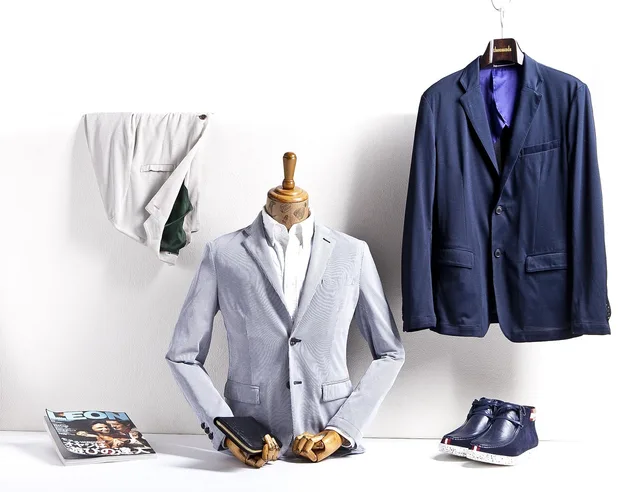
The orphaned suit jacket. A jacket cut as half of a suit is made from suiting cloth, in a suit's color, with a suit's structure. Worn over other trousers it does not become a sports jacket; it looks like a man who has lost his trousers. The garments that work alone were designed to work alone, in different cloth with different weight and texture.
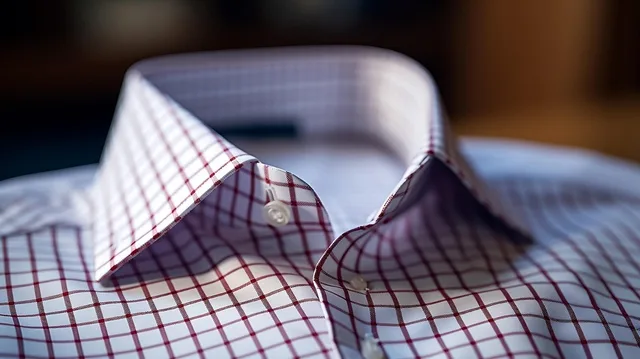
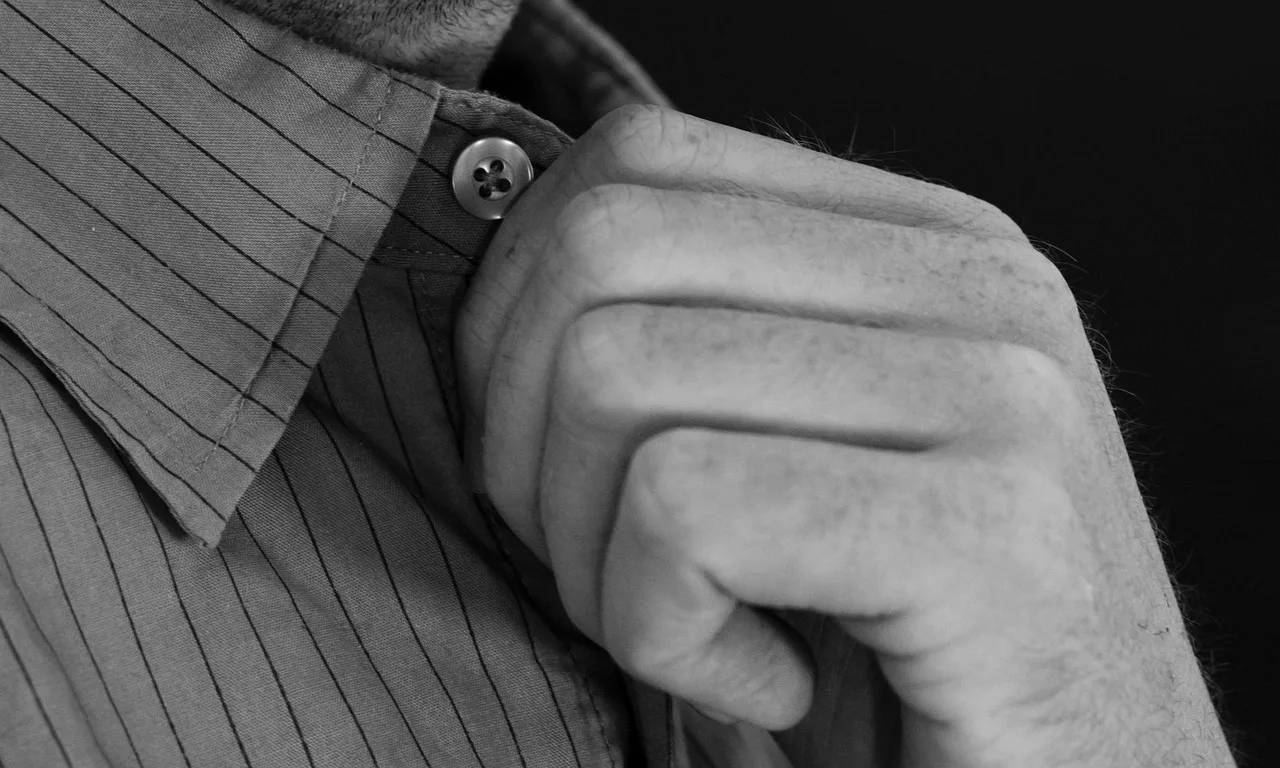
The shirt built for a tie. A collar with stiff interlining and a high, closed stance is engineered to sit around a knot. Without one it stands away from the neck and collapses. Shirts intended to be worn open have softer, shorter collars that hold a shape on their own. This is a construction difference, not a styling preference.
Formal shoes under casual trousers. A highly polished shoe with a slim sole belongs to the same system as the suit. Under a heavier casual trouser it reads as a leftover. The shoes that work here have a bit more weight and a less glassy finish.
Athletic cloth in a room that is not athletic. Technical fabrics designed for performance have a distinctive sheen and drape that is easy to identify and hard to place in an office. Comfort is a fair objective, and it is better achieved with the weave than with the technology.
One item at the wrong formality. The whole outfit is read at the level of its least formal element. A carefully assembled set of clothes with one obviously casual component is read as casual, and the effort spent on the rest is not recovered.
What to actually spend attention on
The vocabulary being small, three variables carry nearly everything.
Three variables that carry everything
- Shoulder seam sits where shoulder ends
- Trouser hangs from waist, no seat tension
- Cloth has visible texture, not flat suiting
- Heavier cloth holds a line through the day
- Shoes set formality of everything above
Fit, in two places. The shoulder seam should sit where your shoulder ends, because that seam is the one an alteration cannot practically move. The trouser should hang from the waist without being held up by tension across the seat. Length is adjustable, waist is adjustable, sleeves are adjustable, and a small amount of alteration on an ordinary garment beats an expensive one that fits nobody in particular.
Fabric weight and texture. This is the quiet difference between clothes that look intentional and clothes that look like a compromise. Cloth with visible texture reads as belonging to the casual register on purpose. Smooth, fine, flat cloth reads as suiting, and outside a suit it reads as a fragment of one. Weight matters too: heavier cloth holds a line through the day, and light cloth in a trouser is where most men discover creasing at the hip. Weight is often unstated; fiber content is not, because the rules on textile and wool labeling require it to be disclosed, and it is the more reliable thing to read on a ticket.
Shoes, which are looked at more than anyone admits. They set the formality of everything above them, they are the hardest item to fake, and they are the item where condition is as legible as quality. A well-kept ordinary shoe outperforms a neglected expensive one, and that is entirely within your control.
The boundary nobody will point out
There is a lower edge to what a given room accepts, and crossing it produces no feedback at all. Nobody comments. What happens instead is slower and harder to trace: you are given fewer of the meetings where appearance is part of the message.
Because there is no correction, the only reliable way to find the edge is to observe it. The people two levels above you mark the upper end. What changes on days when clients or the board are in the building tells you whether the code has a second setting that nobody wrote down.
And what the newest arrivals wear after three months tells you where people settle once they have worked out the real rule as opposed to the stated one.
One part of the boundary is not the room's to set. Where religious practice requires dress or grooming, a conflict with a workplace expectation runs through an accommodation process rather than through the code. The federal agency responsible sets out its position on religious dress and grooming at work.
Dress one notch above your estimate for the first fortnight in any new building. Relaxing a step later is easy and unremarkable. Recovering from having been visibly under-dressed in the first week takes considerably longer, because first impressions in this area are formed fast and revised slowly.
Building the small set
Because the vocabulary is narrow, a working wardrobe here is genuinely small, and trying to make it large is what produces the cupboard full of nearly-right items.
Building the small set
- Two trousers, cloth clearly not suiting
- Shirts and knits that work under a layer
- One structured layer, non-suit texture
- One pair of shoes for four days a week
- Stop; add only for a repeated gap
Start with two trousers in cloth clearly not suiting, in colors that go with everything you own. Add shirts and knits that work under a layer without bunching at the shoulder.
Add one layer with some structure, in a texture that makes clear it was never part of a suit. Add one pair of shoes you can wear four days a week and are willing to look after.
Then stop, and add only when a specific gap has irritated you more than once. Nearly everything men buy beyond that point is bought to avoid repetition, and repetition is not the problem it feels like.
The parallel version of this problem, where the range is narrower and the reading is faster, is set out in business casual for women. The mechanics differ enough that the two are worth reading as separate subjects rather than as one subject with two versions.
Common questions
Can I wear a suit jacket on its own if it is a dark color?
Color is not the issue; cloth and construction are. Fine, flat suiting reads as suiting whatever shade it is. If you want a jacket that works alone, it needs to be made from something visibly different in texture and weight, which is a different garment rather than the same one styled differently.
Do I need a tie?
Rarely by default, and the useful question is whether the room has a second setting for client or board days. If it does, having one thing that works with a tie is worth more than owning several. If it does not, you are unlikely to need one at all.
What about jeans?
It depends entirely on the building, and it is one of the few things a written code usually does answer. Where they are accepted, the same register logic applies: the rest of the outfit has to belong to the same system, and a formal shoe underneath is the most common way it goes wrong.
Is comfort a legitimate goal?
Yes, and it is better pursued through cloth choice than through athletic materials. Weight, weave and a trouser that actually fits at the waist deliver most of the comfort people are chasing, without moving the outfit into a register that the room will read as out of place.
How do I know if I have got it wrong?
You will not be told, which is the problem this whole subject has. The available evidence is comparative rather than direct: look at what the people whose position you would like are wearing on ordinary days, and notice whether the gap between that and your own is a deliberate choice or an accident.
In this guide
- A four-rung temperature ladder for business casual menswearBusiness casual men ideas arranged as a ladder of four temperature rungs, with what the shirt, the knit and the outer layer each have to do.
- Forget the brand list: judge business casual menswear by constructionBest business casual men brands, replaced by a construction check: the trouser waistband, the shirt side seam and the knit edge, in one minute.
- Affordable business casual men: a cost-over-time guideAffordable business casual men starts with more than the tag: weigh tailoring, cleaning, repairs, replacement, garment rotation and second-hand value.
- Business casual mistakes made in the shop, the morning and the yearBusiness casual men mistakes sorted by where they happen: in the shop, in the morning, and across the year as condition quietly drifts downward.
- Why does a business casual review mean nothing without a real test?Business casual men reviews are worth little without a test, so here is what one has to include, how to run it yourself, and its real limits.
- 7 things worth knowing about business casual men examplesBusiness casual men examples across six real working days, each with what was worn, why it worked, and the pattern that transfers to your own.