Industry
Part of Accessories and bags: common mistakes, and the better choice each time
6 things nobody tells you about accessories and bags styles
Accessories and bags styles are read as choices rather than necessities: how a room reads them, and the noise and reflection nobody accounts for.
At work, accessories and bags styles help shape how a room reads a person. Accessories are the part of an outfit nobody made you wear. Clothing can be explained away as necessity. A watch, a scarf, a bag or a ring is a choice.
Rooms read choices as evidence about the person making them. So a small item can carry more weight than an expensive garment. The same item lands differently in two buildings on the same street.
What to take away
On camera and in quiet rooms, accessories have physical effects that have nothing to do with appearance: they reflect light and they make noise.
- Accessories are read as deliberate because they are optional. That is the whole mechanism, and it works for you as easily as against you.
- Consistency reads as intent. Items that share a visual family look chosen; a collection of unrelated items looks accumulated.
- The setting determines how much attention an item can ask for. In a room where the work is the subject, a large, bright or moving item can pull focus.
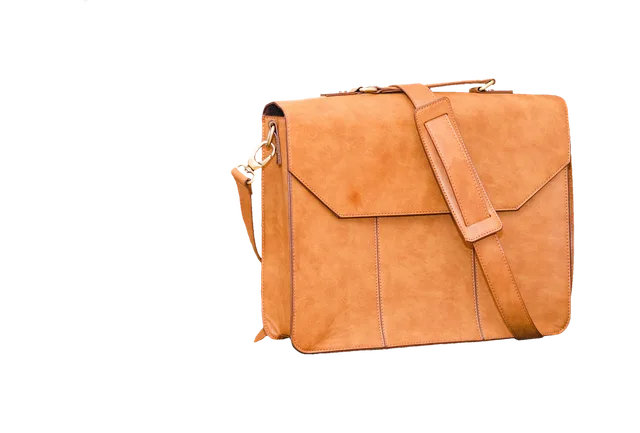
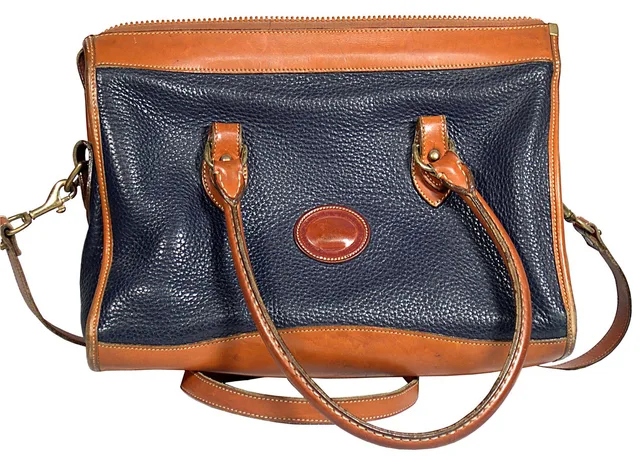
- Bag silhouette helps set formalitya structured briefcase, satchel or tote often reads as more formal than a soft backpack or crossbody, though the setting and function matter.
- Bracelets against a desk, bangles near a keyboard and a large ring on a gesturing hand can make noise in quiet rooms or on an open-microphone call.
- Polished metal, a watch face or a bright earring can reflect light into a camera, creating a highlight that competes with the face.
What a room is actually reading
Two signals do most of the work, and neither is about cost.
The first is how much attention an item asks for. A plain strap and a plain buckle ask for none. A large, bright, or moving item asks for some.
Neither is right or wrong, but attention should match what the setting can comfortably give. In a room where the work is the subject, items asking for attention pull focus from what you are saying.
The second is coherence. Items in one visual family, a color range, a metal tone or a formality level, read as a set. Items that do not read as a pile.
This is the useful residue of the old rule that leather should match leather. The rule is a convention with exceptions, but its reason holds. Repeated tones look intentional because coincidence rarely repeats.
The same item in three settings
How accessories are read
- Conservative professional
- As punctuation, and as a test of judgment
- Ordinary office
- As personality within a range
- Creative or client-facing studio
- As content, and as evidence of taste
- Field, plant or clinical
- Often restricted for safety or hygiene reasons
What tends to work
- Conservative professional
- Few items, low contrast, nothing that moves or catches light
- Ordinary office
- One or two items that are clearly chosen rather than incidental
- Creative or client-facing studio
- More latitude, and an expectation that something will be interesting
- Field, plant or clinical
- Whatever the rules permit, and nothing loose
The bottom row is not a style rule at all. Near moving equipment, limits on anything that hangs come from the employer's hazard assessment. That is what the OSHA general requirements for personal protective equipment describe. In food handling they come from the operation's own hygiene rules, which follow the framework set out in the FDA Food Code.
The mistake is assuming your own preference travels. Move from a studio to a bank and the same watch reads as loud, while moving the other way makes it read as timid. Neither watch changed.
The industry dress codes guide covers how far these conventions vary by sector, and the ordinary-office end of the range is in business casual for women.
Physical effects, which get ignored
Two properties of accessories have nothing to do with style and are worth thinking about first, because they are the ones that actually interrupt a meeting.
Check accessories in real conditions
- Record 30 seconds of typing and talking
- Listen for bracelet and ring noise
- Watch for metal reflections on camera
- Check watch face against window light
- Test shiny buckle in video frame
Noise. Bracelets against a desk, a stack of bangles near a keyboard, a large ring on the hand that gestures: in a quiet room these are audible, and on a call with an open microphone they are amplified into something close to percussion. The person wearing them is the least likely to notice. If you take calls, check by recording thirty seconds of yourself typing and talking.
Light. Polished metal reflects, and a camera meets that reflection as a bright point that pulls the eye and confuses automatic exposure. A watch face catching a window, an earring throwing a highlight, a shiny buckle in frame: all of them compete with your face for the viewer's attention, and the camera has no way to prioritize.
Neither effect is a reason to avoid accessories. Both are reasons to check them in the conditions you actually work in, rather than in a mirror.
The scarf, the belt and the watch, honestly
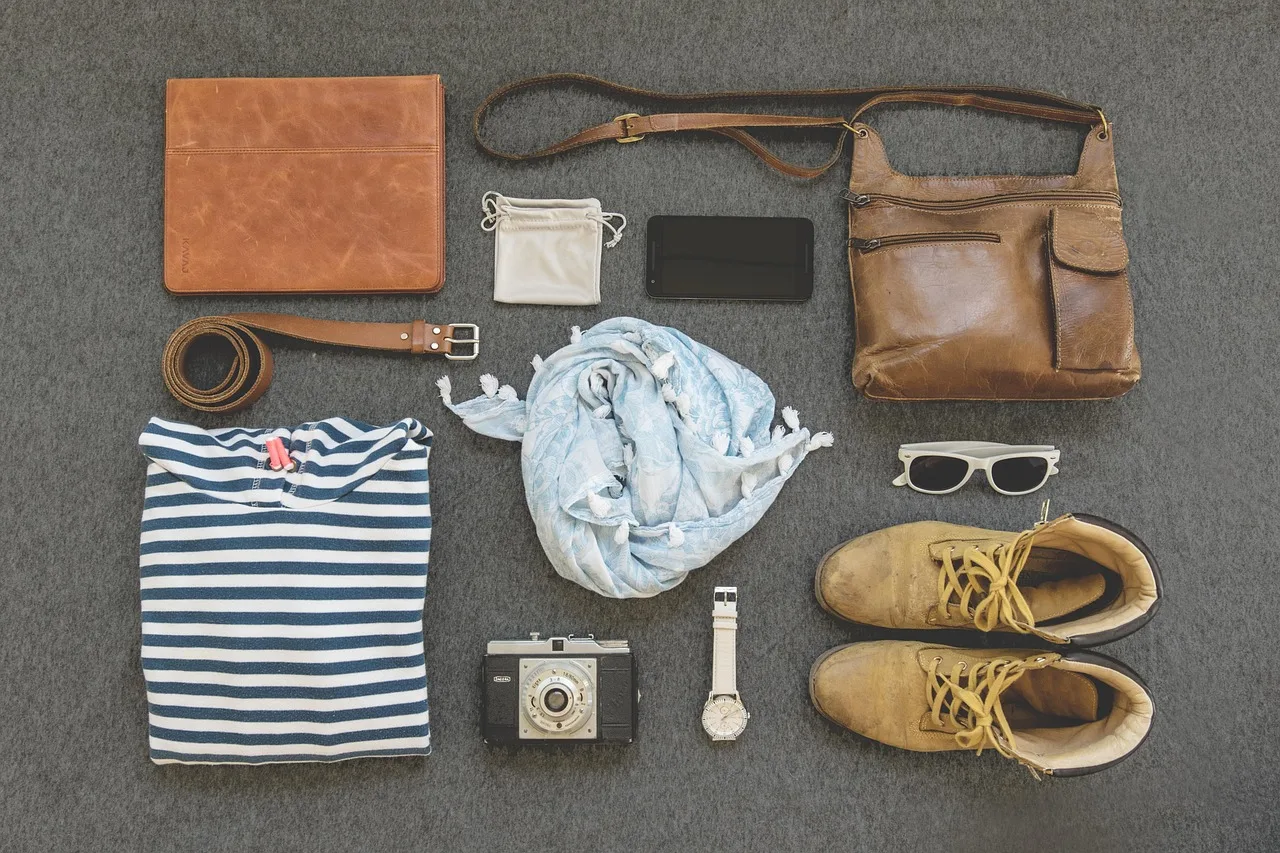
A scarf changes the color right below the face, which in a video frame is a large part of what anyone sees. That makes it the cheapest way to change how a repeated outfit reads.
It is also the fastest way to fix a color doing nothing for you under office lighting. But it is the item most likely to need adjusting all day, a real cost in a meeting.
A belt is structural on trousers that need one and decorative otherwise. Where it is decorative, it becomes a horizontal line across the middle of the body, which is why it draws attention there whether or not that was the intention.
A watch is the accessory that survives every dress code, including the ones that ban everything else. That is the argument for having one you like: it is the item with the widest range of acceptable settings, and the one least likely to be read as a statement.
The asymmetry worth naming
Accessories are a much larger share of the visible decisions for women than for men, simply because there are more categories in play and fewer of them are standardized. More decisions means more surface, and a wider surface gets read more often and more critically.
The same room that notices nothing about a man's plain watch will form a view about earrings, a bag, a scarf and a shoe, and will treat that view as information about competence rather than taste.
In practice, this is not symmetrical, and there is no point writing as if it were, because what follows is not a rule about what to wear.
A smaller number of items, chosen once and repeated, reduces the number of judgments available. That is a defensible reason to keep the set small, even for someone who enjoys the category. It also means effort is better spent on coherence than on variety.
How closely anyone chooses to accommodate that is their decision to make. It is easier to make deliberately than by accident.
Building a small set that covers most days
Start from the bag, since it is present every day and sets the formality of everything else. A structured briefcase, satchel or tote often reads as more formal than a soft backpack or crossbody, though the setting and what you need to carry matter; choose a size that holds daily essentials without appearing overfilled. Then add the items you will actually reach for. Three or four accessories in one visual family will cover more situations than a drawer of unrelated ones, and each of them gets worn often enough to be worth its price.
The buying side of that is set out in accessories on a budget, the category overview is in accessories and bags, and how any of it behaves in front of a lens is covered in headshots and presentation.
Common questions
Do metals really have to match?
No, and mixed metals are common and fine. The reason the rule persists is that matching is an easy way to look deliberate. Mixing deliberately works; mixing by accident looks like accident, which is the actual thing rooms react to.
Is it worth owning statement pieces?
If the setting has room for them and you enjoy them, yes. Understand what you are buying: an item that asks for attention will get it, in meetings where you may want the attention elsewhere. Owning one and choosing when to wear it is different from owning six.
What is the single most useful accessory for a small budget?
The bag, because it is carried every day and seen by everyone, and because the difference between one that is holding up and one that is failing is visible across a room.