Rules
Part of Accessories and bags: common mistakes, and the better choice each time
Affordable accessories and bags: durability basics
Affordable accessories and bags: learn how materials, hardware, repairability, and secondhand inspection help you judge durability beyond the price tag.
Almost nobody knows what their bag costs. They know what it cost, which is a different and much less useful number. When comparing affordable accessories and bags, divide the purchase price by the number of years the item will actually be in service. The ranking of the options in front of you changes, often completely.
What to take away
- Cost per year, not price, is the comparison that matters. A bag kept for eight years at a high price beats four cheap ones over the same period.
- The metal parts decide the lifespan. Fabric and leather almost never fail first; zippers and anchor points do.
- Repair is available and underused. A worn zipper slider, a loose seam and dried-out leather are all fixable for a fraction of a replacement.
Compare cost over time
Take the price of anything you are considering and divide it by a realistic number of years in use. Then be honest about the denominator. A design you will be tired of in two years is a two-year bag whatever it is made of. A bag whose zipper cannot be serviced is a bag that ends when the zipper does.
Affordable, in this category, is not a price band. It is that ratio: the item with the lowest cost per year of service is the affordable one, whichever end of the shelf it came from. That is why no single dollar figure answers the question of what a work bag should cost.
Price divided by years of use
Expensive
- Cost per year
- Low
- Years in use
- Decade
- Price signal
- Honest
Middle
- Cost per year
- Worst
- Years in use
- Short
- Price signal
- Least informative
Cheap
- Cost per year
- Low
- Years in use
- One stretch
- Price signal
- Honest
The comparison usually produces one of three answers. The expensive thing is genuinely cheaper because it works for a decade, while the cheap thing is genuinely cheaper because you want it for one specific stretch.
Most commonly, the middle option is worst: it costs enough to hurt and lasts as long as the cheap one.
That middle band is where most money gets wasted in this category, and it is where price alone is least informative. What separates a five-year bag from a fifteen-year bag is not the price tag, it is a short list of components you can inspect.
What you are actually paying for
The cheap version
- Outer material
- A coating applied over a fabric or fiber base
- Zipper
- Light coil with a stamped slider
- Strap anchors
- A line of straight stitching through one layer
- Edges
- Raw or thinly painted
- Base
- Same panel as the sides
- Hardware
- Hollow or stamped rings and hooks
The version that lasts
- Outer material
- A material whose strength is in the material itself, not in a surface layer
- Zipper
- A heavier gauge whose slider can be replaced separately
- Strap anchors
- Bar tacks or rivets through a reinforced patch
- Edges
- Folded, stitched or properly finished and touchable up later
- Base
- A separate reinforced panel, ideally with feet
- Hardware
- Solid cast parts that do not deform under load
A polyurethane coating over a fabric base is light, water resistant, and inexpensive, and it works well for several years.
Then the coating cracks at flex points and peels, and there is no repair: the surface was the product. Known in advance, that makes it a reasonable purchase rather than a disappointment.
The words on the tag have defined meanings, and the Federal Trade Commission is the authority behind them. The federal trade guides for select leather and imitation leather products set out how leather and imitation terms may be used, which clears up most of the confusion in one reading.
The practical version: full-grain keeps the whole outer surface of the hide and is the most repairable; top-grain has that surface sanded down; split is the lower layer of the hide; and bonded leather is reconstituted from scraps and binder, so it peels instead of wearing in.
Where the outer material is a textile rather than a hide, the fiber content statement is the useful part. What it has to disclose is set out in the rules under the Textile Fiber Products Identification Act — the fiber content, the country of origin, and the identity of the manufacturer, importer or other responsible party — and the same agency enforces it.
Leather and woven synthetics fail differently. Leather scuffs, dries and creases, and all three are recoverable. Woven nylon and canvas abrade at the corners and can be patched. Both give you warning and both give you options, which is the actual argument for them.
The same test on the accessories themselves
Bags carry most of the money in this category, but the smaller items fail by the same logic and are inspected the same way.
- Belts.The buckle and the stitching decide. A solid cast buckle with stitched layers holds for years; a stamped buckle with a sharp tongue cuts into the strap, and a bonded strap peels open at the fold.
- Wallets.Read the edges and the fold, the two places that fail. Stitched, edge-finished leather survives folding for years; a glued edge on a split or coated material splits along the same crease, and there is nothing left to restitch.
- Gloves.The seams at the thumb and between the fingers go first. Lined leather or a dense knit outlasts a coated shell, which stiffens at the knuckles and then cracks.
- Umbrellas.Fiberglass or mixed ribs flex back in wind; a thin steel frame bends and then rusts at the joints. A vented canopy is the version that survives a gust.
- Scarves and small goods.A finished, hand-rolled edge keeps its shape; a raw or fringed edge on a loose weave frays and takes the seam with it.
The metal is the deadline
Turn any bag over to the zipper and check the slider, the small piece that runs along the teeth. It takes all the wear, spreads slightly over time, and stops closing the teeth behind it.
On a standard-gauge zipper, a repairer replaces the slider and the bag continues. On an unusual or proprietary zipper, the whole assembly must be replaced, which means opening and restitching the top edge. That cost then decides the bag's future.
Gauge is simply the size of the chain: a #5 is the common weight for bags and garments, and a #10 is luggage-grade. A widely available chain — YKK is the maker you will see most often — is what keeps the cheap repair possible. If the slider cannot be matched from a repairer's stock, assume the expensive repair.
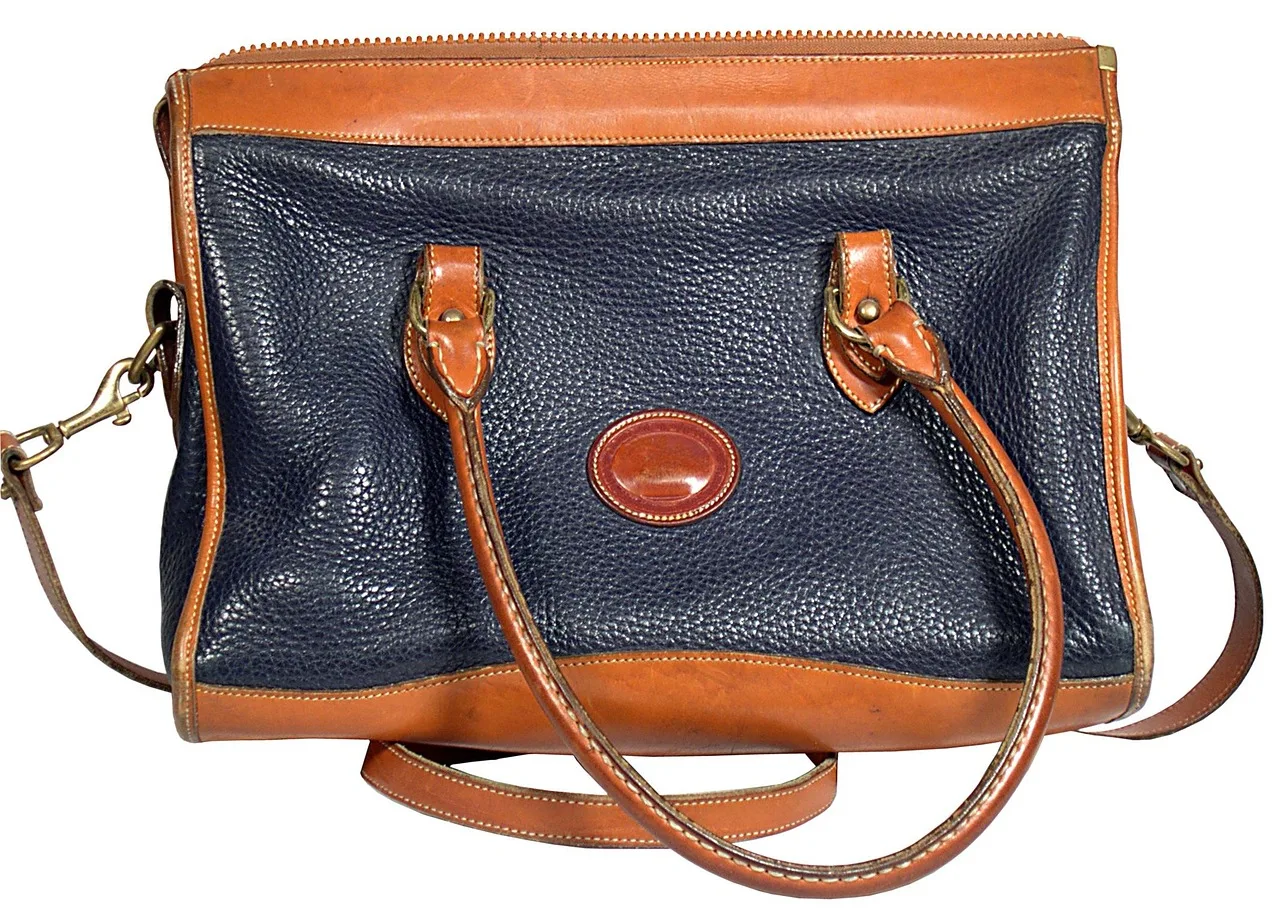
Rings, hooks and buckles matter for the same reason. A solid cast ring holds its shape under a heavy load; a hollow or stamped one opens slightly over years and eventually lets go, usually while full. Squeeze them. The difference is obvious by hand and invisible in a photograph.
None of this requires a brand name, and no brand name substitutes for the inspection. Two bags at the same price can differ on every row of that table.
Repair and reconditioning, which most people skip
A repairer who resoles shoes will usually also restitch a bag, replace a slider, refinish an edge and rebuild a strap anchor. The work is unglamorous and cheap relative to replacement, and it is available in most places.
Two of those jobs are yours to do. Dried leather recovers when a neutral leather conditioner is worked in thinly and left to absorb, before the creases turn into cracks. A worn edge on a strap, a belt or a wallet recovers with edge dressing or a wax-based edge finish applied in thin coats, which seals the edge before it frays into the stitching.
Repairs most people skip
- Dried or scuffed leatherclean and condition
- Zipper will not closereplace slider first
- Opened seamcheapest repair, do it early
- Stretched strapshorten, replace or reinforce
- Worn cornersadd patch or base panel
The same reasoning applies to footwear, where the repairable and non-repairable versions of the same object sit side by side on the shelf, as set out under choosing shoes that last.
Buying second hand, where the advantage is largest
Accessories are the best category in the whole wardrobe for buying used, because everything that determines quality is visible on inspection. You can see the stitching, feel the hardware, test the zipper and judge how the material has aged. None of that is available when buying new online.
Second-hand inspection checks
- See the stitching
- Feel the hardware
- Test the zipper
- Judge how material aged
- Check strap anchors for pulling
- Smell the interior for moisture
The checks are the same ones above, plus two. Look at the strap anchors for stitching that has started to pull, since that is the failure that ends a bag. And smell the interior, because a lining that has absorbed moisture will not recover.
Where accessories sit against the rest of a budget
A small number of accessories carries more visual weight than the same money spent on another garment, because they are the parts that change a repeated outfit into a different one. That is the honest case for spending here rather than on a fourth top: it is the cheapest available variety.
It is the cheapest available way to buy less: one bag kept for a decade is a decision made once. The full category sits under accessories and bags, while the load-carrying side of the same question is in setting up what you carry.
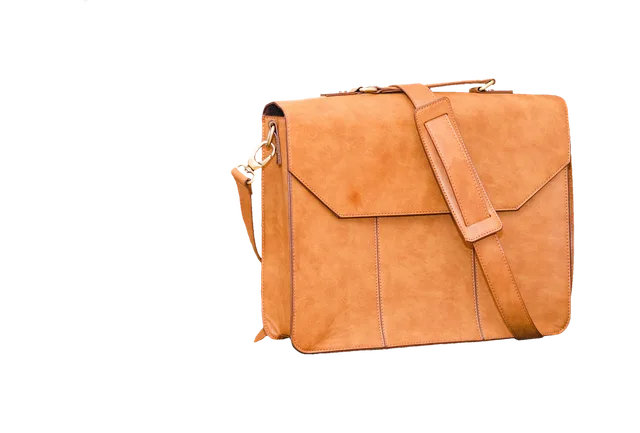
For business-formal settings, a structured briefcase or tote in a restrained color and finish is generally a safer fit. Choose the shape by the load: a tote with a wide base takes a laptop and a folder and stays upright, while a slim briefcase with a handle suits documents and little else. Business-casual dress allows more relaxed shapes, provided a bag is neat and in good condition. How accessories interact with formal clothing is covered under business formal on a budget and work dresses.
Common questions
Is leather always the better buy?
No. It is heavier, needs occasional care, and marks. Its advantage is that nearly everything that happens to it is reversible. If the bag will be soaked regularly or carried at maximum weight every day, a woven synthetic may serve better and weigh less.
How much should a work bag cost?
Start from the years you need and work backward. Divide a candidate's price by the years it will realistically serve, compare that figure across the options in front of you, then check whether the zipper, the strap anchors and the base can plausibly reach those years. That check is what makes a price affordable or not, and it is the part no price tag can tell you.
Are two cheap bags better than one good one?
Only if they genuinely do different jobs. Two similar bags bought for variety cost more, get used less, and each wears out at the same point as if it were the only one.