Guides
Accessories and bags: common mistakes, and the better choice each time
Accessories and bags, mistake by mistake, with the better choice each time, plus the construction checks that decide how long a given bag lasts.
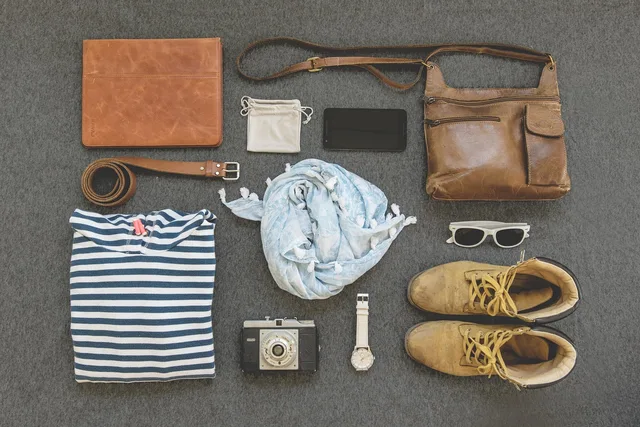
An accessory is the item most often bought without a job to do. A jacket must keep you warm, and a shoe must carry you.
A bag, belt, watch, or scarf can be bought for no reason beyond liking it. Most mistakes in this category follow from that.
The fix is to give every accessory a job before buying it and to judge it by whether it does the job. What follows is a list of the common mistakes, each paired with the better choice, and a section on the one accessory that is genuinely doing structural work all day, which is the bag.
What to take away
- Give every accessory a job. An item with no job is either decoration, which is fine if you know that is what it is, or clutter, which reads as indecision.
- The bag is a load-bearing garment. What you carry in it determines what it does to your shoulder, your jacket and your posture, and the bag has to be built for that load.
- Fewer, worn consistently, reads as deliberate. The room remembers one good watch and forgets six bracelets.
Mistakes, and what to do instead
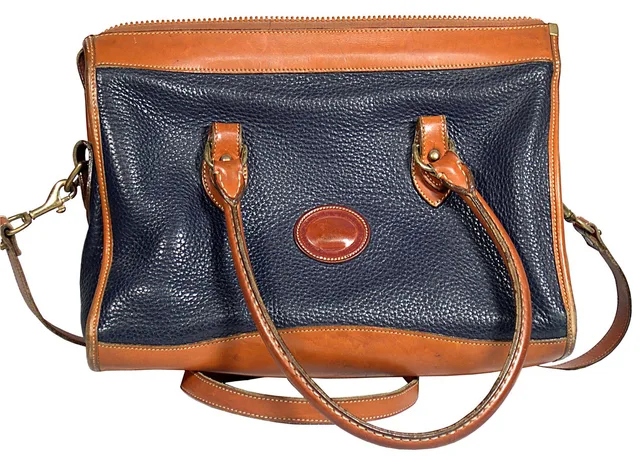
Buying the bag for its look and then putting a laptop in it. A bag designed as a soft, unstructured shape collapses around a laptop, drags on the shoulder strap and bows the strap anchor out of the leather. Better: decide what the bag has to carry every day, and buy a bag whose base is stiff enough to hold that flat and whose strap is anchored through a reinforced panel rather than sewn to a single layer.
A shoulder strap on one side, every day. The weight pulls the shoulder of every jacket you own out of line and wears the cloth at that point. Better: alternate sides, or carry by the handle on days with a jacket, or move to a bag that carries across the body or in the hand.
Hardware that scratches. Buckles, clasps and feet in bright metal mark a desk, a table and the inside of a car door, and they mark the bag itself where the strap swings against the body. Better: fewer metal fittings, a matte or dark finish, and feet on the base so the bag stands up rather than sits on its own leather.
Belt and shoes in different finishes. A matte belt over a polished shoe, or the reverse, is read as two outfits meeting in the middle. Better: match finish before matching color. A polished belt with a polished shoe in a nearby color works; an exact color match in two different finishes does not.
Jewelry scaled for a room, worn on camera. Fine pieces disappear at video resolution and large pieces catch every light source and flash. Better: on camera days, one piece at the neckline, matte rather than reflective, and nothing that moves when you talk.
A watch that competes with the cuff. A thick case will not sit under a shirt cuff and will pull the jacket sleeve every time the arm bends. Better: on days with a jacket, a case slim enough to disappear under the cuff, which is the whole point of a watch in a formal room.
A scarf with no function. Worn indoors in a heated building it reads as a costume. Better: a scarf for the walk, removed at the desk, in a cloth that does not shed on a dark jacket.
Everything at once. Watch, bracelet, rings, necklace, earrings, brooch, all on the same day. Better: choose two, and make one of them the thing that is worn every day so it becomes part of how you are recognized.
The bag is doing structural work
Everything else on this page is optional. The bag is not, and it is the one accessory where construction matters as much as it does in a shoe.
| What to check | Why it matters | What to look for |
|---|---|---|
| The base | A soft base lets the load sag and deform the bag | A stiffened panel, with feet, that holds a laptop flat |
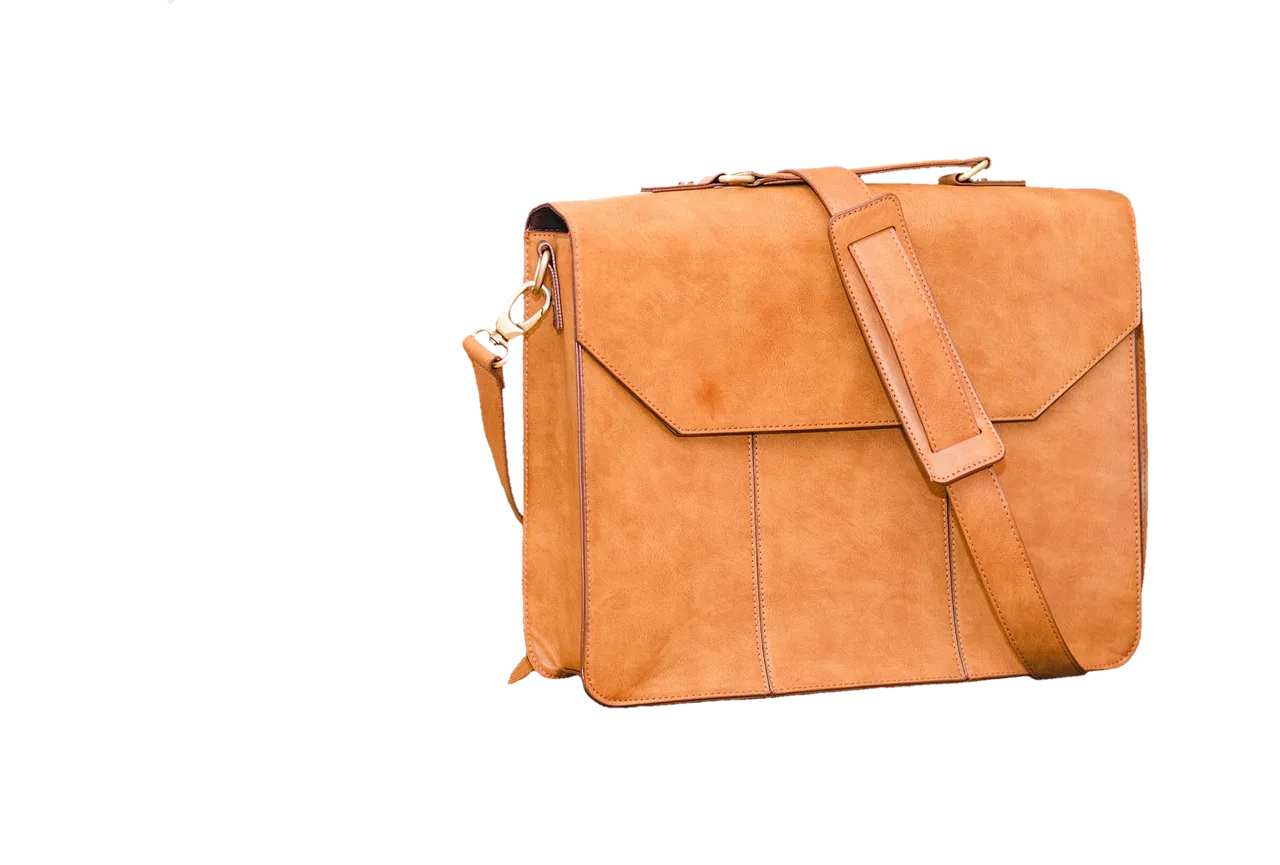
| The strap anchor | This is where a bag fails first | The strap fixed through a reinforced patch or a metal ring set into a doubled panel |
| The strap itself | It carries the whole load across a narrow band of shoulder | Wide enough not to cut in; adjustable; padded if the load is heavy |
| The closure | A bag that gapes tips out onto the floor of a taxi | A zip or a flap that closes fully, with the zip mounted in a reinforced seam |
| Interior | A single open space becomes a search every time you need a key | A few fixed pockets, and a padded sleeve if a laptop is a daily passenger |
| Edge finishing | Raw or painted edges crack and wear through | Turned, stitched or well-sealed edges that will take years of rubbing |
The strap row is a physical question as much as a construction one. A load carried on one narrow band of shoulder, every day, is the kind of thing the OSHA material on ergonomics is concerned with, and the remedy is the same there as here: spread the load, or reduce it.
A bag that passes this table can be plain and inexpensive and last a decade. A bag that fails it will fail at the strap anchor within a year whatever it cost.
Leather, and what the word means
Bags are where leather claims are made most freely and understood least. "Genuine leather" can cover a wide range of quality, and "bonded" describes material largely reconstituted, not a hide.
In the United States, trade guides for select leather and imitation leather products explain how such terms may and may not be used. Reading them once removes most of the confusion permanently.
In the shop, the practical test matches the one for shoes: bend it, check the cut edge, smell it. Real hide flexes without cracking, shows fiber at a cut edge, not a foam layer, and has no solvent smell.
A coated fabric or synthetic bag is a perfectly good bag, and for weather it is often the better one. The problem is only when it is sold as something it is not.
When the workplace restricts what you carry
In some settings an accessory stops being a choice. Anything that hangs is restricted near moving equipment, jewelry is limited in food handling and clinical areas for hygiene reasons, and some buildings restrict what may be brought into particular rooms at all. None of that is a style judgment, and none of it is negotiable against how an outfit reads.
Two practical consequences follow. Find out before your first day rather than on it, and ask by area rather than by job title, because these rules attach to places and tasks. And keep the restricted items out of the daily set entirely, so that the question never arises on a morning when you are late.
Where accessories sit in the outfit's register
Accessories move an outfit up or down a register more cheaply than any garment. A polished belt and a slim watch pull an ordinary day one notch toward business formal. A canvas bag and a fabric strap pull a suit one notch away from it.
Used deliberately, that is a tool; used by accident, it is the reason a carefully assembled outfit still reads slightly off.
The same rule governs everything else: an outfit is read at the level of its least formal element. Accessories are the elements most often forgotten when that reading is made.
The shoe most often sets that level, so the guide to work shoes treats it on its own.
Common questions
Is one good bag enough?
For most working weeks, yes, if it was bought for the load it actually carries. Add a second only for a different job, such as travel or weather, rather than for variety.
Should metals match?
Within one outfit it looks more considered, and on camera it stops the eye jumping between two different reflections. It is a preference rather than a rule, and it matters less than finish matching between belt and shoe.
How do I carry a laptop without a shoulder bag?
By the handle in a structured bag, or across the body with a wide strap. Both spare the jacket shoulder. A backpack does the same for the body and does not survive a formal room, so it is a question of which register the day belongs to.
What do the wardrobe guides say about this?
The grid method in women's professional wear treats accessories as a fifth row that has to pair with everything above it; the selection order in men's professional wear puts them last, after the fixed points of fit are settled. Both come to the same place: an accessory earns its position by having a job.
In this guide
- Choosing a work bag: straps, laptop padding, failure pointsChoosing bags and accessories for work: how load placement, strap adjustment, laptop padding, sizing and the first failure points decide which bag to buy.
- Affordable accessories and bags: durability basicsAffordable accessories and bags: learn how materials, hardware, repairability, and secondhand inspection help you judge durability beyond the price tag.
- Which bag and accessory trends will last, and which are just a cycle?Accessories and bags trends 2027 follow what people carry: which changes will hold, which are cycles, and how to specify a bag from its contents.
- 6 things nobody tells you about accessories and bags stylesAccessories and bags styles are read as choices rather than necessities: how a room reads them, and the noise and reflection nobody accounts for.
- What seams, strap anchors and linings reveal about bags that fail earlyTwenty accessories and bags construction details to check: seams, strap anchors, bases, hardware and lining, and what each predicts about failure.