Rules
Part of Business formal: what the experienced already know
Business formal ideas worth trying first
Business formal ideas 2027 built on one plain outfit: six configurations made from the shirt, the neckwear and the shoes, and the order to buy them in.
Most people who need formal clothing need it a few times a year. That makes a second formal outfit hard to justify and a single one hard to repeat.
The problem is not variety for its own sake. The same people see you at the same events, and one unvarying outfit becomes what they remember instead of the occasion.
There is a way around this that does not involve buying a second suit. Everything except the suit is cheap, and everything except the suit is what the eye actually lands on.
What to take away
- Buy one formal outfit in the plainest version you can tolerate. Plain is what accepts variation; a distinctive one does not.
- The variation lives in the shirt, the neckwear, the shoes and what is at the wrist and the pocket. All of it is cheap relative to the suit.
- Match the register to the occasion, not to the last event. Evening rules invert several of the daytime ones.
Why plain is the load-bearing decision
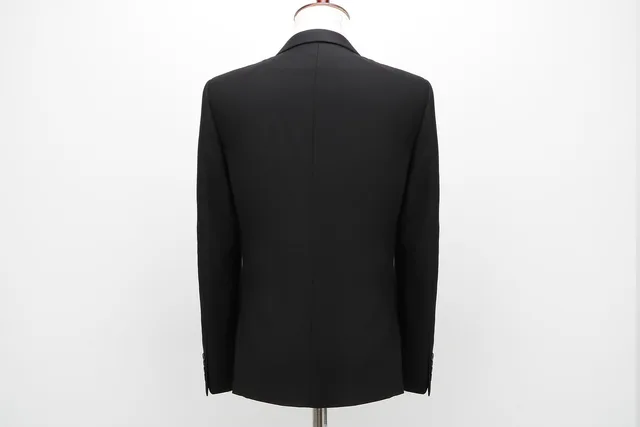
A formal garment with a memorable feature can be worn once in a given circle and then it is the outfit with the feature. A plain one in a smooth dark cloth is not remembered, which is precisely what allows it to be worn six times a year to six different rooms.
Plain also survives changes in cut, because nothing about it is a period marker except proportion, and proportion is reachable by a tailor. This is the same argument that runs through business formal: the specification is set by the occasion, and the garment's job is to meet it without commenting.
The four cheap variables
| Variable | What it changes | Range available |
|---|---|---|
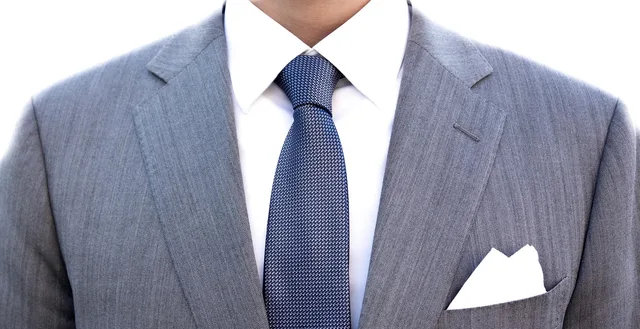
| Shirt | The largest area of contrast near the face | Color, collar shape, cuff type, cloth surface |
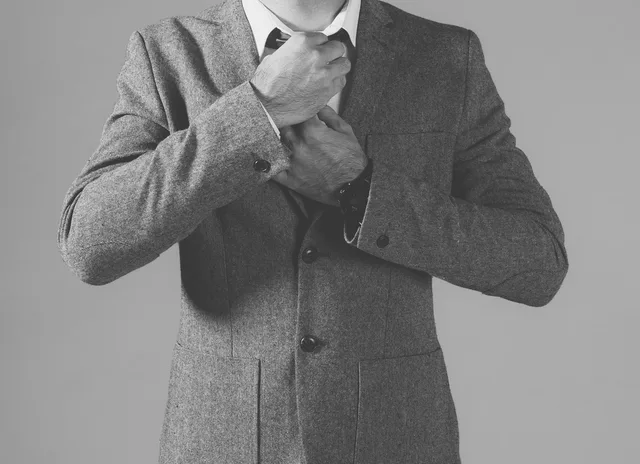
| Neckwear | The single most noticed item, or its absence | Present or absent, matte or lustrous, width |
| Shoes and hosiery | The level the whole outfit is read at | Formality of the sole and the toe shape |
| Small items | Almost nothing, correctly | A pocket square, a plain watch, cuff fastenings |
Two of these change the register enough to move the outfit up or down a level. A smooth-soled plain shoe with a slim profile reads more formal than a heavier one with visible stitching, whatever the suit above it is doing, and the construction behind that difference is explained in the guide to work shoes.
Six configurations from one suit
Think of the outfit as a base plus a setting, and write the settings down once so you are not deciding them at seven in the morning.
Six configurations from one suit
- Interviewwhite shirt, matte neckwear, plainest shoes
- Client presentationpale shirt, same base
- Daytime ceremonyspread collar, textured neckwear, pocket square
- Evening formaldarker, lustrous, no daytime accessories
- Funeralplain, dark, matte, nothing at pocket
- Ordinary dayno neckwear, stand-alone collar
- Interview or a hearing. White shirt, plain neckwear in a matte finish, the plainest shoes you own. Nothing that invites a comment.
- A client presentation. The same base, with a shirt in a pale color rather than white, which reads slightly less severe without dropping a level.
- A daytime ceremony. Shirt with a spread collar, neckwear with some texture, a pocket square that is not a match for the neckwear.
- An evening event described as formal. Darker everything, more lustrous surfaces, and no visible daytime accessories. Evening inverts the matte rule.
- A funeral. Plain, dark, matte, nothing at the pocket, and the least conspicuous version of every choice available.
- An ordinary day when the room needs one level up. Suit without neckwear, shirt with a collar built to stand on its own, and the softer end of the range takes over from there, as described in the guide to business casual for men.
What to buy first if you own none of it
The order matters, because the first two purchases carry the other four.
What to buy first
- Shoesplainest formal profile, sets the ceiling
- Suitplain, dark, altered properly
- Two shirtsone white, one pale
- Neckwear
- Everything after that is optional
Shoes first, in the plainest formal profile available, because they set the ceiling for everything above them and because they last longest. Then the suit, plain and dark, altered properly rather than bought expensively. Then two shirts, one white and one pale. Then neckwear. Everything after that is optional and should be treated as optional.
The equivalent sequence for a wardrobe built around dresses rather than suits reaches the same place by a different route, and it is set out in the guide to work dresses. The wider order of decisions for a men's wardrobe is in men's professional wear.
The two constraints that are not yours to set
Some formal expectations are not a matter of preference for either side. When workplace dress conflicts with religious practice, the issue goes through accommodation, not the dress code. The federal agency responsible states its position on religious dress and grooming at work.
When a disability makes a required item impossible, the route is the same process, described in the EEOC guidance on reasonable accommodation and undue hardship.
Neither of these is a style question, and neither should be settled by guessing. Ask, in writing, and ask early enough that an answer can arrive before the occasion does.
Common questions
Is one suit really enough?
For a handful of formal occasions a year, yes, provided it is plain and provided it is cleaned and rested between wears. It stops being enough when formal wear becomes weekly, at which point rotation matters more than variety.
How do I know which level an invitation is asking for?
Ask the host or whoever sent it. The words used on invitations are not standardized and mean different things in different circles, and one question removes the guessing entirely.
Can I use the same suit for a funeral and a celebration?
Yes, if it is dark and plain. Everything that distinguishes the two occasions is in the accessories and in the finish, not in the suit.
Does a photograph change any of this?
It changes the shirt and the neckwear, because fine patterns and high contrast behave differently under a lens than in a room. Those constraints are set out in the guide to headshots and presentation.