Rules
Part of Work dresses: knit against woven, and the fiber label that decides fit
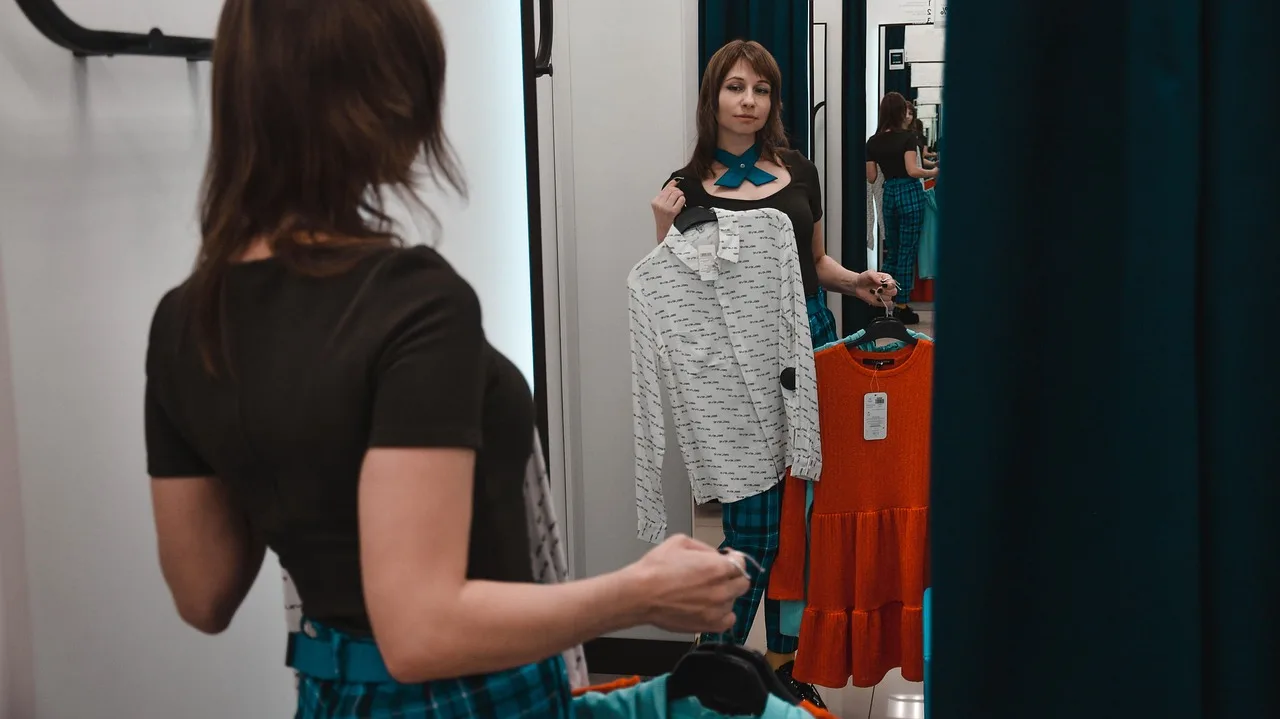
Work dress mistakes caught in the fitting room, one seam at a time
Nine work dresses mistakes made in the fitting room, each with the test that catches it: seam allowance, the seated hem, the zipper and the cloth.
A dress concentrates risk. There is no second garment to compensate, so a fault that would be minor in a separate top or skirt becomes the whole outfit. That is why almost every dress mistake is made at the point of purchase, in a fitting room, in about ninety seconds.
Nine of them follow, each with the test that catches it while the tags are still on. None of the tests takes more than a few seconds, and all of them are done standing in the fitting room rather than at home.
What to take away
- A dress is bought to its largest measurement and altered downward. Nothing can be added later.
- Most failures are found by sitting down, not by standing up. Do it every time, in every dress.
- The zipper, the lining and the seam allowance decide whether the dress has a second year. Look at all three before the color.
The nine
One: buying to the smaller measurement
A dress has to clear the bust, the waist and the hip, and bodies are rarely one size across all three. Buying to the smallest of those and hoping is the most expensive error available, because taking in is routine and letting out is limited to whatever spare cloth the maker left.
The test: turn the dress inside out and look at the side seam. A finger's width of spare cloth means the dress can go either way. A raw overlocked edge with nothing behind it means it can only go smaller.
Two: judging the hem standing up
A hem that reads well standing rises when you sit, and the difference is larger than most people expect on a narrow skirt.
The test: sit on the fitting-room bench, look down, then stand and look in the mirror. Judge the seated version, because that is where the day is spent.
Three: ignoring the zipper
An invisible zipper in a fitted dress is the single most common mechanical failure, and repairing it means opening a whole seam.
The test: run it up and down twice, quickly, and feel for a catch. A zipper that hesitates in a shop will fail within the year.
Four: no lining under a knit
An unlined knit dress clings to whatever is underneath and rides up when you walk. This is not a fit problem and cannot be fixed by a different size.
The test: walk the length of the fitting room twice and see whether the hem has moved. A lining can be added by a tailor, at a price close to the dress.
Five: skipping the reach test
A dress that fits the body may still not allow a forward reach, because the back has no ease across the shoulder blades.
The test: reach both arms straight forward as if for a keyboard. If the back pulls or the hem lifts, the dress is a standing garment and you have a sitting job.
Six: reading the size label instead of the cloth
Two dresses of identical size and identical fiber content can behave completely differently, because the weave or knit structure decides drape.
The test: squeeze a handful of the cloth hard for a slow count of ten and let go. What remains is what the room sees after lunch.
Seven: not reading the care instructions
A dress you will not dry clean is not a dry-clean dress, whatever it looks like on the rail. The label has to state a complete regular care procedure under the FTC care labeling rule, so the information is available before you decide rather than after.
The test: read it, then honestly answer whether you will do that every time.
Eight: buying a print that only works once
A distinctive print is remembered, and being remembered is exactly what stops a garment being worn every week. This is not an argument against print; it is an argument for knowing which kind you are buying.
The test: ask how many times a month you can wear it in front of the same people. If the answer is once, price it accordingly.
Nine: buying a dress that fits one weight of the year
A dress bought for a hot month and unwearable in a cold one is half a garment. The fix is not a second dress but a layer, and the combinations that do this are set out in the guide to work dresses.
The test: hold a jacket and a fine knit against it in the store. If neither sits over the neckline and the shoulder, it is a single-season purchase.
The pattern under the nine
| Mistake type | Where it is caught | Cost if missed |
|---|---|---|
| Measurement and allowance | Inside seam, before purchase | The price of the dress |
| Movement | Sitting and reaching, before purchase | Daily discomfort, no remedy |
| Mechanism | Zipper and closures, before purchase | A seam repair |
| Cloth behavior | The squeeze test, before purchase | Nothing fixable |
| Care and season | The label and a layering check | Reduced use, not failure |
Six of the nine are found by moving. That is the transferable lesson, and it is the same one that governs the fitting sequence used across women's professional wear.
What is not a mistake
Wearing the same dress often is not a mistake. Owning few dresses is not a mistake. Buying a plain one is not a mistake, and it is usually the opposite, because plain is what accepts variation from the pieces around it.
Shoes are judged on entirely different criteria, since fit is about shape rather than measurement, and the guide to work shoes covers what to check.
Where a workplace sets requirements about sleeves, hems or footwear, those come from a hazard assessment rather than from taste. The general obligation behind that sits in the OSHA general requirements for personal protective equipment. Which sectors do this is mapped in the guide to industry dress codes.
Common questions
Is it worth buying a dress that needs altering?
Usually yes, because a dress alters more cheaply than a two-piece outfit: one hem, one set of side seams. Decide the alteration and its cost before you buy, not after.
How do I know if a lining can be added?
Ask a tailor before buying, with the dress in hand if possible. The answer depends on the neckline and the closure more than on the cloth.
Should I avoid knits entirely for work?
No. A dense, stable knit is one of the most comfortable options for a long day of sitting. What to avoid is a thin, loose knit with no lining and no recovery.
What if I only find the fault after wearing it once?
Then decide whether it is one of the fixable ones. Length, waist and side seams are cheap. Shoulder, cloth behavior and cut are not, and holding on to an unwearable dress does not improve it.