Rules
Part of Men's professional wear: what to check in the jacket, cloth, trouser and shirt
Men's professional wear trends 2027: five that will last
Men's professional wear trends 2027: softer jackets, year-round cloth, the outer layer, the optional tie and camera-safe cloth, and the cycles to rent, not buy.
Most reporting on what men wear to work describes a moving average and calls it a direction. When weighing men's professional wear trends in 2027, the useful skill is not predicting next year. It is telling the difference between a change that will still be there in a decade and a cycle that will reverse before the garment wears out.
There is a test for that, and it has nothing to do with taste. A durable change is one driven by something outside clothing: how people travel, how buildings are heated, whether the day includes a camera. A cycle is driven by clothing alone.
What to take away
- A change caused by something outside the wardrobe tends to stay. A change caused by the previous change tends to reverse.
- Only three things about a men's wardrobe actually movehow much structure a garment carries, how heavy the cloth is, and where the garment sits on the body.
- The written dress code and the enforced one drift apart in one direction only, and the enforced one is the real specification.
The test, stated plainly
Ask what causes the change. If the cause is a fact about the world, the change survives. Buildings held at a steady temperature all year removed the reason for two cloth weights, and that has not reversed anywhere. A day with a video call constrained pattern and contrast, and that has not reversed either.
If the cause is the previous state of clothing, the change is a cycle. Lapels widen because they were narrow. Trousers loosen because they were slim. Nothing outside the wardrobe is pushing, so the pendulum returns, usually on a slower schedule than the garments last.
The practical consequence is a spending rule. Buy into the first kind. Rent the second kind, which in practice means buying it cheaply and expecting to be finished with it.
Five changes that will last through 2027
Each of these passes the test, because something outside clothing is driving it:
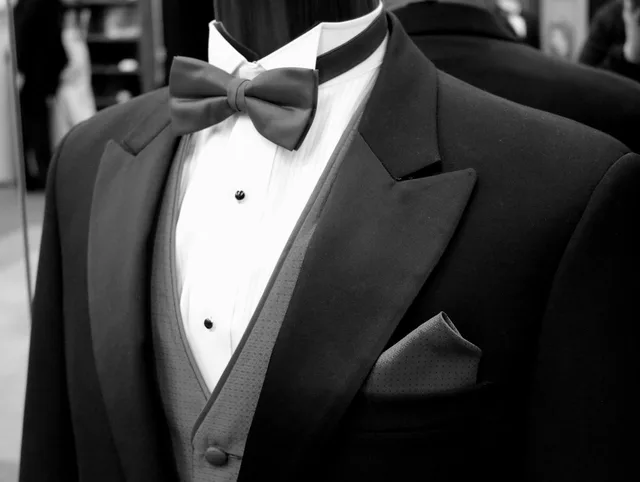
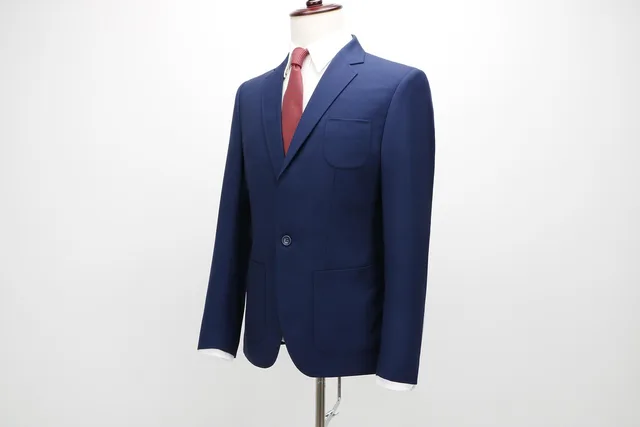
- Softer jackets.Less canvas and padding, driven by climate-controlled buildings, commuting and fewer people wearing a jacket all day.
- Year-round cloth.One cloth weight for the office, because the office no longer gets cold or hot enough to need two.
- The outer layer doing the jacket's work.The seasonal difference moves to the coat or knit worn on the commute.
- The optional tie.Optional in more places than it used to be, and kept for the days that need a higher register.
- Camera-safe cloth.Quieter pattern and contrast, because the working day now includes video calls.
What does not pass the test is lapel width, trouser fullness, rise, break and sleeve length. Those are cycles: follow them with a tailor, not a new wardrobe.
The three axes that actually move
Structure. A jacket can have a canvassed front and shaped shoulder, or be soft with almost nothing inside. The long move has been toward less, driven by buildings, commuting, and fewer people wearing a jacket all day.
Three axes of change
Structure
- Direction
- Softer
- Driver
- How day is spent
- Response
- Own one structured, one soft
Cloth weight
- Direction
- Year-round
- Driver
- Climate control
- Response
- Seasonal layer outside
Rise, break, sleeve
- Direction
- Cyclical
- Driver
- Previous cycle
- Response
- Alter, don't replace
Structure has not vanished. It makes a jacket hold a line, and the formal end of the range still needs it.
Cloth weight. Year-round cloth is the default now. An office that does not get cold needs no winter weight; one that does not get hot needs no summer one.
The reversal happens outdoors, on the commute. That is why the layer over the jacket now does the work the jacket used to do.
Position on the body. Rise, break and sleeve length are where cycles live, and they are cheap to follow because a tailor reaches all three. A trouser can be shortened, tapered and rehemmed, so following this axis is the one place where chasing a change is economically sensible.
Direction and driver
- Structure
- Softer, driven by how the day is actually spent
- Cloth weight
- Converging on year-round, driven by climate control
- Rise, break, sleeve
- Cyclical, driven by the previous cycle
How to respond
- Structure
- Own one structured garment and one soft one
- Cloth weight
- Put the seasonal difference in the outer layer
- Rise, break, sleeve
- Alter rather than replace
What is not a trend
Fit is not a trend. A shoulder seam that sits at the edge of the shoulder was correct thirty years ago and will be correct in thirty more. The reason is that it describes a body rather than a fashion. The order in which to judge fit is set out in men's professional wear.
Condition is not a trend either. A pressed garment and a clean shoe have never gone out and never will, and that is the only part of the subject where effort reliably beats money. The shoe half of it is covered in the guide to work shoes.
The written code and the enforced code
Employers rewrite a dress code rarely and enforce it daily, so the two drift, and the drift runs one way: the written document stays stricter than the room. That is not carelessness. Rewriting a policy costs approvals; letting a standard relax costs nothing.
The consequence for readers is simple. Read the document to learn what you cannot do, because prohibitions are enforced when they are enforced at all. Read the room to learn what you should do.
The sectors where the written document truly binds, because it is a safety document rather than a style document, are mapped in the guide to industry dress codes.
Where clothing is required for protection, the employer has to assess the hazard and select equipment against it. The general OSHA rule is 29 CFR 1910.132, and that is what the OSHA overview of personal protective equipment describes, and no style trend touches it.
Two other constraints sit outside the employer's discretion entirely. Religious dress and grooming, and dress rules that a disability makes impossible, both run through an accommodation process rather than the dress code. The Equal Employment Opportunity Commission (EEOC) publishes its guidance on reasonable accommodation and undue hardship under the Americans with Disabilities Act (ADA).
Reading a change without buying into it
Give any apparent shift a year of observation before spending. Watch what the people two levels above you wear on ordinary days rather than on presentation days. Notice what has quietly disappeared, which is a better signal than what has quietly appeared, because removal is harder to reverse.
Then change the cheapest thing that expresses it. A different collar shape, a different trouser length, a knit instead of a jacket. The equivalent reasoning for the softer end of the wardrobe is in the guide to business casual for men, and the formal end, where structure still does real work, is in the guide to business formal.
Common questions
Should I replace a suit because the cut looks dated?
Usually not. Check whether the trouser can be tapered and rehemmed and whether the sleeves can be shortened. Most of what reads as dated is length and width below the waist, and both are reachable.
Is the tie finished?
It is optional in more places than it used to be, which is not the same thing. A garment that has become optional is more useful than one that is compulsory, because it becomes a way to raise the register on a day that needs it.
How do I dress for a workplace whose direction is still moving?
Toward the middle, with the ability to move up. One structured jacket and one clean shoe cover almost every escalation, and neither looks wrong on an ordinary day.
Does any of this apply to what a camera sees?
Some of it. The camera has its own constraints on pattern, contrast and texture, and they do not follow the room's. Those are set out in the guide to headshots and presentation.